


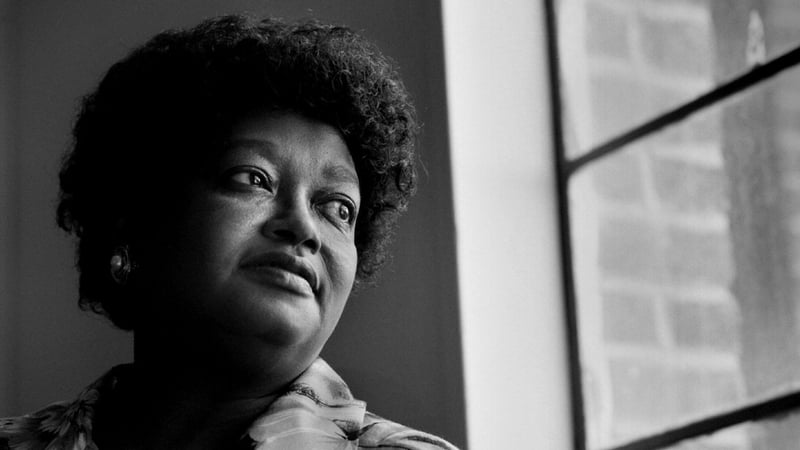
US civil rights pioneer Claudette Colvin, who was arrested at age 15 for refusing to give up her bus seat to a white woman in Alabama, nine months before Rosa Parks' similar act of defiance, has died aged 86.
Although she remained a largely unsung figure in the civil rights movement for decades, Ms Colvin's 1955 act of rebellion inspired Ms Parks and others, and helped form the basis for the federal lawsuit that outlawed racial segregation in US public transportation.
Her death, under hospice care in Texas, was confirmed by a spokesperson for her family and the Claudette Colvin Foundation.
Ms Colvin "leaves behind a legacy of courage that helped change the course of American history", her foundation said.
In one of the first publicised acts of civil disobedience against Montgomery's Jim Crow rules governing city bus seating by race, Ms Colvin refused to relinquish her seat for a white woman, as ordered by the driver, and stayed put until she was dragged off the bus by police.
According to accounts of her testimony in court, Ms Colvin recalled she had been studying anti-slavery abolitionist heroes in school and felt that she had Harriet Tubman on one shoulder, Sojourner Truth on the other and "history had me glued to the seat".
She was briefly imprisoned for disturbing public order.
Ms Parks, an older seamstress who was secretary of the local National Association for the Advancement of Colored People chapter, was seen as a more dignified, sympathetic figure to rally behind as civil rights leaders organised what became the year-long bus boycott that thrust Martin Luther King Jr to the national stage.
Listen: Claudette Colvin speaks to RTÉ's The History Show in 2018
We need your consent to load this rte-player contentWe use rte-player to manage extra content that can set cookies on your device and collect data about your activity. Please review their details and accept them to load the content.Manage Preferences
Ms Colvin, who was born in Alabama in 1939 as the eldest of eight sisters, would be ostracised from the civil rights movement when she became pregnant by a married man.
It happened about a year after her arrest and she would later described the incident as statutory rape.
Nevertheless, Ms Colvin went on to become one of several plaintiffs and a principal witness in the Browder v Gayle lawsuit challenging the city's Jim Crow bus policies.
The case eventually led to the landmark 1956 US Supreme Court decision banning segregation in public transit as unconstitutional.
She spent decades in obscurity, working for 30 years at a Catholic nursing home, caring for elderly patients as a nursing assistant.
However historians and others have since brought to light the pivotal role she played in the early civil rights movement.
Fred Gray, the attorney behind Browder v Gayle, credited Ms Colvin with helping to ignite the battle against segregation in the deep south.
"I don't mean to take anything away from Ms Parks, but Claudette gave all of us the moral courage to do what we did," the Washington Post quoted Mr Gray as saying.
A 2009 biography by Phillip Hoose, Claudette Colvin: Twice Toward Justice, won the US National Book Award for young people's literature.
However, it was only in 2021 that the record of her 1955 arrest and adjudication of delinquency was expunged by a US court.
