


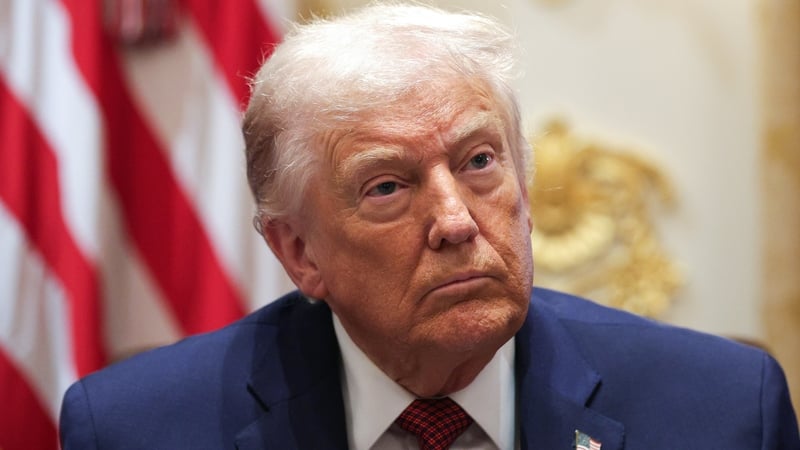
US President Donald Trump's administration has said it will dictate decisions to Venezuela's interim leaders and control the country's oil sales "indefinitely" after deposing Nicolas Maduro.
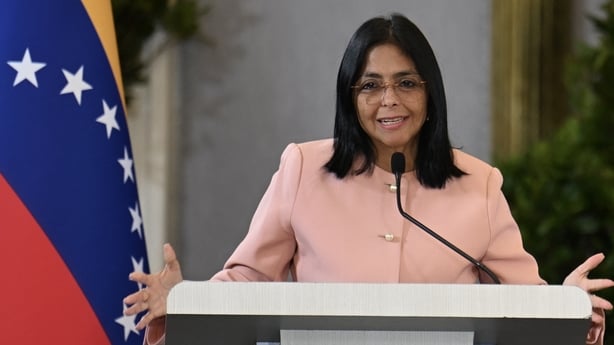
Mr Trump's assertion of US dominance over the oil rich South American country comes despite its interim leader Delcy Rodríguez saying there is no foreign power governing Caracas.
"There is a stain on our relations such as had never occurred in our history," Ms Rodríguez said about the US attack to depose her predecessor.
US special forces captured president Maduro and his wife on Saturday in a raid and took them to New York to face trial on drug charges, underscoring what Mr Trump has called the Donroe Doctine of US dominance over its backyard.
"We obviously have maximum leverage over the interim authorities in Venezuela right now" following the capture operation, White House Press Secretary Karoline Leavitt told a briefing.
"We're continuing to be in close coordination with the interim authorities and their decisions are going to continue to be dictated by the United States of America," she said.
Mr Trump has said the United States will "run" Venezuela, which has the world's largest proven oil reserves.
But Washington has no boots on the ground and appears to be relying on a naval blockade alongside the threat of further force to ensure the cooperation of the interim president.
Meanwhile Caracas announced that at least 100 people were killed in the US attack and a similar number were injured.
Among those hurt were Mr Maduro and his wife Cilia Flores, Interior Minister Diosdado Cabello said.
The couple were seen walking on their own power during a New York court arraignment earlier this week.
According to Havana, the death toll includes 32 members of the Cuban military.
Mr Maduro, like his predecessor Hugo Chavez, employed specialised Cuban soldiers as bodyguards.
President Trump's administration - which has so far indicated it intends to stick with Ms Rodríguez and sideline opposition figures, including Nobel Peace Prize winner Maria Corina Machado - has given few details about its plans.
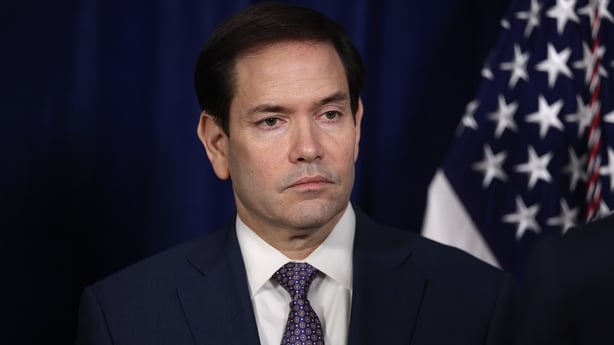
Secretary of State Marco Rubio insisted, after meeting politicians on Capitol Hill who have been critical about the post-Maduro planning, that the United States was "not just winging it".
But so far, the US plan relies heavily on what Mr Trump said on Tuesday was an agreement for Venezuela to hand over between 30 million and 50 million barrels of oil to the United States for it to then sell.
Mr Trump said that under the deal Venezuela "is going to be purchasing only American made products, with the money they receive" from the oil profits they receive.
That would include agricultural products, machinery, medical devices and energy equipment, he added.
Mr Rubio said that in a second "recovery" phase, US and Western companies would have access to the Venezuelan market and "at the same time, begin to create the process of reconciliation nationally within Venezuela".
Venezuela's state oil firm said it was discussing oil sales with the United States for the "sale of volumes of oil" under existing commercial frameworks.
But Washington is looking at longer term control, according to Energy Secretary Chris Wright.
"We're going to market the crude coming out of Venezuela, first this backed up stored oil and then indefinitely, going forward, we will sell the production that comes out of Venezuela," Mr Wright said.
Mr Trump will meet executives from US oil companies tomorrow, whom he has said will invest in Venezuela's crumbling facilities, despite no firm having yet made such pledges amid the turmoil in the country.
"It's just a meeting to discuss, obviously, the immense opportunity that is before these oil companies right now," Ms Leavitt told reporters.
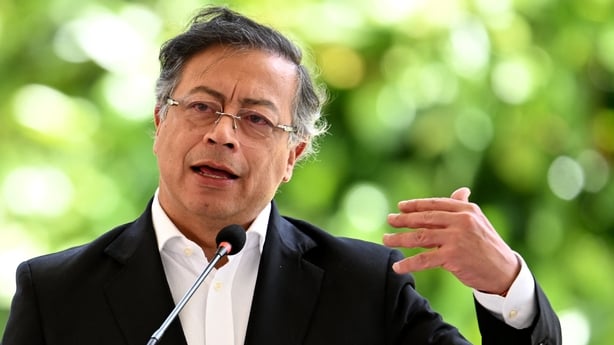
Mr Trump also invited leftist Colombian President Gustavo Petro to meet at the White House "in the near future" after the two leaders had their first phone call yesterday since Mr Trump took office last year.
Washington moved further to stamp its authority on Venezuela when it seized two oil tankers, including a Russian-linked vessel that it pursued from Venezuela to the North Atlantic.
Moscow condemned the operation but Ms Leavitt insisted the oil tanker had been "deemed stateless after flying a false flag".
We need your consent to load this rte-player contentWe use rte-player to manage extra content that can set cookies on your device and collect data about your activity. Please review their details and accept them to load the content.Manage Preferences
