


A US admiral acting under the authority of Defense Secretary Pete Hegseth ordered the "double-tap" military operation that targeted survivors of an initial attack on an alleged drug smuggling boat, the White House said today.
A total of 11 people were killed in the two strikes - the first group of more than 80 left dead in what has become a months-long campaign against alleged drug-runners that experts say amount to extrajudicial killings.
US President Donald Trump's administration insists it is effectively at war with alleged 'narco-terrorists', and the White House said Admiral Frank Bradley, who currently leads US Special Operations Command, had acted legally and properly in ordering the second strike on the survivors.
Admiral Bradley "worked well within his authority and the law directing the engagement to ensure the boat was destroyed and the threat to the United States of America was eliminated," White House Press Secretary Karoline Leavitt told journalists.
Mr Hegseth "authorised Admiral Bradley to conduct these kinetic strikes," she said.
US media reported last week that an initial 2 September strike left alive two people who were killed in a subsequent attack to fulfil an order from Mr Hegseth.
Mr Trump announced at the time that 11 alleged members of Venezuelan gang Tren de Aragua had been killed in what he described as "a kinetic strike."
Subsequent strikes that left survivors were followed by search-and-rescue efforts that recovered two people in one case and failed to find another later in October.
Mr Hegseth has insisted that the strikes are legal, saying in a recent post on X that the military action is "in compliance with the law of armed conflict - and approved by the best military and civilian lawyers, up and down the chain of command."
However, the military action on 2 September would appear to run afoul of the Pentagon's own Law of War Manual, which states: "For example, orders to fire upon the shipwrecked would be clearly illegal."
Mr Trump added last night that he "wouldn't have wanted that - not a second strike".
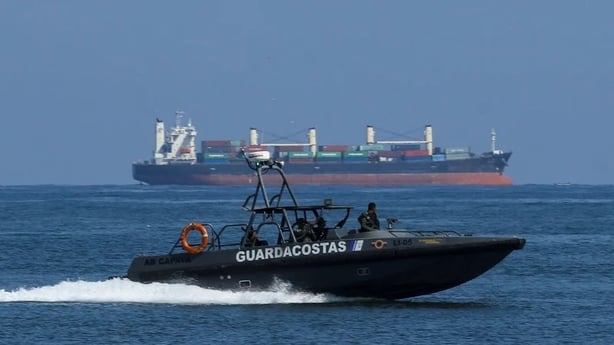
Mr Trump has deployed the world's biggest aircraft and an array of other military assets to the Caribbean, insisting they are there for counter-narcotics operations.
Regional tensions have flared as a result of the strikes and the military build-up, with Venezuela's leftist leader Nicolas Maduro accusing Washington of using drug trafficking as a pretext for "imposing regime change" in Caracas.
Mr Maduro, whose re-election last year was rejected by Washington as fraudulent, insists there is no drug cultivation in Venezuela, which he says is used as a trafficking route for Colombian cocaine against its will.
On Sunday night, President Trump confirmed that he had spoken with President Maduro, but did not provide details on what the two leaders discussed.
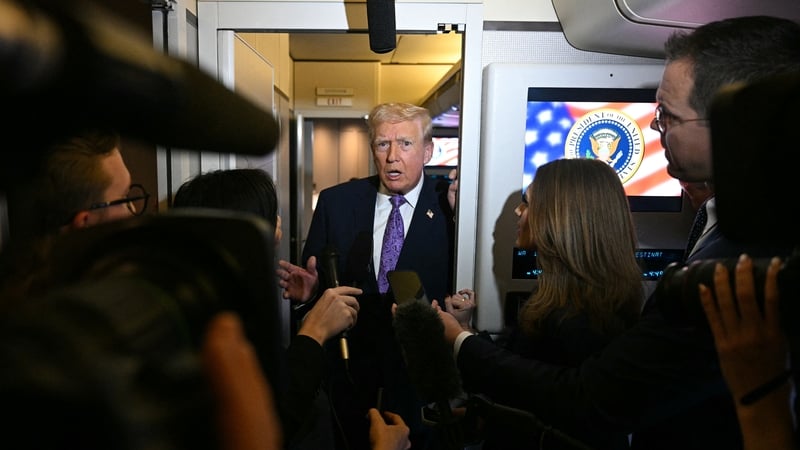
"I don't want to comment on it. The answer is yes," Mr Trump said when asked if he had spoken with Mr Maduro. He was speaking to reporters on board Air Force One.
The New York Times first reported Mr Trump had spoken with Mr Maduro earlier this month and discussed a possible meeting between them in the United States.
"I wouldn't say it went well or badly, it was a phone call," Mr Trump said regarding the conversation.
The revelation of the phone call comes as President Trump continues to use bellicose rhetoric regarding Venezuela, while also entertaining the possibility of diplomacy.
On Saturday, Mr Trump said the airspace above and surrounding Venezuela should be considered "closed in its entirety," but gave no further details, stirring anxiety and confusion in Venezuela as his administration ramps up pressure on Mr Maduro's government.
When asked whether his airspace comments meant strikes against Venezuela were imminent, Mr Trump said: "Don't read anything into it."
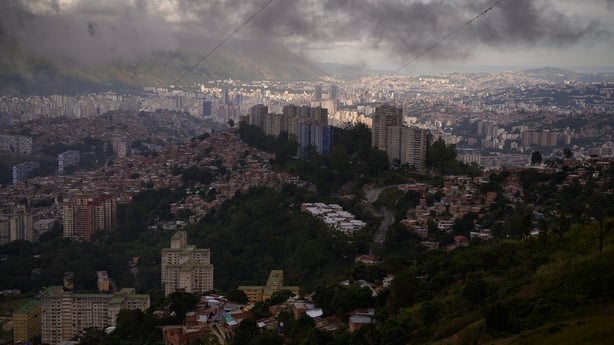
The Trump administration has been weighing Venezuela-related options to combat what it has portrayed as Mr Maduro's role in supplying illegal drugs that have killed Americans.
The Venezuelan president has denied having any links to the illegal drug trade.
Human rights groups have condemned the strikes as illegal extrajudicial killings of civilians, and some US allies have expressed growing concerns that the United States may be violating international law.
Trump says US freeze on asylum decisions will last 'a long time'
Meanwhile, Mr Trump said his administration intends to maintain a pause on asylum decisions for "a long time" after an Afghan national allegedly shot two National Guard members near the White House, killing one of them.
When asked to specify how long it would last, Mr Trump said he had "no time limit" in mind for the measure, which the Department of Homeland Security says is linked to a list of 19 countries already facing US travel restrictions.
The Trump administration issued the pause in the aftermath of the shooting in Washington on 26 November, that left 20-year-old Sarah Beckstrom dead and another guardsman critically wounded.
Read more: Trump says Venezuela airspace should be considered closed
A 29-year-old Afghan national, Rahmanullah Lakanwal, has been arrested and charged with first degree murder in connection with the incident.
Mr Lakanwal had been part of a CIA-backed "partner force" fighting the Taliban in Afghanistan, and entered the United States as part of a resettlement programme following the American military withdrawal from Afghanistan in 2021.
Mr Lakanwal had been granted asylum in April 2025, under the Trump administration, but officials have blamed what they called lax vetting by the government of Mr Trump's predecessor Joe Biden for his admission to US soil during the Afghan airlift.
Mr Trump wrote after the shooting that he planned to "permanently pause migration from all Third World Countries to allow the US system to fully recover."
Asked which nationalities would be affected, the Department of Homeland Security pointed AFP to a list of 19 countries - including Afghanistan, Cuba, Haiti, Iran and Myanmar - which since June have all faced travel restrictions to the United States.
