


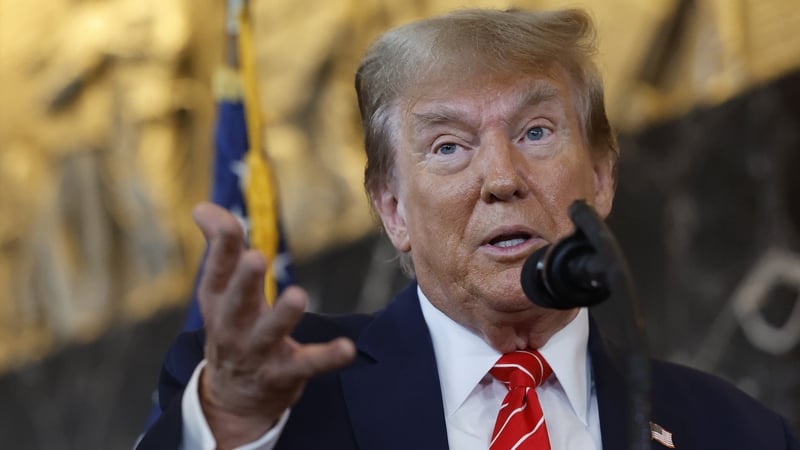
Former US president Donald Trump has denounced an appeals court ruling that he is not immune from prosecution, calling it "nation-destroying".
"A President of the United States must have Full Immunity in order to properly function and do what has to be done for the good of our Country," Mr Trump said in a post on his Truth Social platform.
"A Nation-destroying ruling like this cannot be allowed to stand."
Mr Trump's spokesman said he would appeal the finding.
A US federal appeals court ruled that he does not have immunity from charges that he plotted to overturn his 2020 election defeat, bringing him a step closer to an unprecedented criminal trial.
A three-judge panel unanimously rejected his claim that he cannot be prosecuted because the allegations relate to his official responsibilities as president.
"For the purpose of this criminal case, former President Trump has become citizen Trump, with all of the defences of any other criminal defendant," the panel wrote.
"But any executive immunity that may have protected him while he served as President no longer protects him against this prosecution."
The ruling rebuffs his attempt to avoid a trial on charges that he undermined American democracy and the transfer of power, even as he consolidates his position as the front-runner for the Republican presidential nomination.
The case will remain paused until at least 12 February to give Mr Trump time to appeal to the US Supreme Court.
Mr Trump’s lawyers argued that former presidents were entitled to sweeping legal protections and could not be criminally prosecuted for official actions unless first impeached by the House of Representatives and removed from office by the Senate.
Mr Trump was impeached twice by the House, but each time Senate Republicans cast sufficient votes to acquit him of the charges.
Judges homed in on the broad nature of Mr Trump’s claim at a 9 January hearing, questioning a Trump lawyer over whether even a president who ordered military commandos to assassinate a political rival could escape criminal prosecution without initial action by Congress.
Mr Trump has repeatedly voiced his immunity claim on the campaign trail and social media, saying in an 18 January post: "All presidents must have complete & total presidential immunity, or the authority & decisiveness of a president of the United States will be stripped & gone forever."
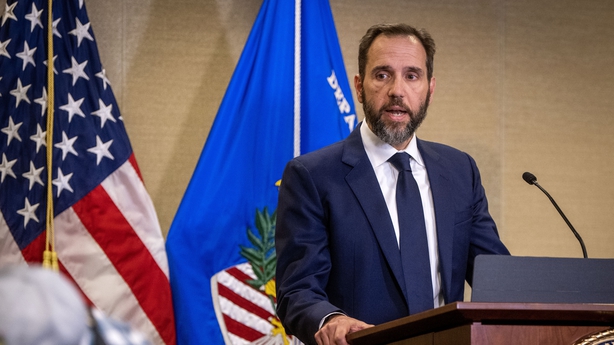
The indictment brought by Special Counsel Jack Smith accuses Mr Trump of using false claims of voter fraud to pressure state politicians, Department of Justice officials and then-vice president Mike Pence to halt the certification of the election results.

It is one of four criminal cases facing Mr Trump and one of two alleging interference in the 2020 election.
He has pleaded not guilty to four felony counts and accused prosecutors of a politically motivated effort to damage his campaign.
The immunity argument was previously rejected by US District Judge Tanya Chutkan in December, prompting Mr Trump to appeal.
Even if his argument is not accepted by courts, the appeal is likely to achieve his aim of delaying the scheduled 4 March trial and potentially pushing it until after the November election.
The case is on hold while Mr Trump appeals.
If he wins the election, he could seek to pardon himself or direct the Department of Justice to shut down the case.
Mr Trump can ask the full DC Circuit Court and the US Supreme Court to review the ruling, potentially leading to weeks or months of additional delay.
