


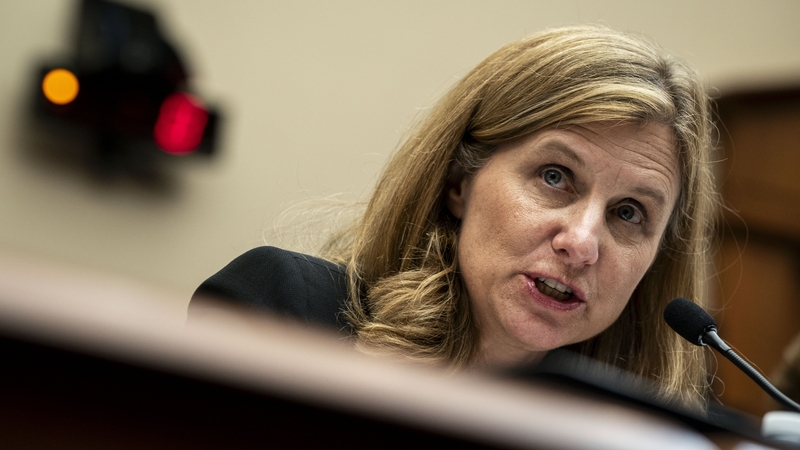
University of Pennsylvania President Liz Magill, who came under fire for her stance on antisemitism on campus, has resigned, the Ivy League school confirmed.
Ms Magill was one of three top university presidents who were criticised after they testified at a congressional hearing about a rise in antisemitism on college campuses following the outbreak of the Israel-Hamas war.
She has agreed to stay on until an interim president is appointed, Scott Bok, chair of the Philadelphia-based university's board of trustees, said in a statement posted on the university's website.
"I write to share that President Liz Magill has voluntarily tendered her resignation as President of the University of Pennsylvania," Mr Bok said in the announcement released by the university.
Ms Magill will remain a tenured faculty member at the university's law school, Mr Bok said.
Ms Magill, Harvard University President Claudine Gay, and Massachusetts Institute of Technology President Sally Kornbluth testified before a US House of Representatives committee on Tuesday.
As they tried to walk a line that protected freedom of speech, they declined to give a definitive "yes" or "no" answer to Republican Representative Elise Stefanik's question of whether calling for the genocide of Jews would violate their schools' codes of conduct regarding bullying and harassment.
Calls for Ms Magill's and Ms Gay's resignations in particular mounted in the days after that testimony.
Ms Magill released a video in which she expressed regret, Ms Gay also publicly apologised.
Jewish students, families and alumni have accused the schools of tolerating antisemitism.
"One down. Two to go. This is only the very beginning of addressing the pervasive rot of antisemitism that has destroyed the most 'prestigious' higher education institutions in America," Ms Stefanik said on social media site X.
She said Ms Magill's resignation was the "bare minimum of what is required" and urged Harvard and MIT to take similar action.
Antisemitism and Islamophobia have risen sharply in the United States and elsewhere since October.
Antisemitic incidents in the United States rose by about 400% in the two weeks after the Hamas attack on Israel, according to the Anti-Defamation League.
The Council on American-Islamic Relations said that in the two months after the war began, incidents motivated by Islamophobia and bias against Palestinians and Arabs rose by 172% compared to the same period last year.
