


Women's Aid Federation in Northern Ireland has said that 30 women have been murdered there since 2020.
Regional Services Manager Women's Aid Federation Northern Ireland Sonya McMullan has said the facts that emerged from the murder trial of Stephen McCullagh were triggering for so many people who have suffered domestic abuse.
Speaking on RTÉ's Morning Ireland, she said that the statistics of gender-based violence are "extremely high" in Northern Ireland.
She explained that the reasons for this is linked to the history of paramilitarism in Northern Ireland, where violence is normalised as part of everyday life.
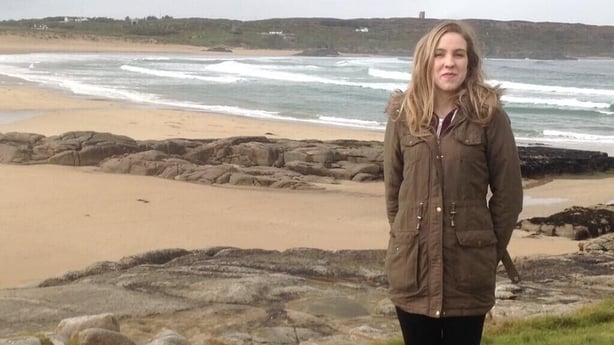
"Our statistics are extremely high. We get asked all the time, why? Why is this? And I think, the root causes and impact of violence against women and girls in Northern Ireland is different because of our legacy of conflict, the normalisation of violence.
"We see that quite a lot in those patriarchal kind of patterns of life in Northern Ireland, that post-conflict masculinity, patriarchy and that influence of paramilitarism, which we have to remember has not gone away.
"So, we are different and it's hard to map that out. We also were the last part of this island and the UK to get a violence against women and girls' strategy.
"So, to be able to examine those crimes that disproportionately affect women and girls and look at those common themes, which we simply haven't had the opportunity to do in the North. And a lot of that is down to the stop-start government as well."
She added that there is "a huge issue" with the courts as well.
"We have huge backlogs. We have court delays. Our criminal bar is on strike at the moment as well due to the challenges that we have around access to justice and legal aid within both the civil legal aid space and criminal legal aid.
"So, whenever people see the delays and the time it takes for cases to come ... we need to restore public confidence in policing.
"We need people to come forward to tell their stories. We need serial perpetrators of domestic abuse and all of these crimes around violence against women and girls to be held accountable.
"And there's a sentencing bill going through Stormont at the moment, so we hope that will help around some changes.
"But people have to see that change and have public confidence in the system to immediately report in the aftermath of an assault."
She said that there is also an issue of internal trafficking and "that's always been an issue here in Northern Ireland, especially in relation to our young looked after children who would be more vulnerable to child sexual exploitation."
Ms McMullan said that her organisation is going into communities doing training and awareness of the issue, especially to boys and young men.
"It's children's basic right to learn about healthy relationships and learn about trust, equality, values, respect, all of those things that many of us take for granted," she said.
Ms McMullan added: "And for many young people, they haven't grown up in a house where there is a healthy relationship between parents, they may be in a single parent, or there may be domestic abuse.
"If we look at the figures of one in three women experiencing domestic abuse, you can only imagine the amount of children and young people."
"Boys and men need to be our allies and our solution in ultimately ending violence against women and girls."
