


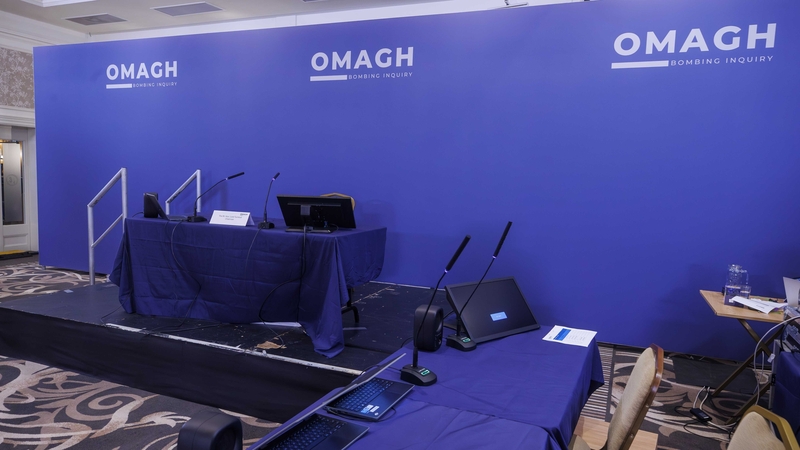
The next phase of hearings at the Omagh Bombing Inquiry will take place six months later than scheduled, the lead counsel to the inquiry has said.
Public hearings about the days immediately before and after the 1998 atrocity in the Co Tyrone town were due to start on 9 March.
Paul Greaney KC gave an update on the progress of the inquiry and said the hearings will now begin on 21 September.
He said core participants in the inquiry were informed of the development on 6 March.
Mr Greaney added that the inquiry legal team is "acutely aware of how disappointing this will be for many people", but said "most, if not all, will understand the importance of your inquiry not being rushed and being as comprehensive as it can be in addressing the terms of reference".
The Real IRA bombing killed 29 people, including the mother of unborn twins.
The inquiry, chaired by Alan Turnbull, was set up following a number of legal challenges brought by campaigners, to examine whether the explosion could have been prevented by UK authorities.
The next stage of the hearing, known as Chapter 3, will explore what can be established based on information including construction of the bomb, warning calls, claims of responsibility, arrests and subsequent court proceedings.
Mr Greaney said the delay was due, in part, to material "originating from the Republic of Ireland not being available" and that the Chapter 3 evidence would take around four weeks.
He said the volume of that material should not be "underestimated", adding that while it is being made available to the inquiry on a "rolling basis" it will only be fully disclosed by June.
The mechanisms by which the material was disclosed were "the subject of extensive discussion with the government of Ireland in a series of face-to-face meetings", Mr Greaney said, and he praised them for the "considerable efforts" they have made to work with the inquiry.
The inquiry has now received a "very significant quantity of An Garda Síochána material from the Government of Ireland", he said.
"We are still a long way off being able to say that all issues have been dealt with," Mr Greaney said, but An Garda Síochána "are responsive to our communications and have kept the necessary deadlines required for the efficient processing of this material".
He added that 20,000 pages have already been disclosed and processed by the inquiry, and the material was provided to core participants last week.
Mr Greaney did express frustration at some of the obstacles faced by the inquiry team.
One issue he outlined was its ability to digitally access highly sensitive documents.
Mr Greaney said that given the volume of material they are looking at, working from hard copies would be "ludicrous".
However, working with material relating to national security issues can only be viewed on special terminals connected to secure networks.
A facility to house these terminals in Northern Ireland will not be completed until the end of April, Mr Greaney said, after that IT infrastructure will need to be installed.
"That state of affairs is not satisfactory," he said, but added that other arrangements have been made after meetings with the Northern Ireland Office.
Mr Greaney said the inquiry has "taken steps" to ensure time lost can be gained back, including a "surge" in resources to the inquiry team working on this material.
