skip to main content

MPs to vote on removing immunity clause from new Troubles legislation

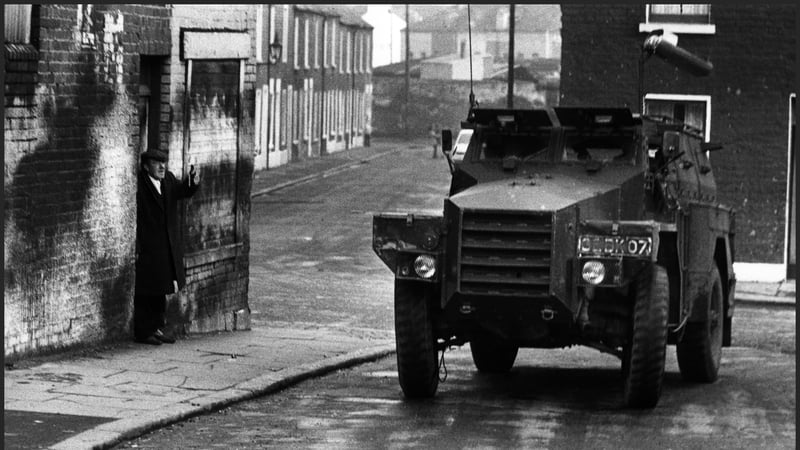
The British army patrols the Falls Road area of Belfast in March 1972, the most violent year of the Troubles in Northern Ireland

British MPs are to be asked to support the removal of an immunity clause from the UK government's legislation dealing with the legacy of the Troubles.

The Labour government will table what is known as a remedial order to address deficiencies in the law identified following court challenges.

A number of legal actions in the courts in Northern Ireland identified elements of the legislation which were incompatible with the European Convention on Human Rights.
The move is part of a commitment to repeal and replace the controversial act which Labour inherited from the previous Conservative government.

It begins the process of honouring commitments made in a joint framework on legacy agreed by the British and Irish governments last September.

A vote will follow a debate on the remedial order in the House of Commons. It will also have to be passed in the House of Lords.

The remedial order is separate to fresh legacy legislation currently making its way through the UK parliament.

That legislation will replace the controversial Troubles legacy body, the Independent Commission for Reconciliation and Information Recovery.

It will be reformed and renamed the Legacy Commission.

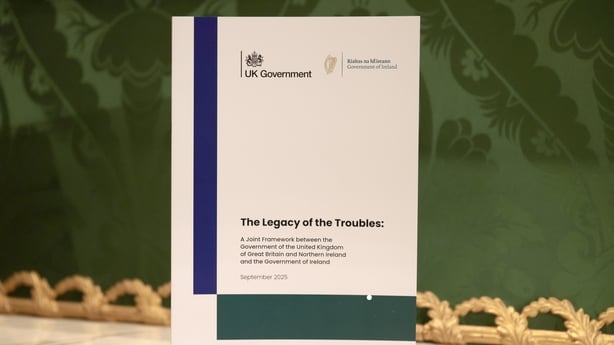
A copy of the newly published joint framework report addressing the legacy of the Northern Ireland Troubles on display
A framework agreement on the Troubles legacy was announced by the British and Irish governments last September

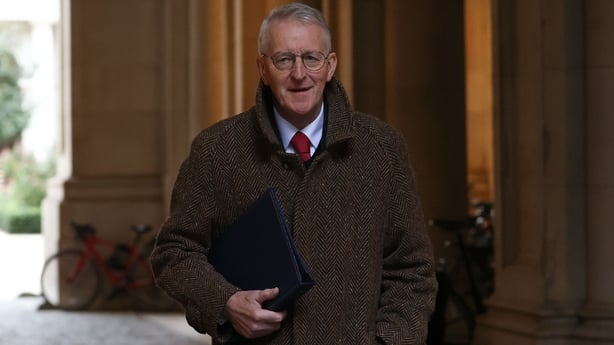
UK Secretary of State for Northern Ireland Hilary Benn arrives at Downing Street
Northern Ireland Secretary Hilary Benn said the move is essential to rebuild trust

The provision of immunity from prosecution for anyone who co-operated with a truth recovery process was a hugely controversial part of the Tory government's legislation.

It was roundly condemned by all parties in Northern Ireland and by victims' groups.

As well as formally striking out that element of the legislation, the remedial order will, if passed, allow new civil actions linked to the Troubles to proceed.

It is estimated around 230 such cases were guillotined by the Legacy Act.

"Today, I am asking the house to endorse a remedial order to remove indefensible and legally defective provisions contained in the previous government's Legacy Act," Secretary of State for Northern Ireland Hilary Benn said.

"This remedial order is essential to rebuild the trust of communities across Northern Ireland who are opposed to the idea that the terrorists who murdered their loved ones could be granted immunity from prosecution if they came forward to the commission.

"It also restores the historic right of citizens of this country to seek redress through the courts," he said.

The issue of protection for British army veterans remains to be addressed.

The British government claims six protections for former soldiers are baked into the proposed new legislation.

These include a commitment that the new Legacy Commission will not duplicate previous investigations; that former soldiers can apply for anonymity and that the commission must consider a veteran's age and infirmity in deciding how to proceed in a case.

Critics claims these are protections open to all, not specifically to British army veterans.

They point out the new legislation does not mention the word "veteran" and have called for stronger safeguards.

The legislation is due to be debated in the House of Commons in the coming months where attempts will be made to amend it.

Prime Minister Keir Starmer has hinted at government amendments to strengthen protection for veterans in the new law though there has been no further detail.

Minister for Foreign Affairs Helen McEntee has said any deviation from what was agreed with the Irish Government in the joint framework would require the approval of both governments.