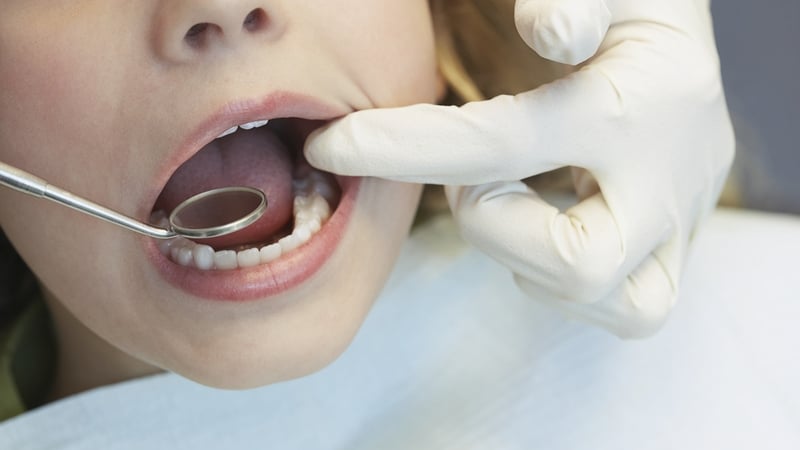

Almost 1,000 children who finished primary school in Monaghan in the last two years are on a waiting list for their sixth class dental check-up.
The Health Service Executive has said that staffing issues in the School Dental Programme in Cavan/Monaghan has resulted in "an inevitable delay" in progress and "a significant unmet treatment need".
No sixth class child in Monaghan from the 2024/25 school year was examined by the programme, despite sixth class being the only cohort targeted by the service there in recent years.
A total of 832 children in the county finished primary school this year without receiving their sixth class dental check up and are now on a waiting list for the service.
While 145 children from the sixth class cohort in the previous 2023/24 school year in Monaghan are also still waiting to be seen.
The School Dental Programme treats children under the age of 16 and is delivered through the HSE's six health regions.
It provides dental examinations to children and any necessary treatment needed.
The programme starts with sixth class and follows with second and fourth classes, depending on the available resources.
The figures were provided in a letter from the HSE to Sinn Féin TD for Cavan Monaghan Cathy Bennett, in response to a parliamentary question to the Minister for Health.
We need your consent to load this rte-player contentWe use rte-player to manage extra content that can set cookies on your device and collect data about your activity. Please review their details and accept them to load the content.Manage Preferences
HSE says the school dental service in area being 'curtailed'
In the letter, the HSE said that the school dental service for the area is "curtailed".
For the last few years, only sixth class children in Monaghan were being targeted, and the service is currently screening the sixth class students from 2023/2024 who would now be in second year in secondary school.
The response cited staff retirements, maternity leaves and a nationwide shortage of dentists, and said that HSE Dental Services in Cavan Monaghan have operated with a "significant shortfall of whole-time equivalents over several years".
It said this has resulted in "an inevitable delay in progress through target classes, resulting in a significant unmet treatment need and therefore an increase in children presenting as emergencies".
Deputy Bennett said that she had been contacted by "numerous families that are not getting their dental screening".
"It's just not good enough for parents. They're not getting the screening done for their children. It leads to problems later and down the line. We need to get it sorted out ASAP," she said.
On the issue of staffing, Deputy Bennett said the Government needed to act.
"The Government needs to plan for the future and ensure there are staff available to carry out this very, very necessary healthcare for children," Deputy Bennett said.
In a statement to RTÉ News, the HSE said that it's staff are currently seeing sixth class students in Monaghan from the 2023/2024 school year.
It said that progress has been made in that cohort due to the recruitment of an additional General Dental Surgeon in October.
Of that group, 145 remain on the waiting list.
In Cavan, it said that 149 sixth class students from the 2024/2025 school year are also waiting on treatment.
There are also 1,885 children who finished sixth class in Meath this year, and a further 405 in Louth, who are also waiting on their sixth class dental check up.
But delays to screening appointments and waiting lists for the school dental programme are not confined to the North East.
The HSE said a total of 106,964 school dental programme targeted assessments across all ages took place in 2024.
Only half of eligible cohort received screening, says Irish Dental Association
However, the Irish Dental Association said that about only about half of the eligible cohort received their screening, with the other half, around 105,000 children, "denied dental screening appointments".
Chief Executive of the Irish Dental Association Fintan Hourihan said there had been a neglect of the public dental service for many years, with staffing levels dropping off while the population increases.
"What that means is that 50% of children who should be seen in any one year, are not being seen by a dentist and that is now causing serious problems with the oral health of children and indeed, teenagers and adults".
"We are in a situation where some children are seeing their dentist when they're teenagers, half way through secondary school and that is simply incredible in this day and age", he said.
He said delays to screening means that small problems become big ones and issues that could have been detected are not.
"Teeth that could be saved are ultimately lost. Children are more likely to see a dentist for the first time in pain, for an emergency treatment and some problems that could have been remedied by treatments which save the tooth, ultimately if they deteriorate significantly could require major surgery."
Dr Orla Clarke from Boyne Dental in Navan said she is now seeing a "huge volume" of children in the private practice.
"When these children present, they're presenting with large numbers of decay, often approximately four to 12 teeth are affected by dental decay.
"That decay is often quite large or extensive, meaning that quite often the treatment is removal or extraction of these teeth. It's important to note that these patients, generally, have severe toothache, have had sleepless nights and are on regular pain relief and are unable to attend school," she said.
Dr Clarke said that she believes that if children are seen on the targeted assessments that decay would be detected earlier and therefore the decay would not be so extensive and the treatment would not be so challenging.
"Early detection is always a message we would like to put out there," she said.
Mr Hourihan said the schools dental programme, when staffed properly, is a good service, but that priority had not been given to it.
"Ultimately, we have a really good service in how it's supposed to operate, going to schools to see every child, rather than hoping some children will come to see a private dentist. It does require a level of dentists. Clearly there are huge numbers of children to be seen. I would say the problem is a lack of priority given to oral health for many years, reflected in the fact that when dentists retire, they're not being replaced. As the population increases, the number of dentists is not keeping pace," he added.
'Smile agus Sláinte' policy yet to be implemented
The HSE said the Government acknowledges the need to do more to support access to the current programme, while a move towards a new model of care goes ahead.
The National Oral Health Policy, Smile agus Sláinte, has yet to be implemented.
An implementation plan is currently being reviewed by the HSE, before it will be sent to the Minister for Health for consideration.
The HSE said that the implementation of the policy will initially focus on children between zero to seen and will emphasise the development of prevention focused oral health care, which it said would be supported by an extra €4.75 million in funding.
Under the new model, it said that dental teams would be supported by the State to provide advice for caring for children's teeth and gums, and on supporting food and drink habits in line with the WHO Global Oral Health Strategy and Action Plan.
The Department of Health said that the Government is committed to reforming oral health care services through the implementation of the National Oral Health Policy.
It said new services under the plan would be "prevention focused" and "tailored to each age group" from birth to old age.
The Department also said the policy contains a range of "strategic workforce planning actions to increase workforce capacity, in support of improving patient access to care".
The implementation plan for the policy is being finalised and will set out the intended approach to reform services.
The Department also said that the development of the implementation plan included "targeted consultation with stakeholders including representative bodies".
The Irish Dental Association welcomed the fact the plan is nearing publication.
Mr Hourihan said that it hopefully means there will be investment set aside to improve access to care.
However, he raised concerns about the proposed role for private dentists in treating children, who he said are "already full" and "have no capacity to take on extra patients".
Mr Hourihan said while the association does believe there is a role for private practice, the priority should be rebuilding the public dental service.
He said the current scheme cannot operate successfully because there are not enough dentists, but said there were "significant problems" with the proposal to engage private dentists because there was no capacity in private practice.
The Irish Dental Association also said that they believed those with the greatest expertise to treat children already reside in the HSE.
Mr Hourihan said that there would need to be further discussions with the HSE and Department of Health on this, and they are happy to meet them.
"The sooner the plan is published, the sooner we can get around the table and look at all the various changes that need to be made, most of which we support and agree with. Where we might differ sometimes, would be on the how," he said.