
Less than two weeks after the restoration of devolution in Northern Ireland, the Stormont Executive is in dispute with the British government over a promised funding package.
The UK Treasury has allocated £3.3 billion to support the new power-sharing administration, but it says that is not enough to fix a huge range of problems it faces.
Those issues include the cost of child care.
Full-time child care in Northern Ireland is estimated to cost more than £10,000 per child per year.
In 2023, a major review by the Department of Education found that the majority of parents on low and middle-incomes "consider childcare to be unaffordable".
Working parents can avail of some financial supports, but there is no free childcare scheme available, unlike in other parts of the UK.
'Costs are just huge'
Mother-of-two Nicola McIntosh is familiar with the cost burden for parents of young children.
"I used to work in childcare and I know a lot of the parents struggle with the payments of the childcare and working and so it's an option that you have to weigh up, whether you want to go to work or whether you want to pay child care costs," she says.
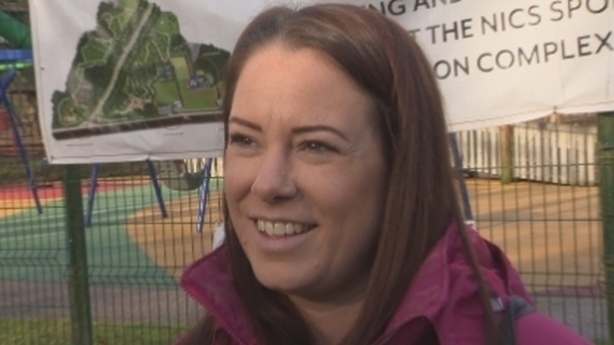
Nicola works and her partner looks after their two young sons after being made redundant last year, but hopes to return to work in the near future.
"At that stage we will have to pay for child care and that will make a huge difference to our finances," she adds.
All parties at Stormont agree that addressing that imbalance is a priority.
They also want to employers in the sector, many of whom say they are struggling to cope because many parents cannot afford to pay escalating costs.
One model being considered by the Stormont Assembly is the provision of up to 30 hours free child care for children aged from nine months to four years during school term times.
That would cost £270m a year.
In addition to agreeing on the need to subsidise child care, the parties also agree that they cannot afford to do so without subvention from the British government.
Another working mother, Susanna Harris, said she and her husband could not both work if they did not have family support to help mind their two young children
"The costs are just huge and are just increasing every year," she says.
"We have friends that we know that pay an absolute fortune and it probably wouldn't be worth my while working just with how much we would have to pay.

"It really prevents people from working and from, you know, excelling in their career doing what they want. It's especially unfair if maybe across the water, they're getting more money or, you know, costs towards certain hours with childcare than we are.
"So, it's a huge, huge thing and we're in a fortunate position where we do have family help, but I know there's plenty that don't so yeah, it's something that needs sorted."
The child care issue illustrates the problems facing the newly reconstituted devolved institutions.
Big ideas
Politicians say they have big ideas to deal with a range of issues, including longer health waiting lists than anywhere else in the UK or the Republic of Ireland, but say they cannot do so without more money from Westminster.
Having pledged £3.3bn to support the new Executive, the British government insists that no more money will be made available, at least not in the short time.
In fact, the UK has said that support package is conditional on Stormont raising some additional revenue itself.
The Northern Ireland Office (NIO) yesterday told the Executive it must raise a minimum of £113m in additional funds as part of the financial package from the Treasury.
The £113m is the figure it is estimated could be raised by increasing the regional rate in Northern Ireland by 15%.
Elements of the financial plan, and conditions attached, were outlined in a letter to Stormont Finance Minister Caoimhe Archibald of Sinn Féin.
Ministers at Stormont will also be expected to publish a "comprehensive and costed" long-term strategic infrastructure plan that sets out priority areas for action and how they will support prosperity and growth.
But at this stage those ministers appear reluctant to consider any revenue raising measures that would be deeply unpopular with voters.
They insist they did not agree to any conditions being attached to the funding package and that Northern Ireland merits additional money following decades of under investment.
After two years of stalemate at Stormont the parties that make up the Executive, Sinn Féin, the DUP, Alliance and Ulster Unionists are now all speaking with one voice in the financial issue.
A senior British government source said the financial negotiations are over.
"It's time for politicians at Stormont to make government work and make decisions about spending priorities just like other governments and devolved administrations do," they said.
"They can't simply keep asking for more."