Environmentalists and campaigners are sounding alarm bells about Lough Neagh in Northern Ireland, the largest freshwater lake in Britain and Ireland.
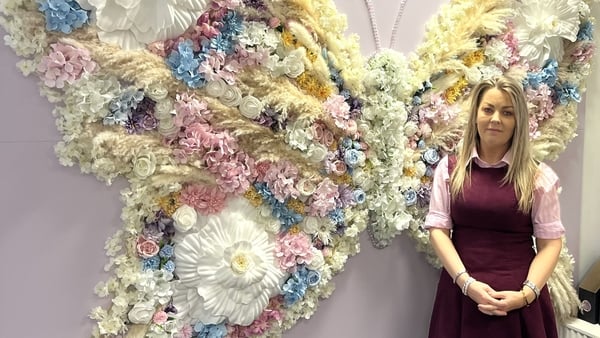
A wake was held on the shore this afternoon to mourn what they say is the death of the lough.
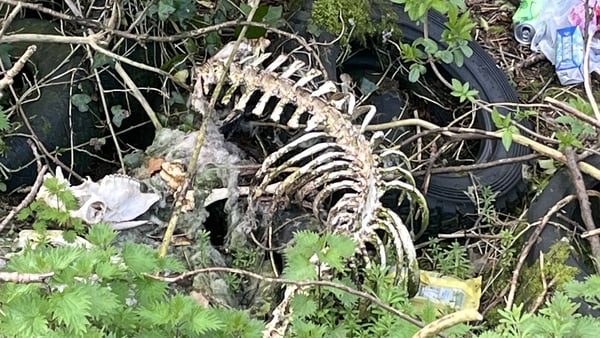
It's heavily polluted with toxic blue-green algae, which has killed dogs and birds and led to a number of water-based businesses closing because of concerns about the health of their customers.
Civil servants at Stormont have set up a number of special groups to look at the issue, but campaigners say actions, not words, are urgently needed.
The lough is vast, with a surface area of almost 400sq.km, bigger than the island of Malta.
Its shores touch five of Northern Ireland's six counties, and it provides more than 40% of its drinking water, including more than half for the city of Belfast.
From a distance, it looks idyllic.
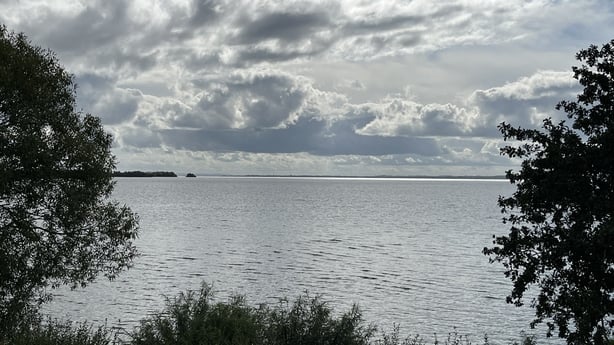
When we visited on Thursday, a ray of sunshine broke through the clouds and shimmered on the water. Up close, it was very different. It's the smell that gets you first. I have a very weak sense of smell, but even for me, it was at times sickening.
"At one point a few weeks back the local people smelled a really strong smell of gas, they thought there was like a mains gas leak," explains Eimear Kearney, who has lived on the lough shores all her life and works for the Lough Neagh Partnership, established 20 years ago to help manage and protect it.
"The Fire and Rescue Service were brought out to check if that was the case, but it turns out it was the small from the algae.
"The smell is really awful. Throughout the summer we couldn't have windows in the house open and you couldn't even put clothes on the line because they picked up the smell."
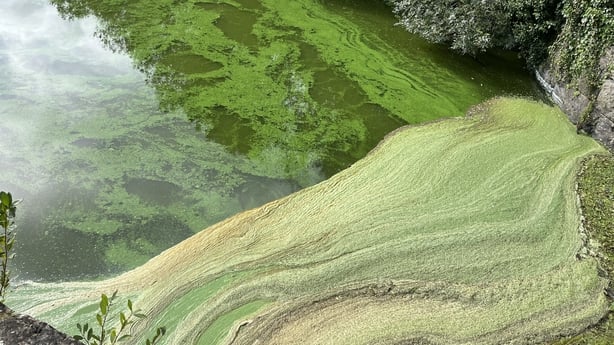
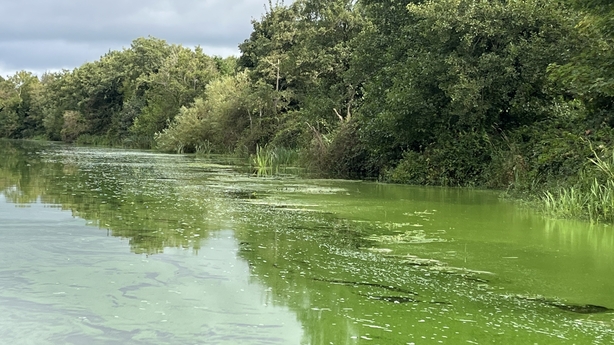
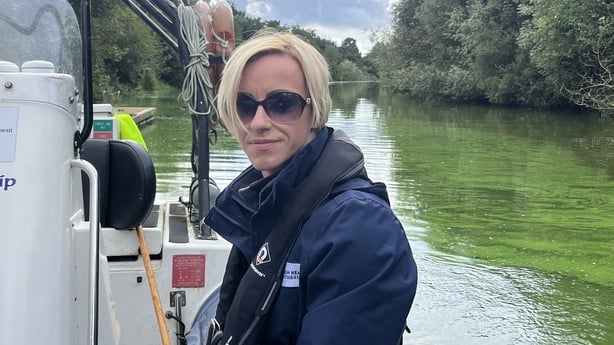
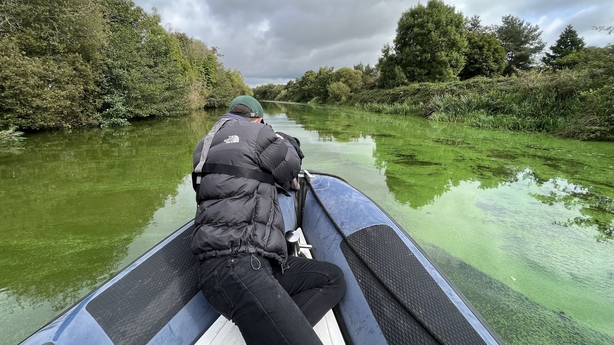
Heading out on the water from Ballyronan marina near the village of Toomebridge in Co Antrim, our rib sliced through thick green sludge, with algae and pondweed combining.
In other places it looked like someone has scattered green glitter into the water.
"It's a real crisis and people need to wake up, it should be top of everybody's agenda," says our skipper, Peter Harper.
The blue-green algae, proper name cyanobacteria, is thriving due to a combination of factors that have created an overload of nutrients.
The biggest contributor is agriculture - estimated to be responsible for more than 60% of the total.
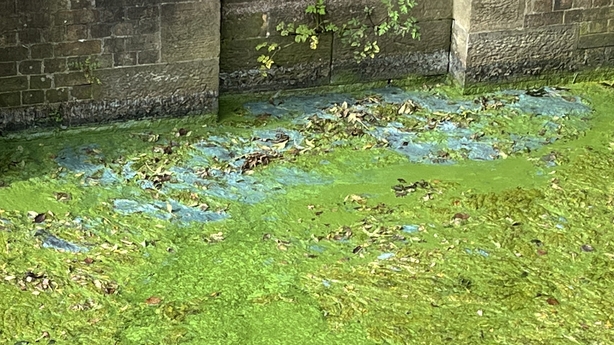
Excess fertiliser runs off from fields into the lough and five rivers that feed into it, flooding the water with nitrogen and phosphates, which the bacteria feeds on.
"This disaster has been many years in the making and it's going to take a long-term fix," says Peter Harper.
"It's about how we do agriculture. The guys who are doing good stuff, following the regulations, good environmental practices, they need to be incentivised and the guys who are doing the bad stuff they need to be penalised, and penalised hard."
Raw sewage is believed to account for more than 20% of the pollution.
Millions of invasive Zebra mussels have worsened the situation. They've filtered the water, allowing light to penetrate much further, boosting the bacteria's growth. Climate change is also a factor.
"The temperature of the lough has increased by one degree since 1995," explains Gerry Darby, manager of the Lough Neagh Partnership.
"That doesn't sound a lot, but it is for a lough like this.
"And this summer, really from the start of July, we've had a lot of rainfall, and the more rain falls on the land the more nutrients are washed into the water.
"This year has created a perfect storm. There's been nutrients coming into the lough really for the past 30 to 40 years and the phosphates in particular have remained in the bed, down there in the mud and in the sand.
"And they think, suggestions now are that the climate change, that increase in temperature, that's now beginning to leach out as well, so you're almost getting a double pincer movement, you're getting it from the top and you're getting it from the bottom and again creating this perfect storm of all these different factors coming together."
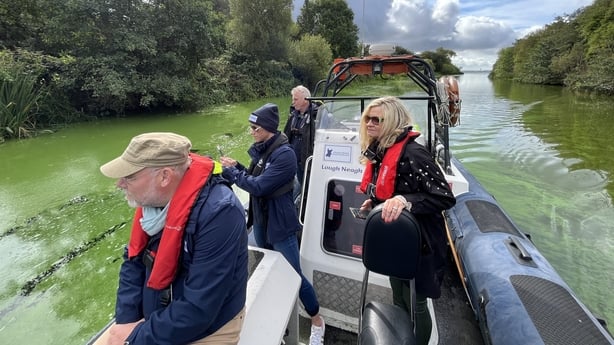
As our rib throws up green water in its wake, Eimear Kearney points out one of three sites where Northern Ireland Water uses giant pipes to extract water.
"Just looking down in the water you can see the algae is right through the water in little, tiny particles," she says.
NI Water says its complex treatment processes ensure that toxins are removed.
As we reach where the lough exits into the River Bann, the water is like thick pea soup, with occasional spots of highly toxic blue algae.
The lough flows into the freshwater eel fishery in Toomebridge, the largest of its kind in Europe.
It has numerous special environmental protection areas, special areas of conservation, areas of special scientific interest, and is an internationally protected bird sanctuary.
But none of those protections have shielded it from this crisis.
Dogs, swans and birds have died as a result of drinking contaminated water and recreational anglers have been advised not to eat their catch. We pass one dead bird lying on the surface.
So far, there has been no restriction on commercial fishing, but the local fishing community is worried about the long-term sustainability of an industry that's vital to communities living around the lough.
Una Johnson has lived on the lough shore in Toomebridge all her life and her husband has spent his entire working life fishing for eels.
That changed this summer.
"In the season to be honest we eat eels at least five times a week, and sometimes seven," she says.
"My husband has been fishing for eels since he was 14, more than 50 years. He has never witnessed anything like this in his entire life.
"This season the eel catch dropped and dropped and dropped til it wasn't worthwhile him going on, so I'd safely say he hasn't been on the lough in the past two months.
"And now to be quite honest, when you look at that water and how much worse it's gotten over the past six weeks, I would say we wouldn't eat them anyway and you wouldn't expect anyone else to."
Just as a combination of factors are responsible for the problem, a combination of factors also makes dealing with it hugely complex and difficult.
No single body owns the lough, its water or the water that flows in and out of it, so no-one can be held accountable.
The Earl of Shaftesbury estate owns the lough bed and the soil, the banks, the rights to sand extraction and shooting licences for wildfowl.
The ownership dates back to the Plantation of Ulster in the 17th Century.
'Everything is always a reaction to a problem once it arises'
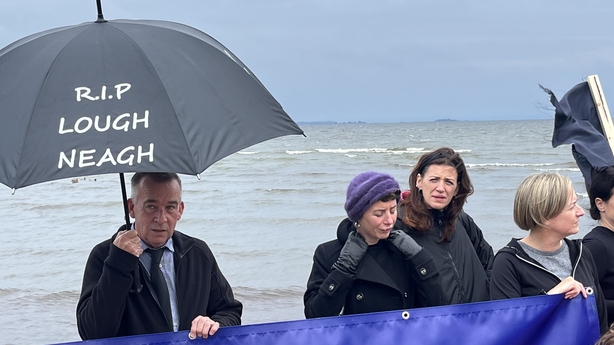
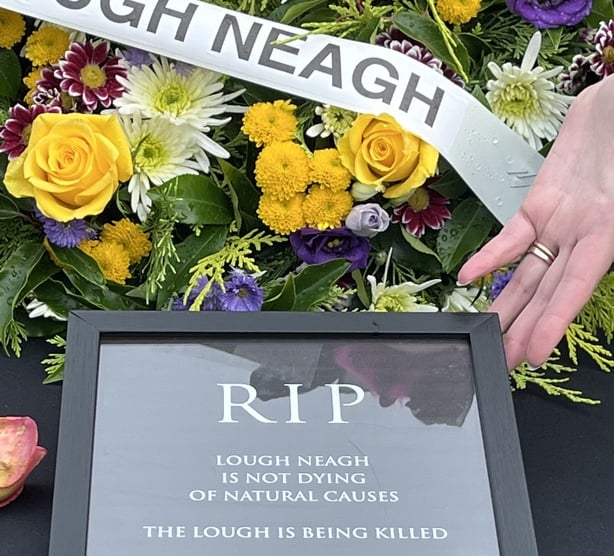
Some campaigners would like to see profits from the sand dredging directed to fund initiatives to tackle the problem.
The National Trust, several councils, a number of charities and Stormont's Department of Agriculture, Environment and Rural Affairs all own areas around the lough, including national nature reserves.
And because no one individual or body or government department is responsible, many organisations and community groups, like the Lough Neagh Partnership, have formed to try to protect and restore it.
Senior civil servants at Stormont have set up a steering group to look at the issue, but with no functioning government and no ministers to make policy decisions it's not clear what can be done.
"The one thing they're not doing if I'm very frank with you is communicating with local people who know the lough better than anyone," says Gerry Darby.
"It's always a reaction, everything is always a reaction to a problem once it arises. That's no good.
"It seems no-one in the civil service will do one thing, put their hand up and say, 'yes I'm responsible' and bring the various departments together."
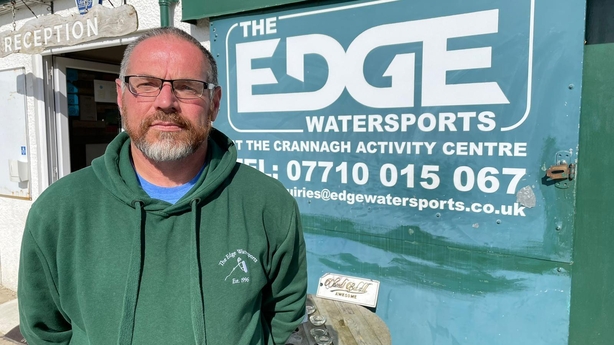
Rob Skelly last week closed a business he started after leaving university in 1993, offering water skiing, canoeing, kayaking and a children's water park.
A furniture removal van arrived at The Edge Watersports at the Crannagh Activity Centre near Coleraine to take away the contents of the office.
Rob and his wife built a business that employed 47 staff and had thousands of customers every year, but after having to close for several weeks this summer, they decided it was time to close for good.
"I don't see how we can put customers into the water and hand on heart say it's safe," he explains.
"And the point is this is not a one-off, this is not going to go away. I don't think I'll see this problem resolved in my lifetime, and maybe even not in my children's lifetimes, so we were forced to take the very difficult decision to close."
The problem created by the plethora of groups and organisations responsible for different parts of the lough was demonstrated when he tried to get answers and advice.
"Whenever this first appeared in July, I did the round of the phone calls, spoke to about ten different people over four hours and ended up being passed back to the first person who I'd spoken to," he says.
"Nobody will take responsibility for it, nobody's prepared to be responsible in case they're held responsible.
"You know, it's just bury your heads in the sand, hopefully it'll go away over the winter and then we won't have to think about it."
This lough is crying for help
As we arrived back at Ballyronan marina on Thursday we met local fisherman Gary McErlain.
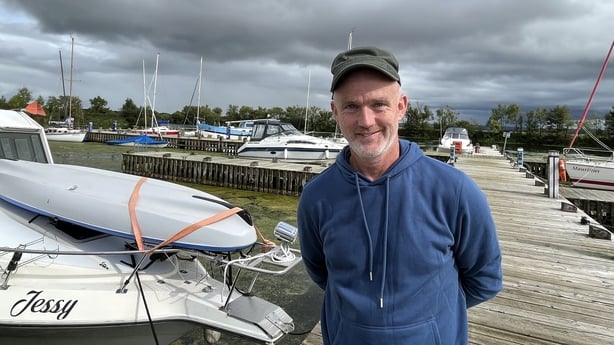
"I've been fishing in Lough Neagh since I was 14 years of age and my father before that, and my grandfather before that," he tells me.
"This was also our playground when we were growing up, we swam in it.
"We have worked on the lough, we've enjoyed the lough, we've taken from the lough. This lough is crying for help and right now as local people we need to be there for her."