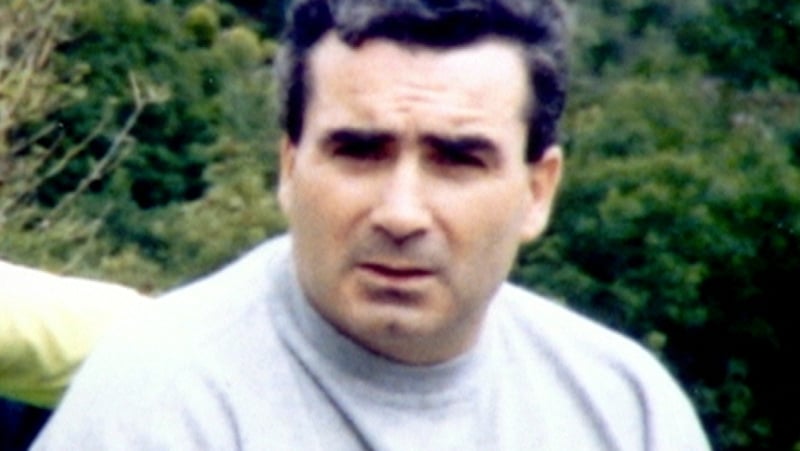

A report into the activities of a man believed to have been the highest-ranking British army agent within the IRA has moved a step closer after passing through security checking and cleared for publication without any changes or redactions.
It will present the findings of a six-year investigation codenamed Operation Kenova into the alleged activities of the agent known as 'Stakeknife'.
The agent is believed to have been west Belfast man Freddie Scappaticci, who died in April.
He was a former head of the IRA's notorious internal security unit, which tortured and murdered alleged informers.
Operation Kenova was established to investigate dozens of killings linked to him.
It examined whether there was evidence of the commission of criminal offences by the alleged agent including, but not limited to, murders, attempted murders or unlawful imprisonments attributed to the Provisional IRA.
Investigators also looked at whether there was evidence of criminal offences having been committed by his handlers within the British army and security services, the RUC or other British government personnel.
The investigation began in 2017 and around 300 witnesses were interviewed.
Jon Boutcher, the head of the investigation, said: "I am pleased to announce that the Kenova interim report has now passed national security checking with no changes or redactions.
"It has now been provided to the Public Prosecution Service of Northern Ireland (PPS NI) to assess whether the report is prejudicial to any possible future prosecutions.
"I anticipate this will be a relatively expeditious process and, once complete, will be able to provide a further update on the progress of the report to publication."
It is understood the report could be published in October.
The Operation Kenova team submitted 30 files to the PPS in 2019, but no decisions have yet been made about whether there will be any prosecutions.
Kenova has also taken on several other investigations and reviews since it was set up in 2016.
One of them is the murder of Co Louth father-of-seven, Tom Oliver in July 1991.
The farmer was abducted from his home on the Cooley Peninsula early on the morning of 19 July and his body was found the following day in the village of Belleeks, Co Armagh.
His family has strenuously denied claims by the IRA that he was a garda informer.
It is understood there is no evidence that Stakeknife was involved in the murder, but the Kenova team are investigating the possibility that he may have been targeted to protect the agent.
The Barnard Review is examining up to 120 murders by a group known as the Glenanne Gang, which operated in Co Armagh and included members of the UVF, British soldiers and police officers.
Operation Mizzenmast is looking at the murder of Jean Smyth-Campbell, a 24-year-old mother of one shot dead as she sat in a car in west Belfast in June 1972. It has been alleged that members of a covert British army unit were responsible.
Operation Turma is examining the murders of three RUC officers, Sgt Sean Quinn (37), and constables Allan McCloy (34) and Paul Hamilton (26), who were killed when a huge IRA landmine was detonated on a road just outside Lurgan in Co Armagh in 1982.
Those cases will be covered by separate reports at a later late.