


An Irish-speaking schoolgirl from Belfast has lost a High Court challenge to being conferred with British citizenship.
The teenager brought a case against the UK government, claiming the status was automatically imposed against her wishes in breach of human rights.
But a judge ruled that having British citizenship does not prejudice or restrict her from identifying as an Irish national.
Mr Justice Scoffield said: "She is effectively free to ignore it."
The girl, who is not being named, attends an Irish-medium school and speaks it as her first language.
She described herself as "fully immersed in all aspects of Irish national culture".
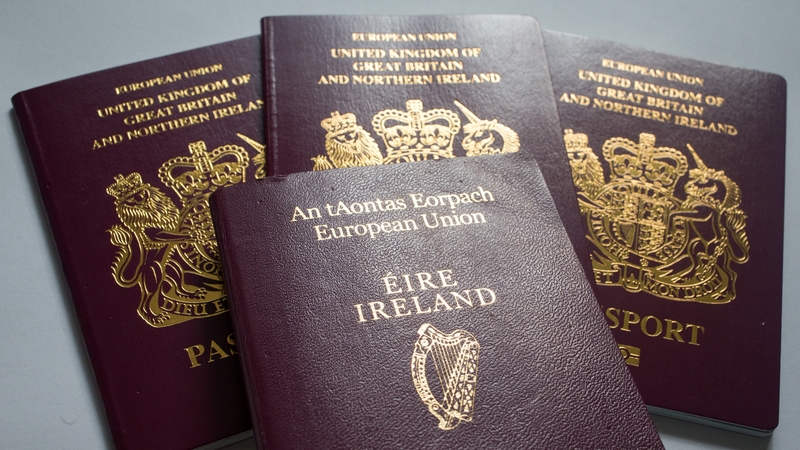
Despite being an Irish citizen and holding an Irish passport, British citizenship was also automatically conferred on her at birth.
That status can only be renounced at the age of 18, in a process that involves paying a £372 fee.
The teenager issued proceedings against British Home Secretary Priti Patel, alleging the provisions of the British Nationality Act 1981 with EU law and the 1998 Belfast Agreement.
Ruling on the challenge, the judge identified nothing to show the conferral imposed any impediment on her.
"She is an Irish citizen; and her additional British citizenship takes nothing away from this in terms of the rights, benefits and privileges which she enjoys as an Irish citizen," he said.
The Belfast Agreement recognises a preexisting birthright of people in Northern Ireland to view themselves as British only, Irish only, or as both, the court heard.
Mr Justice Scoffield also pointed out that she is not required to identify herself as British in everyday life.
Dismissing her bid to secure a judicial review, he said:
"No evidence has been presented in the course of this application as to any material prejudice or practical instance of detriment which has arisen for this applicant by virtue of her current British citizenship.
"That is, of course, not to call into question either her genuineness or strength of feeling on the matter on the basis of her own sense of identity."
