


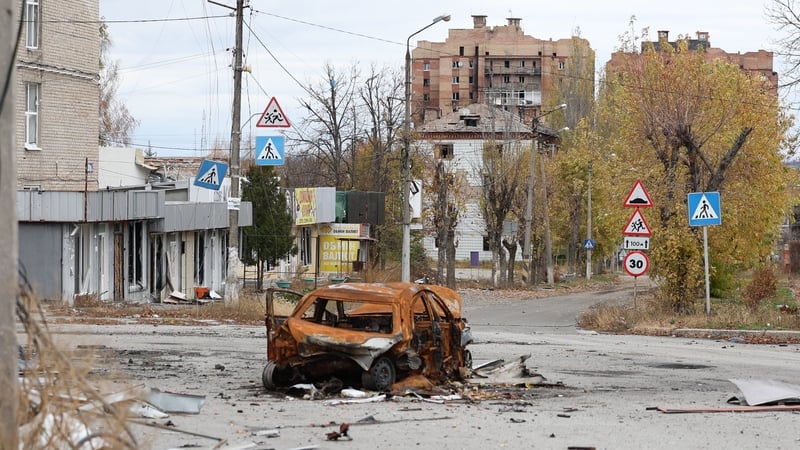
Russia has said its forces are tightening their encirclement of Ukrainian troops in the city of Pokrovsk, a transport and logistics hub they have been trying to capture for over a year.
With fighting raging in the streets of the ruined city, the Russian Defence Ministry said its soldiers had cleared 35 buildings of Ukrainian troops.
It said Russian forces were also squeezing surrounded Ukrainian troops near the town of Kupiansk in the Kharkiv region.
Reuters was unavailable to verify the battlefield reports. Ukraine has denied that its troops are encircled in either location.
DeepState, a Ukrainian project that maps the front line based on verified open source images, showed that Russian forces had pushed further into Pokrovsk and its environs, though it showed much of it still in grey, beyond firm control of either side.
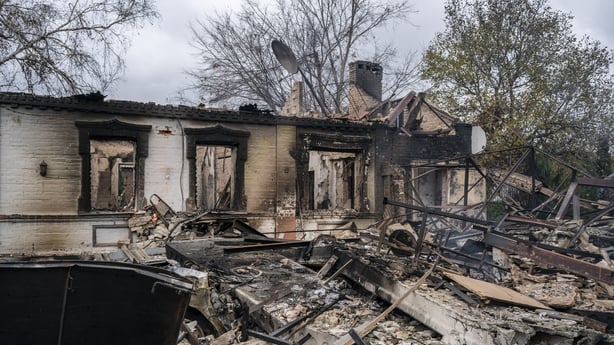
Pokrovsk had a pre-war population of some 60,000, but most civilians fled long ago. Capturing it could give Moscow a platform to drive towards Kramatorsk and Sloviansk, the two biggest remaining Ukrainian-controlled cities in the Donetsk region which Russia wants to capture in its entirety.
Ukrainian President Volodymyr Zelensky acknowledged yesterday that Pokrovsk was under severe pressure, but his military said Russian troops were not in full control of any district.
Russian military blogger Rybar said Moscow's control of the town was gradually expanding but "a complete clearing of the city is still far off".
Putin orders road map for Russian rare earths extraction
Russian President Vladimir Putin has ordered the Russian cabinet to draw up by 1 December a road map for the extraction of rare earth minerals.
In a list of tasks for ministers published on the Kremlin website, Mr Putin also ordered the cabinet to take measures to develop transport links at Russia's borders with China and North Korea.
Rare earths - used in smartphones, electric vehicles and weapons systems - have taken on vital strategic importance in international trade.
Russia says it is also interested in partnering with the US on rare earth projects, but prospects have been held up by a lack of progress towards ending the war in Ukraine.
China, the dominant producer of rare earths, has hit back at US tariffs this year by placing restrictions on their export.
Mr Putin's order - a summary of action points from a Far Eastern Economic Forum he attended in Vladivostok in September - did not go into detail about Russia's rare earths plan.
Among other points, he also instructed the government to develop "multimodal transport and logistics centres" on theChinese and North Korean borders.
Mr Putin said the locations should include two existing railway bridges linking Russia and China and a planned new bridge to North Korea which he said must be commissioned in 2026.
Both of Russia's far eastern neighbours have deepened economic ties with Moscow since Western countries imposed sanctions on it over its war in Ukraine.
