


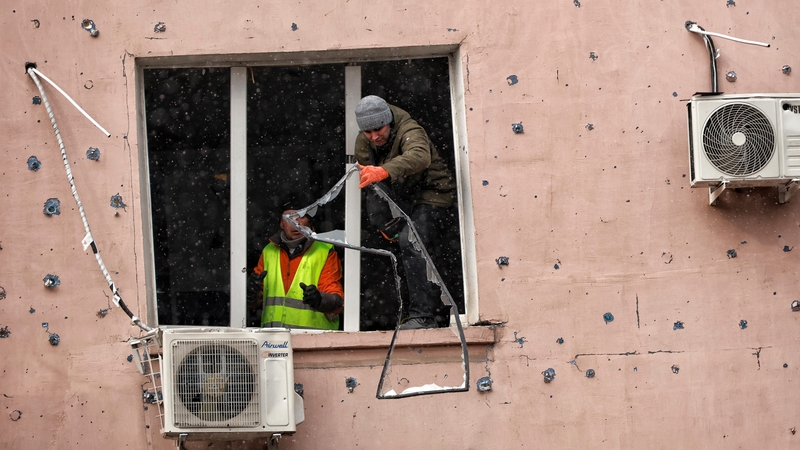
Russia launched 161 drones and a dozen missiles overnight, targeting gas infrastructure in Ukraine's northeastern Kharkiv region and hitting power supply in the southern Odesa region for a second night in a row, Ukrainian officials have said.
The attack was part of an intensified assault on Ukraine's energy system over the past month as Russia discusses ending its war in Ukraine with the new US administration of President Donald Trump, who has blamed Ukraine for Russia's invasion.
"The purpose of these criminal attacks is to stop the production of gas needed to meet the domestic needs of citizens and central heating," Ukraine's Energy Minister German Galushchenko said on Facebook.
The Ukrainian military said it shot down 80 drones and 78 were "lost," likely due to electronic countermeasures, adding that Russia also fired about 14 missiles aimed at what it called "critical infrastructure" in Kharkiv.
Ukraine's main gas production capacity, which covers almost half of Ukrainian gas needs, is in the frontline Kharkiv and neighbouring Poltava regions.
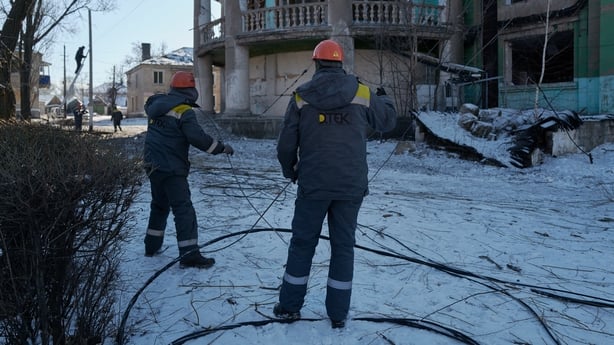
Russia previously focused its missile and drone attacks on Ukraine's electricity sector but has in recent months sharply stepped up its attacks on gas storage facilities and production fields.
Ukrainian state oil and gas firm Naftogaz said in a statement that its gas production facilities in several regions were damaged in the latest attack.
"The situation is under control, although very difficult," said Naftogaz CEO Roman Chumak.
Mr Chumak added that the company "is preparing for all possible scenarios and continues to import gas."
Ukraine's gas import volumes have increased almost tenfold since the start of February after Russian missile attacks targeting its gas facilities.
Data by the state-run operator of the Ukrainian gas transmission system showed imports totalling 22.20 million cubic metres (mcm) today against 25.80 mcm yesterday and a record high of 26.7 mcm on Tuesday.
In Odesa region, a "massive" drone attack injured one person and cut power to 5,000 local residents, prosecutors said on the Telegram messaging app.
It also damaged an administrative and a residential building as well as a private company's storage facility, they added.
Some 49,000 consumers remained without power this morning, Odesa regional governor Oleh Kiper said, adding that engineers had restored power to two boiler houses heating homes cut off by the previous attack, which affected 500 buildings.
Russia said its attacks on Ukraine's energy infrastructure are designed to undermine its military and that it does not deliberately target civilians, although thousands have been killed since Russia's invasion almost three years ago.
Read more:
Russia 'have the cards' in Ukraine peace talks - Trump
Latest Ukraine stories
Russia recaptures territory in Kursk region
It comes as a Russian military leader said that his forces have taken back more than 800sq/km of territory from Ukraine in the Kursk region of western Russia.
General Sergei Rudskoi said the area is about 64% of the total recaptured by Ukraine since its incursion began last year.
He told Krasnaya Zvezda newspaper that Russia is advancing in all directions and Ukraine has been pushed into a defensive stance since February 2024 amid a major Russian offensive that took back considerable territory.
General Rudskoi said that Russia now controls 75% of Ukraine's Donetsk, Zaporizhzhia and Kherson regions and more than 99% of the Luhansk area.
He claimed the four regions are now legally part of Russia and will never be returned to Ukraine.
Russia also controls Crimea - which it annexed in 2014 - as well as just under one fifth of Ukraine.
"Last year was a turning point in achieving our goals. The Kyiv regime will no longer be able to significantly change the situation on the battlefield," General Rudskoi said.
"The enemy has largely lost the ability to produce the necessary weapons, equipment and ammunition. Mobilisation is usually forced."
The future of the conflict, he added, no longer depends on Ukraine but on whether or not the west will agree to a new European security architecture that takes into account Russia's interests.
