


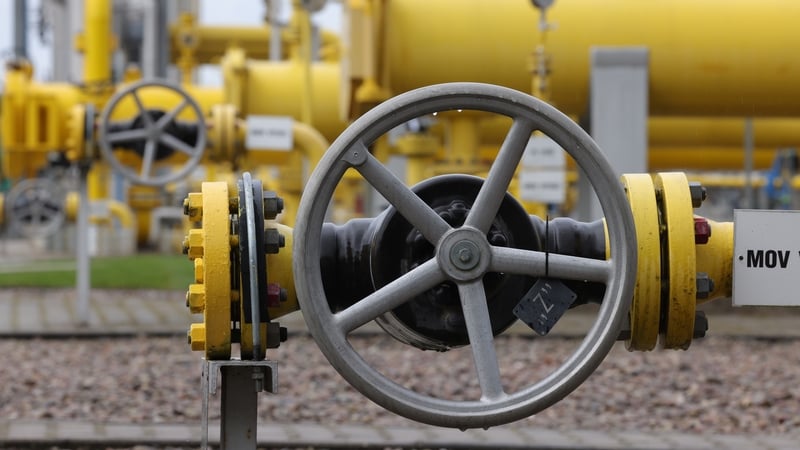
Russia's gas transit to Europe via Ukraine has stopped, both countries have said, ending a decades-long arrangement and marking the latest casualty of the war between the neighbours.
Russian gas has been supplied to Europe via pipelines crossing Ukraine since the end of the Soviet Union in 1991 in an arrangement that earned revenues for Moscow from the gas and for Kyiv from the transit fees.
The latest transit contract has now expired with Ukraine opting not to extend the deal following Russia's 2022 invasion.
Russian gas accounted for less than 10% of the European Union's gas imports in 2023 - down from more than 40% before the war.
But some EU members, mostly in the east, still depend heavily on Russian gas for geographical and political reasons.
"We have stopped the transit of Russian gas," Ukraine's Energy Minister German Galushchenko said in a statement, calling it "a historical event."
"Russia is losing its markets, it will suffer financial losses," he added
Russia's Gazprom energy giant said in a separate statement that "Russian gas has not been supplied for transit via Ukraine since 8am" (5am Irish time).
It said it had lost the "technical and legal right" to ship its gas across Ukraine to Europe.
European natural gas prices climbed above €50 per megawatt hour for the first time in over a year yesterday as buyers in Eastern Europe braced for the halt in supplies.
EU and NATO members Hungary and Slovakia have maintained close ties with Russia despite the invasion.
The halt in Russian gas transit through Ukraine will force some countries to dip deeper into their reserves and seek to import more liquefied natural gas (LNG).
Hungary is set to be largely unaffected by the move, as it receives most of its Russian gas via the Black Sea pipeline, an alternative route that bypasses Ukraine by running via Turkey and up through the Balkans.
Brussels has downplayed the impact the loss of Russian gas supply will have on the 27-member bloc.
"The Commission has been working for more than a year specifically on preparing for a scenario without Russian gas transiting via Ukraine," it said.
Meanwhile, Russia launched a drone strike on the Ukrainian capital Kyiv early this morning, killing one person, wounding six others and damaging buildings in two districts, city officials said.
Explosions boomed across the morning sky as Ukraine's air force warned of drones approaching the city and Mayor Vitali Klitschko said air defences were repelling an enemy attack.
Two floors of a residential building were partially destroyed in the strike, Mr Klitschko said.
Photos posted by the State Emergency Service showed firefighters dousing a gutted corner of a building and helping elderly victims.
Debris from downed drones also damaged a non-residential building in another neighbourhood, Mr Klitschko added.
"This is yet another reminder to the world that Russian aggression knows no holidays or days off," Yulia Svyrydenko, Ukraine's first deputy prime minister, wrote on X shortly after the morning attack.
Ukraine's military said it had shot down 63 out of 111 drones launched by Russia overnight across various regions of Ukraine. Another 46 had been downed by electronic jamming, it added.
Russia has carried out regular air strikes on Ukrainian towns and cities far behind the front line of its nearly three-year-old invasion.
