


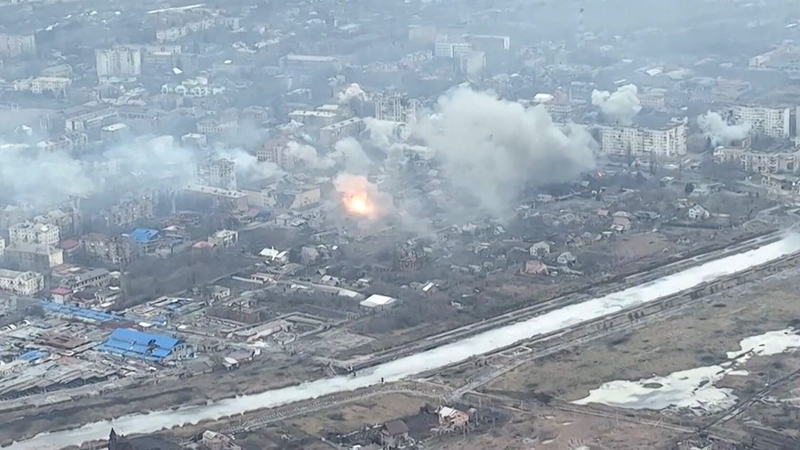
The battle for Bakhmut in eastern Ukraine has been one of the deadliest since Russia invaded, but the city's capture would have mostly symbolic value, analysts say.
Here is an overview:
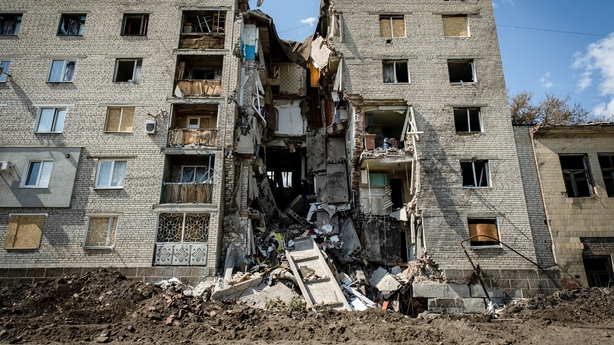
Devastated by fighting
Bakhmut, a small industrial city in eastern Ukraine known for its salt mines, used to be home to some 70,000 inhabitants before troops sent by President Vladimir Putin invaded the country on 24 February last year.
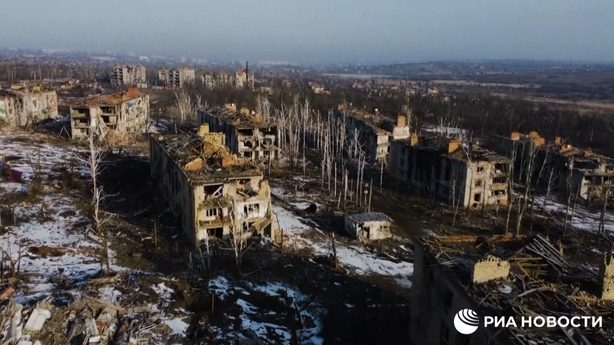
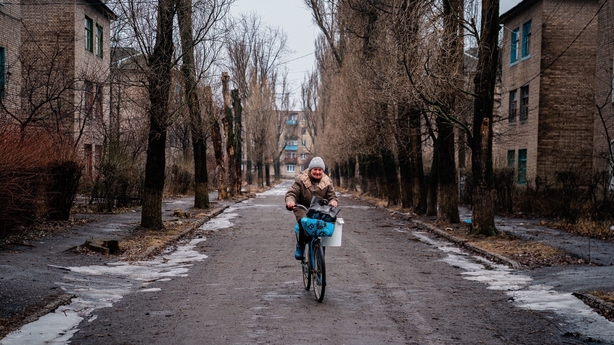
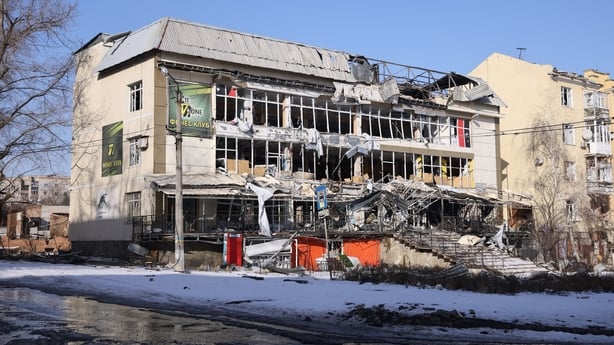
Months of artillery fire largely reduced the city to rubble and forced most of its residents to flee. Those remaining were forced to hide in basements, only venturing out for essential food and fuel.
On the frontline, Moscow and the Wagner mercenary group sent wave after wave of ill-prepared recruits to their death, Ukrainian soldiers say, describing them as "cannon fodder".
Many soldiers are also believed to have died on the Ukrainian side. Western sources estimate that hundreds each day were wounded or lost their lives.
The violence moreover caused casualties among the few thousand civilians remaining in the city, and the Ukrainian and foreign volunteers risked their lives to help them.
No strategic importance
But the city is of little to no strategic importance, analysts say.
Ukraine's President Volodymyr Zelensky said so himself in an interview with French newspaper Le Figaro published in early February.
"Strategically, Bakhmut is of little importance as the Russians have entirely destroyed the city with their artillery," he said.
Retired Australian major general Mick Ryan, of the US-based Center for Strategic and International Studies, said Bakhmut was "not an inherently valuable military target".
"The battle of Bakhmut ... has absorbed massive military and human resources," he said.
"This investment is out of all proportion to the importance of the city."
Belgian military analyst Joseph Henrotin said the city had become a fixation for both sides, but had only served to "mutually degrade their potential".
"Since December, the Russians have been trying to whittle down Ukrainian capacity by forcing them to deploy forces all over the place and preventing them from concentrating in one area to enable a breakthrough," he said.
But "Bakhmut is just one piece of the puzzle. Its fall will mean nothing if other positions hold".
Its capture could possibly allow the Russians to try to advance westwards towards Kramatorsk, but that city was well defended, he added.
Symbolic struggle
As the fighting ground on in Bakhmut, it acquired symbolic significance for both sides.
Mr Zelensky in December visited the city he calls "Fortress Bakhmut".
Wagner chief Yevgeny Prigozhin made seizing the city an almost personal goal, as it would prove the worth of his mercenaries.
Ryan, the retired Australian major general, said the losses suffered in the fight for the city had "invested Bakhmut with political importance".
Its capture represented "a desperately needed victory for Putin and his army," he said.
Thibault Fouillet, of the France-based Foundation for Strategic Research, said the city was "a real symbol - for the Ukrainians and Russians alike".
For Moscow, capturing it would be "the first declared victory" since Ukrainian counter-offensives in the autumn that ousted Russian troops from the southern city of Kherson, he said.
"But some things that were once touted as major turning points in the war are not as much. And I think we will swiftly move on to something else", he added.
The aftermath of victory in Bakhmut will remain a struggle for the Russian army, said Ryan.
Ukrainian forces will have had time to establish defensive positions, which meant "an uphill battle for the Russians".
Russian rivalries
The battle for Bakhmut has become part of rivalries in Russia between the defence ministry and Wagner's chief Prigozhin, who is eager to gain political stature in Moscow.
Late last month, Prigozhin slammed Moscow's "monstrous bureaucracy" for slowing military gains in the embattled city.
Tatiana Stanovaya, a Russian researcher at the Carnegie Endowment for International Peace, said the war in Ukraine had allowed Prigozhin to dream big.
"Putin sees Wagner as a hidden force who should work for the state's interest," she said.
"But Prigozhin has a problem to fit in the small place Putin has for him. He thinks the Kremlin should rely more on Wagner and give him a larger mandate."
Even if he so far has not directly challenged the Russian president, "Prigozhin is a player, a very visible one," she said.
"With the Ukraine war he has gained the public attention and he has liked it," she said.
Tensions between him and the defence ministry would further rise, she predicted.
Read more on Russia's invasion of Ukraine
