


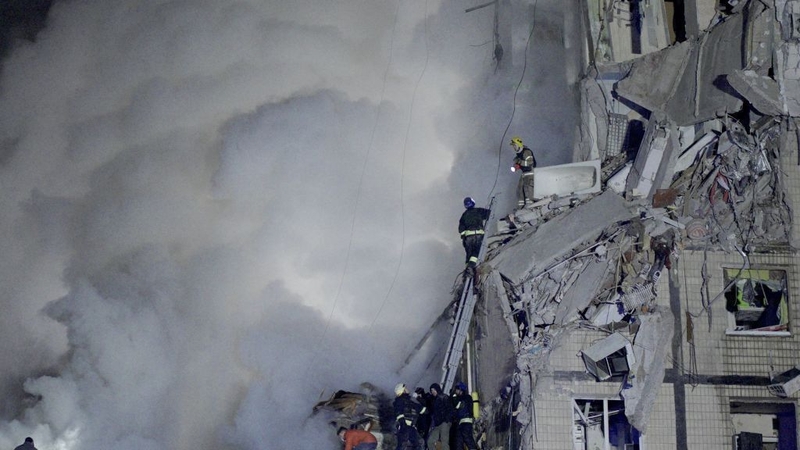
A strike on a residential building in the eastern Ukrainian city of Dnipro has left at least five dead and 27 injured, officials have said, while the president blasted Russian "terror".
"There are already five dead," Dnipropetrovsk governor Valentyn Reznichenko said on messaging app Telegram, where he posted a photo of an apartment block reduced to ruins.
He added that "27 people were wounded. Among them are six children. All are in hospital."
The strike hit the entrance of a nine-storey building, turning several floors into smouldering rubble.
We need your consent to load this rte-player contentWe use rte-player to manage extra content that can set cookies on your device and collect data about your activity. Please review their details and accept them to load the content.Manage Preferences
"Eternal memory to all whose lives were taken by Russian terror! The world must stop this evil," Ukrainian president Volodymyr Zelensky reacted on social media.
"Debris clearance in Dnipro continues... we are fighting for every person, every life," Mr Zelensky added.
Ukrainians were celebrating the Old New Year on Saturday, a popular holiday on the eve of which kids traditionally are given sweets.
Russia has fired a second wave of missiles at Ukraine, forcing people to take cover as sirens blared across the country just hours after morning air strikes that hit critical infrastructure in Kyiv and the eastern city of Kharkiv.
Authorities in Mykolaiv, the western city of Lviv and the Black Sea port of Odesa said air defences were trying to shoot down incoming missiles. Explosions were heard in the central Vynnytsa region, Ukrainian public broadcaster Suspilne reported.
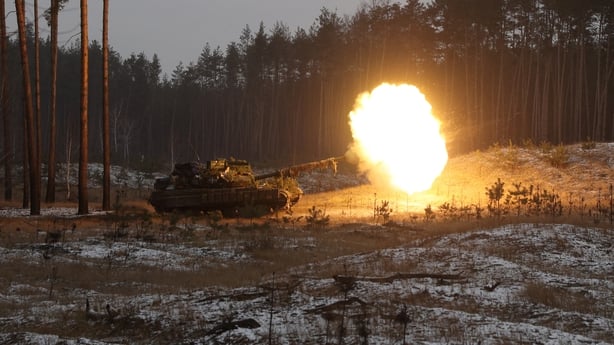
Moscow, which invaded last February, has been pounding Ukraine's energy infrastructure with missiles and drones since October, causing sweeping blackouts and disruptions to central heating and running water as winter bites.
The second attack today came hours after Reuters journalists heard a series of blasts in Kyiv in the morning, before the air raid siren even sounded, which is highly unusual.
The extent of any damage or casualties in the second wave was not yet clear.
No one was reported hurt following the first wave, but missile debris caused a fire in one place and houses were damaged outside the capital, officials said.
"An infrastructure facility was hit. No critical damage or fire. All emergency services are working at the site. No one is wounded," Kyiv's military administration said in a statement.
Ukrenergo, which runs the power grid, said its workers are racing to fix the damage and that the network is grappling with a power deficit caused by earlier attacks, even though it was -2C in Kyiv, only considered mildly cold.
DTEK, the biggest private electricity company, introduced emergency blackouts in Kyiv, the Kyiv region and Odesa region.
Kyiv's mayor said the debris of a missile came down on a non-residential area in the Holosiivskiy district in the west of Kyiv, causing a fire but hurting no one.
Read more on Russia's invasion of Ukraine
Residential infrastructure was also hit in the village of Kopyliv in the region just outside the capital. The windows and roofs of 18 privately owned houses were shattered or damaged by the blast, Oleksiy Kuleba, the regional governor, said.
Air Force spokesperson Yuriy Ihnat said Russia's missiles had likely been fired along a high, looping ballistic trajectory from the north, which would explain why the air raid siren did not sound.
Ukraine is not able to identify and shoot down ballistic missiles, he told the Ukrainska Pravda online outlet.
Missiles strike Kharkiv
In Ukraine's northeast, Oleg Synehubov, Kharkiv's regional governor, said two S-300 missiles struck the city near the Russian border early this morning.
The attacks hit critical energy infrastructure and industrial facilities in the Kharkiv and Chuhuev district of the region, he said.
"Our emergency services units and energy workers are working to liquidate the consequences and stabilise the situation with energy supplies," he said.
The strikes came as Ukrainian and Russian forces battled for control of Soledar, a small salt-mining town in eastern Ukraine that for days has been the focus of a relentless Russian assault.
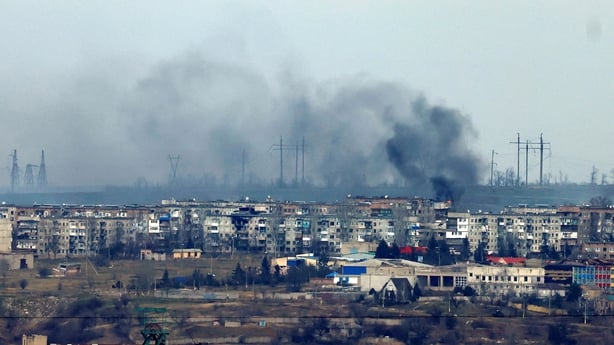
Russia said yesterday that its forces had taken control of Soledar, in what would be a rare success for Moscow after months of battlefield reverses, but Kyiv said its troops were still fighting in the town.
Reuters could not immediately verify the situation in Soledar.
UK to provide tanks
British Prime Minister Rishi Sunak has pledged to provide heavy tanks to Ukraine to help Kyiv's forces "push Russian troops back".
Mr Sunak made the pledge to supply the tanks and additional artillery systems as a sign of the UK's "ambition to intensify our support to Ukraine", according to a readout of a phone call with Ukrainian President Volodymyr Zelensky.
The move makes the UK the first Western power to supply the Ukrainians with main battle tanks.
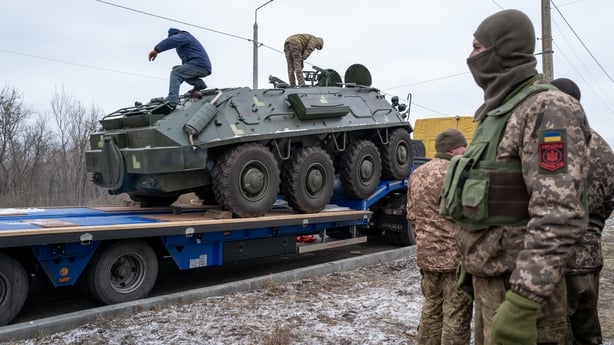
Ukraine's European allies have sent Kyiv more than 300 modernised Soviet tanks since Russia invaded in February 2022.
But they have so far held off on dispatching the Western-made heavy tanks that Ukraine has repeatedly requested to push forward against Russian invaders.
Always strong support of the UK is now impenetrable and ready for challenges. In a conversation with the Prime Minister, @RishiSunak, I thanked for the decisions that will not only strengthen us on the battlefield, but also send the right signal to other partners.
— Володимир Зеленський (@ZelenskyyUa) January 14, 2023
France said on 4 January it would supply Kyiv with the French-made AMX-10 RC -- a light tank model.
Poland on Wednesday said it was willing to send Kyiv 14 advanced Leopard 2 battle tanks as part of an international coalition.
Mr Zelensky thanked the UK on Twitter for making decisions that "will not only strengthen us on the battlefield, but also send the right signal to other partners".
Mr Sunak's formal offer follows reports that he was preparing to sign off on sending four British Army Challenger 2 main battle tanks to eastern Europe immediately, with eight more to follow shortly afterwards.
The prime minister's office has not yet confirmed the exact numbers of tanks it will send to Kyiv.
A Downing Street spokesman said the two men agreed on the "need to seize on this moment" after Ukrainian victories had "pushed Russian troops back".
