


Russia retaliated against a price cap on its oil imposed by Western countries, while its forces were involved in heavy fighting around the eastern Ukrainian city of Bakhmut today.
Russia will ban oil sales to countries that abide by the price cap that was imposed on 5 December, President Vladimir Putin decreed.
The price cap, unseen even in the times of the Cold War between the West and the Soviet Union, is aimed at crippling Moscow's military efforts in Ukraine - without upsetting markets by actually blocking Russian supply.
Under the cap, oil traders who want to retain access to Western financing for such crucial aspects of global shipping as insurance must promise not to pay above $60 per barrel for Russian seaborne oil.
That is close to the current price for Russian oil, but far below the prices at which Russia was able to sell it for much of the past year, when windfall energy profits helped Moscow offset the impact of financial sanctions.
The decree from Mr Putin, published on a government portal and the Kremlin website, was presented as a direct response to "actions that are unfriendly and contradictory to international law by the United States and foreign states and international organisations joining them".
The Kremlin ban would halt crude oil sales to countries participating in the price cap from 1 February to 1 July, 2023. A separate ban on refined oil products such as gasoline and diesel would take effect on a date to be set by the government.
Mr Putin would have authority to overrule the measures in special cases.
Russia is the world's second largest oil exporter after Saudi Arabia, and any actual disruption to its sales would have far-reaching consequences for global energy supplies.
According to Finance Minister Anton Siluanov, Russia's budget deficit could be wider than the planned 2% of GDP in 2023 as the oil price cap squeezes Russia's export income - an extra fiscal hurdle for Moscow as it spends heavily on its military campaign in Ukraine.
Some analysts have said that the cap will have little immediate impact on the oil revenues that Moscow is earning, as the price for Russian oil has already fallen close to it. But it could limit Moscow's ability to profit from future price shocks.
Ghost town
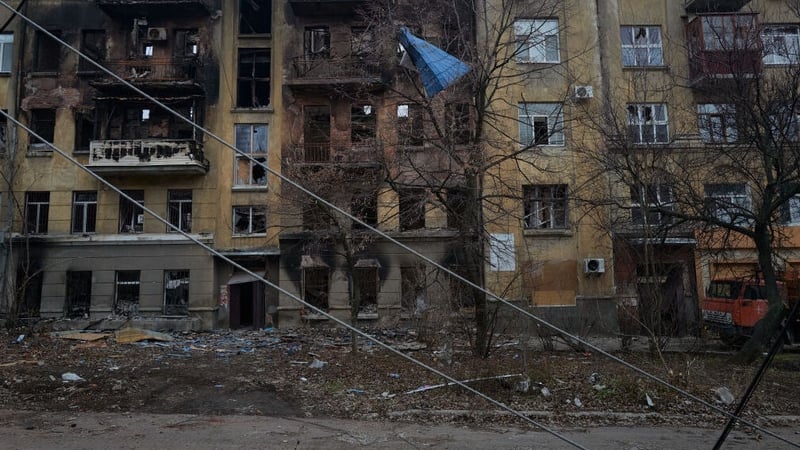
Russian forces shelled and bombed towns and cities in eastern and southern Ukraine again on Tuesday. After a number of dramatic Ukrainian gains in the autumn, the war has entered a slow, grinding phase as bitter winter weather has set in at the front.
The heaviest fighting has been around the eastern city of Bakhmut, which Russia has been trying for months to storm at huge cost in lives, and further north in the cities of Svatove and Kreminna, where Ukraine is trying to break Russian defensive lines.
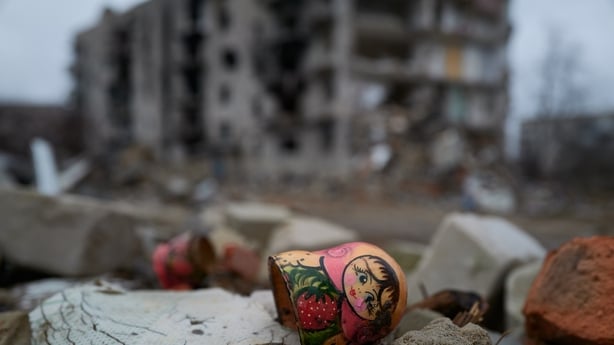
In Bakhmut, home to 70,000 people before the war and now mostly a bomb-wracked ghost town, Reuters reporters saw fires burning in a large residential building, while debris littered the streets and most buildings had had their windows blown out.
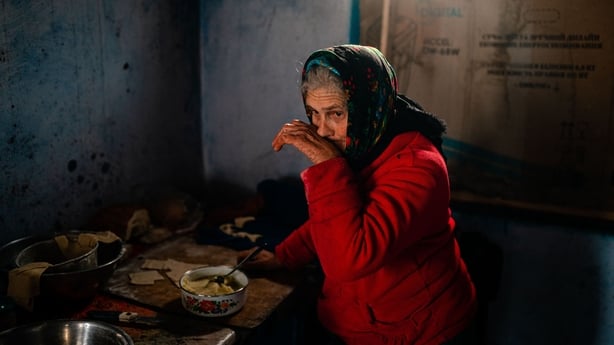
"Our building is destroyed. There was a shop in our building, now it's not there anymore," said Oleksandr, 85, adding he was the only remaining resident there.
Nearby, 73-year-old Pilaheia said she had long got used to the "constant explosions".
Britain's Ministry of Defence said in an update: "Russia continues to initiate frequent small-scale assaults in these areas (of Bakhmut and Svatove), although little territory has changed hands."
Putin has repeatedly spoken of a desire for peace talks in comments in recent days. But his foreign minister Sergei Lavrov made clear Moscow still has a list of preconditions, including that Ukraine recognise Russia's conquest by force of around a fifth of Ukrainian territory, which it says it has annexed.
Kyiv says it is winning the war and will never agree to relinquish its land.
TASS news agency quoted Lavrov as saying late on Monday: "Our proposals for the demilitarisation and denasification of the territories controlled by the regime, the elimination of threats to Russia's security emanating from there, including our new lands, are well known to the enemy.
"The point is simple: Fulfil them for your own good. Otherwise, the issue will be decided by the Russian army."
Ukrainian President Volodymyr Zelensky said that as a result of attacks on Ukraine's energy infrastructure nearly nine million people were currently without power - equal to about a quarter of the country's population.
Russia has openly been targeting Ukrainian energy infrastructure with missiles and drones since October, in what Kyiv says are strikes with no conceivable military purpose solely designed to harm civilians. Moscow says the aim is to reduce Ukraine's ability to fight.
What had been intended as a campaign to subdue Ukraine within days has been a military fiasco for the Kremlin, whose forces were defeated on the outskirts of Kyiv in the spring and forced to flee other areas in the autumn.
Mr Putin has responded by summoning hundreds of thousands of reservists for the first time since World War Two to fight in his "special military operation".
In the latest humiliating setback for Russia's military, a suspected Ukrainian drone reached the main base for Russia's long-range strategic bomber fleet, hundreds of kms inside Russian air space, yesterday. Moscow said it had shot the drone down but acknowledged at least three servicemen were killed.
It was the second time the base had been hit since the start of December, a sign that Russia has yet to plug the gap in its air defences that made the audacious attack possible.
Mr Putin has repeatedly spoken of a desire for peace talks in comments in recent days. But his foreign minister Sergei Lavrov made clear Moscow still has a list of preconditions, including that Ukraine recognise Russia's conquest by force of around a fifth of Ukrainian territory, which it says it has annexed.
Kyiv says it is winning the war and will never agree to relinquish land.
In a late night address, Mr Zelensky said a meeting of the military command had "established the steps to be taken in the near future."
"We will continue preparing the armed forces and Ukraine's security for next year. This will be a decisive year. We understand the risks of winter. We understand what needs to be done in the spring," he said.
Meanwhile Italy's government has pledged its support for Kyiv and reiterated its commitment to achieving a "just peace" for Ukraine, it said in a statement following a phone call between Prime Minister Giorgia Meloni and Ukrainian President Volodymyr Zelensky.
"(Prime Minister) Meloni renewed the Italian government's full support for Kyiv in the political, military, economic and humanitarian fields, to repair energy infrastructure and (to work) for the future reconstruction of Ukraine", the statement said.
Thanked @GiorgiaMeloni for solidarity and comprehensive support for 🇺🇦. Commended 🇮🇹 government's allocation of additional €10 million in aid. Mrs. Meloni informed that the issue of providing air defense systems to protect 🇺🇦 skies is being considered. We discussed #PeaceFormula
— Володимир Зеленський (@ZelenskyyUa) December 27, 2022
Last week in his address to a group of Western leaders, the Ukrainian leader asked for a wide range of weapons and air defence systems to help efforts to counter the Russian invasion.
The US and its allies have imposed sweeping sanctions on Russia for its invasion and sent billions of dollars in assistance to the Ukrainian government.
During Mr Zelensky's visit to Washington, the US announced another $1.85bln in military assistance for Ukraine, including a transfer of the Patriot Air Defense System, angering Moscow.
"It is no secret to anyone that the strategic goal of the United States and its NATO allies is to defeat Russia on the battlefield as a mechanism for significantly weakening or even destroying our country," Mr Lavrov further told TASS.
While Moscow had planned a swift operation to take over its neighbour, the war is now in its 11th month, marked by many embarrassing Russian battlefield setbacks.
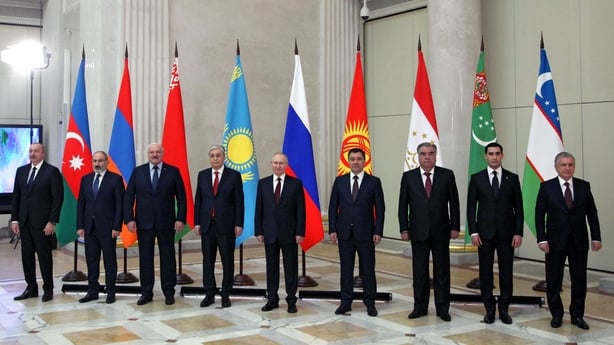
Mr Putin hosted leaders of other former Soviet states in St Petersburg yesterday for a summit of the Commonwealth of Independent States group, which Ukraine has long since quit.
The invasion of Ukraine has been a test of Russia's longstanding authority among other ex-Soviet states.
In televised remarks, Mr Putin made no direct reference to the war, while saying threats to the security and stability of the Eurasian region were increasing.
"Unfortunately challenges and threats in this area, especially from the outside, are only growing each year," he said.
"We also have to acknowledge unfortunately that disagreements also arise between member states of the commonwealth."
