


US intelligence expects the reduced tempo in fighting in Ukraine to continue in the next several months and sees no evidence of a reduced Ukrainian will to resist, despite attacks on its power grid and other critical winter infrastructure, the Director of National Intelligence has said.
"We're seeing a kind of a reduced tempo already of the conflict ... and we expect that's likely to be what we see in the coming months," Avril Haines told the annual Reagan National Defense Forum in California.
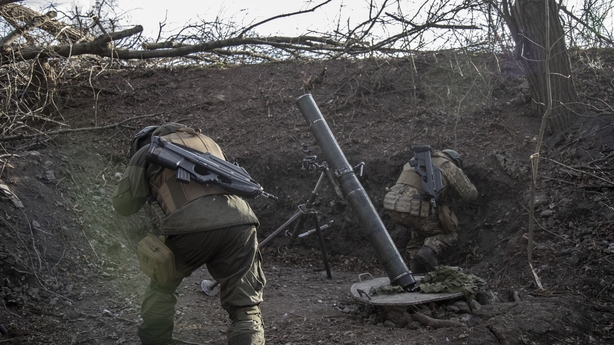
She said both the Ukrainian and Russian militaries would be looking to try to refit and resupply to prepare for a counter-offensive after the winter, but there was a question as to what that would look like.
She added: "We actually have a fair amount of scepticism as to whether or not the Russians will be in fact prepared to do that. I think more optimistically for the Ukrainians in that timeframe."
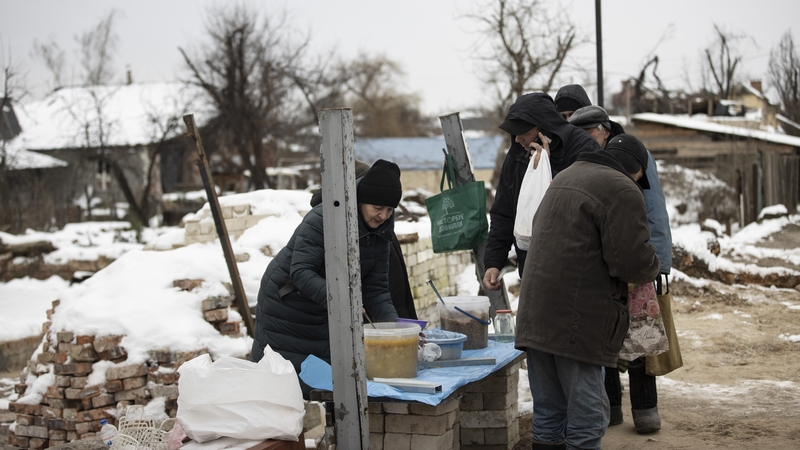
Asked about the effects of Russian attacks on Ukraine's power grid and other civilian infrastructure, Ms Haines said Russia's aim was partly to undermine the will of Ukrainians to resist, and added: "I think we're not seeing any evidence of that being undermined right now at this point."
She said Russia was also looking to affect Ukraine's capacity to prosecute conflict and that Kyiv's economy had been suffering very badly.
"It can over time, obviously, have an impact. How much of an impact will be dependent on how much they go after, what they're capable of doing, the resilience of that critical infrastructure, our capacity to help them defend it.
"Ukraine's economy is suffering very badly. It's been devastating, and ... obviously taking down the grid will have an impact on that as well."
Ms Haines said she thought Russian President Vladimir Putin had been surprised that his military had not accomplished more.
"I do think he is becoming more informed of the challenges that the military faces in Russia. But it's still not clear to us that he has a full picture at this stage of just how challenged they are ... we see shortages of ammunition, for morale, supply issues, logistics, a whole series of concerns that they're facing."
She said Mr Putin's political objectives in Ukraine did not appear to have changed, but US intelligence analysts thought he may be willing to scale back his near-term military objectives "on a temporary basis with the idea that he might then come back at this issue at a later time".
She said Russia appeared to be using up its military stockpiles "quite quickly."
"It's really pretty extraordinary, and our own sense is that they are not capable of indigenously producing what they are expending at this stage," she said.
"That's why you see them going to other countries effectively to try to get ammunition ... and we've indicated that their precision munitions are running out much faster in many respects."
Ms Haines said the United States had "seen some movement" in supplies of munitions from North Korea, "but it's not been a lot at this stage."
She said Iran had supplied Russia with drones and Moscow was looking for other types of precision munitions from Tehran, something that would be "very concerning in terms of their capacity."
We need your consent to load this rte-player contentWe use rte-player to manage extra content that can set cookies on your device and collect data about your activity. Please review their details and accept them to load the content.Manage Preferences
Russia will not export oil subject to price cap
Meanwhile Russia, the world's second largest oil exporter, will not sell oil that is subject to a Western price cap even if it has to cut production, President Vladimir Putin's chief official on energy said.
The Group of Seven and Australia on Friday agreed a $60 per barrel price cap on Russian seaborne crude oil after European Union members overcame resistance from Poland.
The move by the West to prohibit shipping, insurance and re-insurance companies from handling cargoes of Russian crude above the cap, is an attempt to punish Putin for the Ukraine conflict.
Russian Deputy Prime Minister Alexander Novak said the move by the West was a gross interference which contradicted the rules of free trade and would destabilise global energy markets by triggering a shortage of supply.
"We are working on mechanisms to prohibit the use of a price cap instrument, regardless of what level is set, because such interference could further destabilise the market," said Mr Novak, who is the Russian government official in charge of the country's oil, gas, atomic energy and coal.
"We will sell oil and petroleum products only to those countries that will work with us under market conditions, even if we have to reduce production a little," he added.
Novak said the Western cap could trigger trouble in the products markets and could affect other countries beside Russia.

'No diplomatic solution' to Ukraine war
There is no prospect of a negotiated end to the war in Ukraine, according to Irina Scherbakova, one of the co-founders of the Nobel Peace Prize-winning Russian rights organisation Memorial.
"I am absolutely convinced that there is not a diplomatic solution with Putin's regime, so long as it is still there," Ms Scherbakova said today in Hamburg, Germany.
Her comments came as she was presented with another award for her years of work cataloguing Stalinist-era crimes and campaigning on rights issues in her home country.
German Chancellor Olaf Scholz handed over the Marion Doenhoff Prize to Scherbakova, praising her as an ally in the fight for a "peaceful, free and democratic future for Europe".
Ms Scherbakova's accolades come after Russia's invasion of Ukraine means those aims seem further away than ever.
Her lack of hope for a diplomatic solution was a "tragic message", Ms Scherbakova said.
"The solution (to the conflict) that there will now be is a military one," she said.
Diplomacy would ultimately play a role in resolving the conflict, she predicted. "But these decisions, this diplomacy will only happen when Ukraine believes it has won this war and can set its terms," she said.
Hasty calls for peace were "childish", she said, adding that things would not return to the way they were before the outbreak of the conflict.
"This war has turned so many things upside down, it will never be like that again," she said.
