


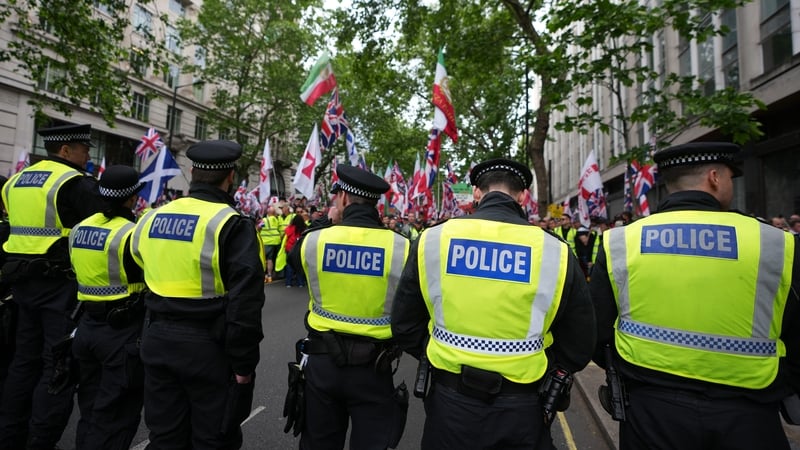
Thousands of people have descended on London for two major demonstrations amid a major police operation.
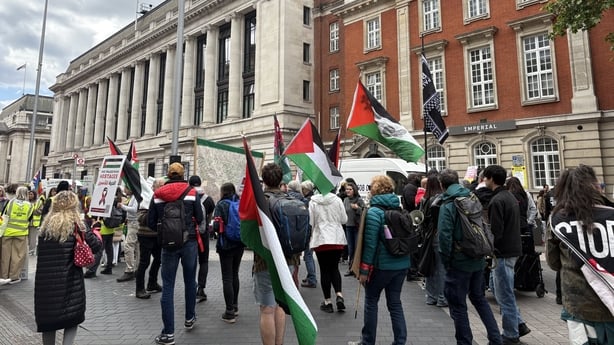
Police have estimated about 50,000 people are set to attend Tommy Robinson's Unite the Kingdom march, while 30,000 are expected to go to the pro-Palestine Nakba Day rally.
Armoured vehicles, police horses, dogs, drones and helicopters will be deployed along with around 4,000 officers on duty as the Met aims to avoid clashes between the two rallies.
Mr Robinson posted on X this morning saying "today, we Unite The Kingdom and the West in the greatest patriotic display the world has ever seen".
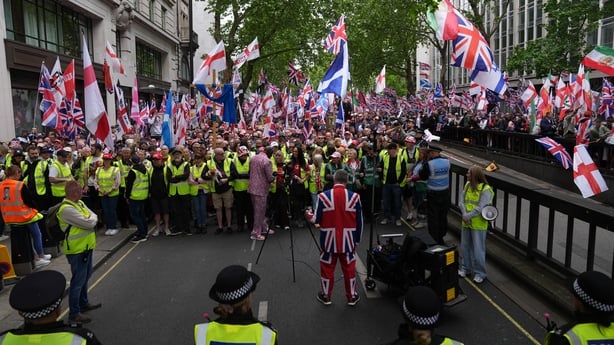
Meanwhile, Daniel Kebede, National Education Union general secretary, said "we're marching today to show that we will not allow Tommy Robinson and the far right to divide our communities".
Sabby Dhalu, Stand Up To Racism co-convener, said: "Violence broke out the last time Tommy Robinson's Unite the Kingdom demonstration mobilised what was one of the largest far-right street demonstrations in recent British history.
"This comes amid wider attempts by figures such as Elon Musk to amplify far-right narratives and encourage political instability.
"The far right is attempting to exploit the cost-of-living crisis by stirring up racism and falsely blaming migrants and refugees for people's hardships in order to build a dangerous street movement.
"History shows where this kind of politics can lead.
"That is why tens of thousands of people will mobilise today to oppose racism and the far right, and to demonstrate that the overwhelming majority of people in Britain reject hate and division."
Prosecutors have been told to consider whether protest placards, banners and chants viewed on social media may amount to offences of stirring up hatred during the rallies.
The new guidance, issued before what police have described as an "unprecedented" security operation, urges prosecutors to assess whether slogans, symbols or chants may influence audiences online if they are filmed and shared.
The Crown Prosecution Service (CPS) said the revised advice is designed to reflect "the changing international context" and follows separate guidance concerning the fast-tracking of hate crime prosecutions issued earlier this month.
The guidance tells prosecutors to take account of the wider context surrounding protests, including heightened tensions linked to national or international events.
Recent criminal cases have seen suspects charged after shouting "death to the IDF (Israel Defence Forces)" and "globalise the intifada".
The British government has also blocked 11 foreign nationals described by Prime Minister Keir Starmer as "far-right agitators" from entering the UK ahead of the Unite the Kingdom rally.
Right-wing figures claiming to have been barred include Polish politician Dominik Tarczynski, Belgian politician Filip Dewinter, anti-Islam commentator Valentina Gomez and Dutch activist Eva Vlaardingerbroek.
For the first time under official protest restrictions, organisers of the rallies will face prosecution as well as any speakers who break the law by using the events as a platform for extremism or hate speech.
Live facial recognition will be used for the first time in a protest policing operation, with cameras set up in an area of Camden that is not on the route of the Unite the Kingdom march, but is expected to be used by a lot of people attending the event.
