


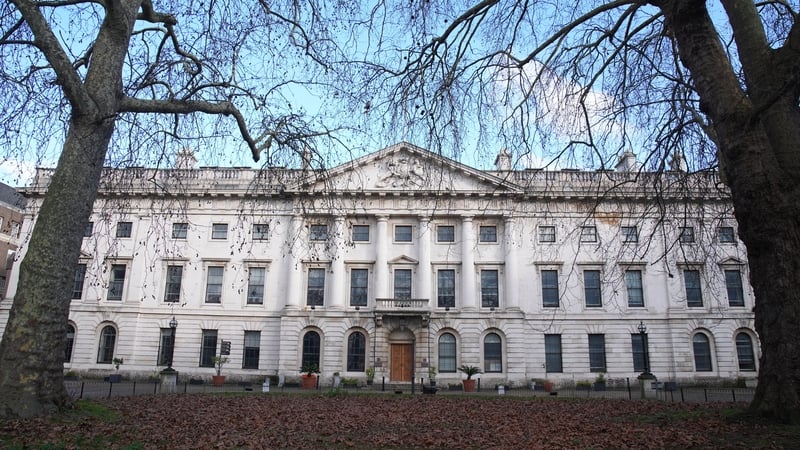
British government ministers have approved a new Chinese embassy in London despite intelligence agencies saying they cannot eliminate the risks to national security.
Local Government Secretary Steve Reed approved plans for the building at Royal Mint Court, near the Tower of London, today.
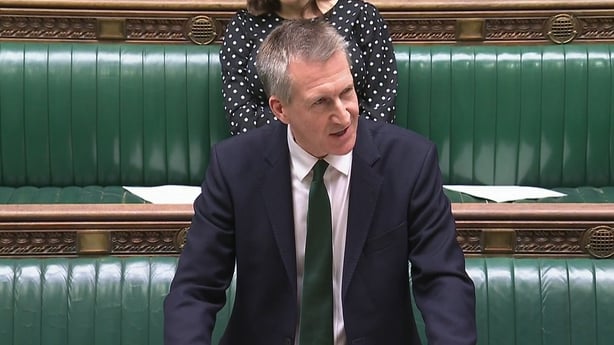
British Security Minister Dan Jarvis told MPs he was "assured that the UK national security is protected" and any risks posed by the new embassy were being "appropriately managed".
And the heads of MI5 and the UK's Government Communications Headquarters said intelligence agencies had created a "package of national security mitigations" for the embassy.
But, in a letter to the British foreign and home secretaries, they acknowledged it was "not realistic to expect to be able wholly to eliminate" national security risks posed by foreign embassies, including the new Chinese mission.
The decision came at the end of a long-running campaign against the proposals, which campaigners and MPs have said would provide a base for Chinese spying and security crackdowns.
MPs and peers on the Labour-led Joint Committee on the National Security Strategy had urged ministers to reject the plans, warning the embassy, the biggest in Europe, would "create a hub for expanded intelligence-gathering and intimidation operations".
Iain Duncan Smith, a Conservative MP who has been sanctioned by China, said: "At a time when the Chinese Communist Party is intensifying its intimidation of Britain, this decision sends entirely the wrong message."
And Christopher Mung, a former Hong Kong district councillor who fled to Britain in 2021, said the decision would "enable" Chinese efforts to repress Hongkongers and others abroad.
He said: "I feel betrayed by the UK government."
Despite these concerns, the British government said the risks could be managed, and Mr Jarvis told MPs there were "national security advantages" to the plans, which will consolidate seven Chinese diplomatic buildings into one site.
His conclusions were partially supported by Parliament's Intelligence and Security Committee, which said in a statement that security concerns "can be satisfactorily mitigated".
But the committee, which oversees Britain's intelligence agencies, said China continued to target the UK and its interests "prolifically and aggressively", and criticised the government's process for evaluating security concerns as it weighed up whether to approve the new embassy.
David Alton, a member of the Interparliamentary Alliance on China (Ipac), told a press conference in Westminster he was "not persuaded" that the risks could be managed.
He said: "How do you manage people like the spies who have been operating across Parliament? How do you manage people who are working in espionage?
"I think unfortunately there is an expectation on our security services to do things that are completely impossible to do."
Mr Alton also compared China with the Soviet Union, saying he could not believe "that any British government would have given the keys to a new embassy, a mega-embassy, in London, to the Kremlin, knowing what they stood for" during the Cold War.
Meanwhile, opponents of the embassy, backed by Ipac, vowed to continue their fight through the courts.
Mark Nygate, treasurer of the Royal Mint Residents' Association, told the same press conference that he expected to mount a judicial review in the coming days.
His association has instructed lawyer Charlie Banner to prepare the challenge, which is expected to focus on whether the decision had been "pre-determined", along with access to historic ruins at the site and the redaction of a number of rooms from the published plans.
Earlier, the Prime Minister's official spokesman told reporters that classified facilities were "a standard part of any significant diplomatic presence", that the government had seen the plans, and was "content that any risks are being appropriately managed".
Mr Reed said the decision was made after "a quasi-judicial process", adding: "This means they must make decisions fairly, based on evidence and planning rules."
A written statement from the British Communities Secretary also said: "All material considerations were taken into account when making this decision.
"The decision is now final unless it is successfully challenged in court."
Mr Mung said the Prime Minister should not go to Beijing unless China reinstated democracy and freedom in Hong Kong.
He said: "We are also worrying that during his trip to China, the Prime Minister will trade off our freedom and human rights for trade and investment.
"I don't think we should compromise the core values this society is upholding."
