Last March, British Prime Minister Keir Starmer held a roundtable discussion with the creators of the Netflix drama 'Adolescence' in Downing Street.
He spoke of watching the series himself with his two teenage children.
"As a dad I have not found it easy viewing. We've been watching it with our children. My girl is 14, my boy is 16 and it's been really hard to watch," he told journalists.
Mr Starmer also welcomed the decision by Netflix to make the series available, for free, to secondary schools across the UK. He said that it shone a light on misogyny and online content.

The series tells the fictional story of a 13-year-old boy, Jamie, who is arrested for the murder of a girl in his class.
Not every school in the UK plans on showing the series, but many agree that it has sparked important conversations.
An extreme example of an everyday problem
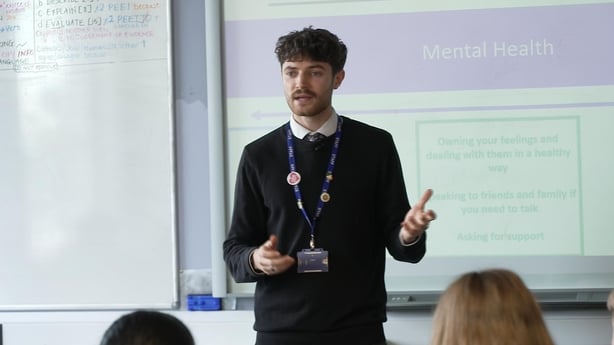
One secondary school that has long been focusing on the issues of online safety and misogyny is Cardinal Wiseman Catholic School in northwest London, a school with a large population of students and teachers with links to Ireland.
Pat Kelly is their Head of Boys Development.
He explained that the series Adolescence is based on an extreme version of toxic masculinity, but there are more subtle examples in everyday life.
He said: "I think when there's a very extreme example, it's very easy for society to look at that and to say that's obviously wrong.
"I think what it highlighted for me is that there's clearly a need for all of us to understand the spectrum on which online misogyny exists.
"Of course when it leads to a young girl being murdered we all turn around and say that's wrong, but do we have that reaction when it's maybe misogynistic comments disguised as banter?"
Read more: An Irish psychologist's take on hit Netflix series 'Adolescence'
Mr Kelly teaches classes on the subject of "positive masculinity" and what it means.
He points out that it is very difficult for parents and teachers, in the era of social media, to call out bad behaviour.
"In the past you might have been exposed to misogyny at football matches, you might be exposed to misogyny at pubs, but there's clearly a generation now that's exposed to an awful lot of misogyny online and this makes it more dangerous because of how unregulated it can be," he explains.
Educating parents
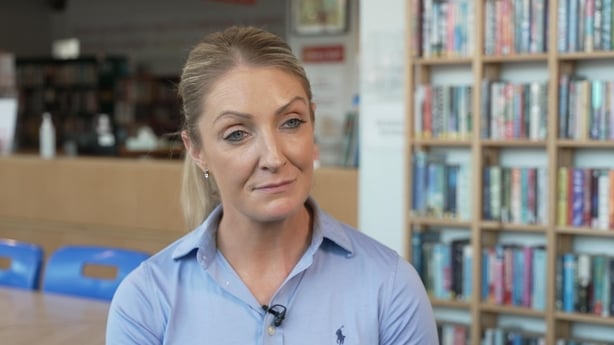
It is a point reflected by 15-year-old Erin, when asked what she thought about the idea of showing Adolescence in secondary schools.
She believes it is a good idea but argues that it might be more beneficial to show it to parents.
"It would also make parents more aware [of harmful online content and misogyny], so I'd show it to parents to see how they would control how their children use social media," she said.
It is an issue that Cardinal Wiseman has picked up on in recent years, largely in response to the rise of controversial male online influencers.
Deputy Head Teacher Ann-Marie McLoughlin said that the school has been holding workshops with parents to educate them on how to monitor their children's social media use and block harmful content.
"I think if we look back to times when we didn't have social media and we didn't have the phones, children's behaviour was more tightly monitored and you may well have a parent that would intervene and say, 'actually that's wrong', we should be doing that," she said.
An aid to teachers
Final year student, 18-year-old Bohir, also believes it is worth showing the series in schools, but as an aid to teachers, rather than simply watching the series without reflecting on it.
He said: "I would say the main essence of the show for me was essentially toxic masculinity and harmful online content, specifically you could say the cultures and the communities that you can join without even realising it.
"I think if teachers are able to add something to it and show maybe how to avoid such stuff on social media, that would be good."
Cardinal Wiseman secondary school currently has no plans to show the series in the classroom, but Ms McLoughlin agrees that if it were to be shown, it would be better to use clips of the series to assist with the curriculum.
Adolescence in Irish schools
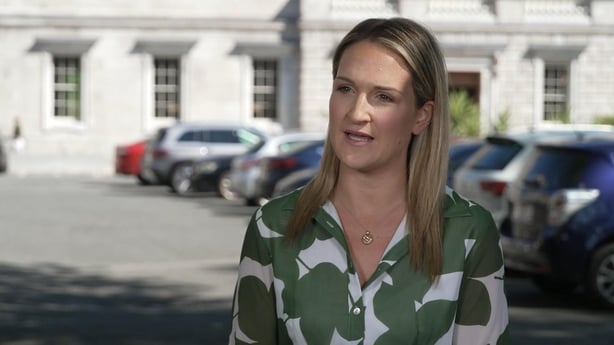
Minister for Education Helen McEntee said that when it comes to showing Adolescence in Irish secondary schools, she has no objection to it.
She said: "The programme Adolescence really has shone a stark light on some of the challenges that young people face and certainly I'd have no objection to it being shown in schools.
"I think it should be open to schools to decide whether or not its part of their curricular, part of their work, and it should really complement the work that's already underway as part of SPHE [Social, Personal and Health Education]."
Minister McEntee said that feedback from students, teachers and parents indicates that a lot of the content that young people see online is starting to be reflected in how they engage with each other.
Asked if Ireland should ban social media for under 16s, as Australia is preparing to do, Ms McEntee said that "anything that would protect our young people, we have to look at, we have to examine and explore".
However, she also spoke of the need to engage with young people about how they use social media, adding that the news Online Safety Commissioner has a role in ensuring that social media companies act responsibly and remove harmful content.