


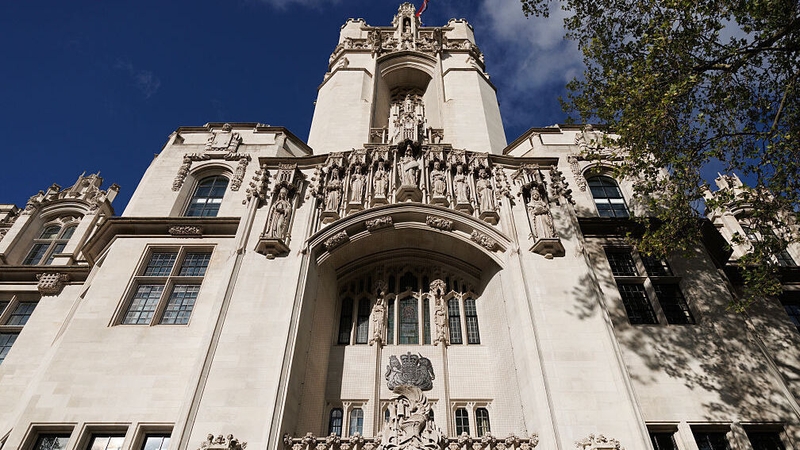
A UK court ruling on biological sex has been hailed a victory confirming "women are women and men are men", but some have called it "incredibly worrying for the trans community".
In a long-awaited judgment, the UK Supreme Court confirmed the terms woman and sex in the 2010 Equality Act "refer to a biological woman and biological sex".
This means transgender women with a gender recognition certificate (GRC) can be excluded from single-sex spaces if "proportionate".
Obtaining a GRC requires a diagnosis of gender dysphoria, having lived in the acquired gender for at least two years and an intention to live in that gender for the rest of the applicant's life.
The judgment says providers of single-sex spaces including changing rooms, homeless hostels and medical services would face "practical difficulties" if the word "sex" was interpreted as being wider than just biological sex in the 2010 legislation.
Campaigners have said the ruling could have far-reaching consequences for sports and single-sex spaces such as changing rooms and hospital wards in the UK.
The Transgender Equality Network Ireland has said it is dismayed by the ruling, describing it as a "step back" for human rights.
The organisation said in a statement that the ruling would impact all trans and intersex people, but particularly transgender women.
In a statement, it said: "Any ruling which excludes and limits personal freedoms, access and participation in society, and recognition in the eyes of the law impacts us all.
"We know that trans women face systemic exclusion, marginalisation and violence, and are targeted and demonised by political actors, media and anti-trans activists.
"This has culminated in efforts to erase trans women from many sectors of society, which this ruling appears to support."
Read more: What does UK Supreme Court's ruling on definition of woman mean?
However, The Countess, an advocacy group, said it is "overjoyed" by the ruling.
In a statement, the group's CEO and founder Laoise de Brún said: "For far too long the conflict between the Gender Recognition Act, which seemingly allows one to change one's sex, and the exceptions in Equality law under the gender grounds, which provide protections based on biological sex have caused chaos in law, in science, and in daily life."
Ms de Brún called on the Irish Government to reform the GRA "to exclude all single-sex spaces, including prisons" and offer statutory guidance to sport national governing bodies and clubs "that they may lawfully exclude males from female sport".
The judges said transgender people are still protected from discrimination in the UK, and "would be able to invoke the provisions on direct discrimination and harassment, and indirect discrimination" if needed.
A UK government spokesperson said: "We have always supported the protection of single-sex spaces based on biological sex.
"This ruling brings clarity and confidence, for women and service providers such as hospitals, refuges, and sports clubs.
"Single-sex spaces are protected in law and will always be protected by this government."

Outside the London court, campaigners supportive of the legal challenge reacted with jubilation.
Author JK Rowling, who has been outspoken on gender issues, paid tribute to the "extraordinary, tenacious" campaigners behind the legal challenge, writing on social media platform X that their efforts had "protected the rights of women and girls across the UK".
The LGBT charity Stonewall, while recognising this in the ruling, said there is "deep concern" around the consequences of the judgment, which it said is "incredibly worrying for the trans community".
Amnesty International UK described the ruling as "disappointing" with "potentially concerning consequences for trans people".
Scotland's First Minister John Swinney said the Scottish government accepts the ruling, adding that "protecting the rights of all" will inform its response.
The LGB Alliance charity said the ruling was a "victory for biology, for common sense, for reality" and that it made clear lesbian clubs can lawfully exclude trans women who have a GRC.
The Sex Matters group, which had made arguments in the case, said the ruling means sports bodies now have "no excuses" for continuing to allow transgender women to compete in female categories.
Current NHS England guidance on the issue is laid out in a document from 2019 titled Delivering Same-sex Accommodation.
Officials were already updating the guidance and have confirmed the ruling will be considered as they move forward.
The document states: "Trans people should be accommodated according to their presentation: the way they dress, and the name and pronouns they currently use."
It adds it "does not depend on their having a gender recognition certificate or legal name change".
