


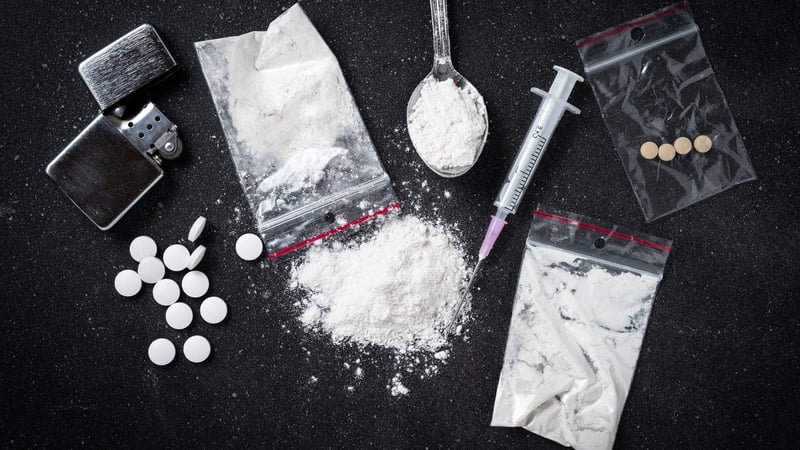
The Scottish government is calling on the UK government to decriminalise all drugs for personal use.
Ministers said the move, outlined in a new paper on drug law reform, would allow people found in possession of drugs to be treated and supported rather than criminalised and excluded.
Decriminalisation would also mean that without a criminal record, people in recovery would have a better chance of employment, the government said.
Other proposals include immediate legislative changes to allow Scottish ministers to implement harm reduction measures such as supervised drug consumption facilities, and increased access to the life-saving drug naloxone.
The document outlines measures which could be implemented through further devolution, independence, or changes enacted immediately by the UK government to support the work being done within existing powers to reduce drug deaths.
Scottish drugs policy minister Elena Whitham said: "These are ambitious and radical proposals, grounded in evidence, that will help save lives.
"We want to create a society where problematic drug use is treated as a health, not a criminal, matter, reducing stigma and discrimination and enabling the person to recover and contribute positively to society.
"While we know these proposals will spark debate, they are in line with our public health approach and would further our national mission to improve and save lives.
"We are working hard within the powers we have to reduce drug deaths, and while there is more we need to do, our approach is simply at odds with the Westminster legislation we must operate within."
Other proposals include a road map for further exploration of drug law reform, focused on evidence and the reduction of harm, including an update of the drug classification system to be based on harms caused.
Ms Whitham said an immediate way for these policies to be enacted would be for the UK government to use its existing powers to change its drug laws.
She added: "Scotland needs a caring, compassionate and human rights-informed drugs policy, with public health and the reduction of harm as its underlying principles, and we are ready to work with the UK government to put into practice this progressive policy."
Speaking later, at a news conference in Edinburgh, the minister said she is "terrified" of the impact a lack of reform could have on the number of drug-related deaths in Scotland.
"We’re actually facing down the barrel of a storm in terms of synthetic opioids and new and novel street benzodiazepines that are heading to our shores at the moment.
"If we are not prepared for that arriving here, with 21st century drug laws in place, I’m terrified as to what that could look like.
"So again, I would ask the United Kingdom government to work constructively with the Scottish government so that we can realise these proposals which, although may sound radical, but are actually tried and tested."
Responding, a UK government spokesperson said there are no plans to alter its "tough stance" on drugs.
