


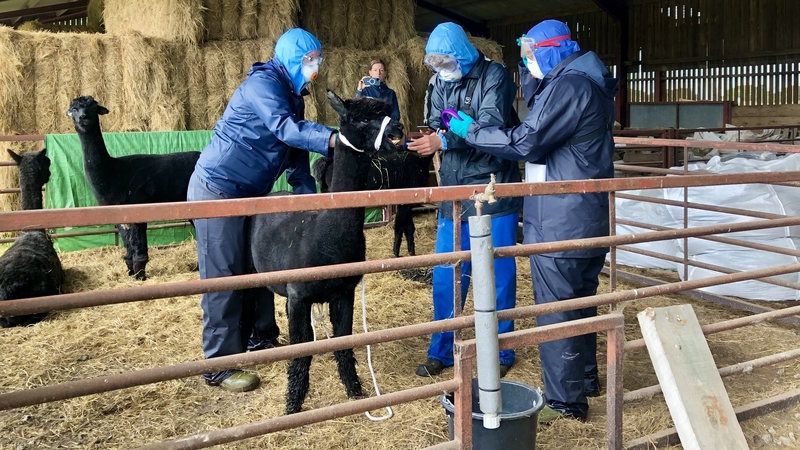
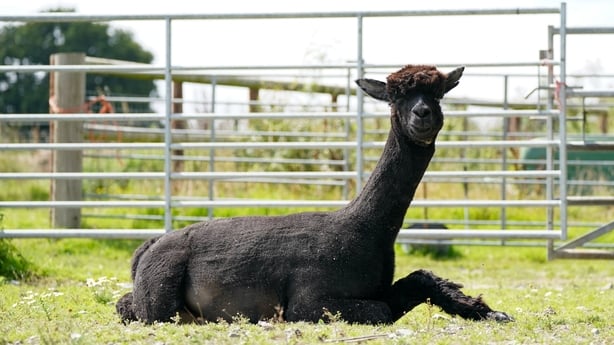
Geronimo the alpaca has been euthanised by UK government vets carrying out a court-ordered destruction warrant.
The animal was rounded up this morning as other alpacas watched on from a nearby field, before being loaded into a trailer, which then left the farm where he lived near Wickwar, south Gloucestershire.
The Department for Environment, Food and Rural Affairs (Defra) said Geronimo was killed by staff from the Animal and Plant Health Agency (APHA) in order to control the spread of bovine tuberculosis.
The alpaca had twice tested positive for bovine tuberculosis and a destruction warrant was ordered, although owner Helen Macdonald believed the tests had returned false positives and thousands of members of the public backed her plea to stop his culling.
Avon and Somerset Police confirmed it supported the Animal and Plant Health Agency in executing a court warrant.
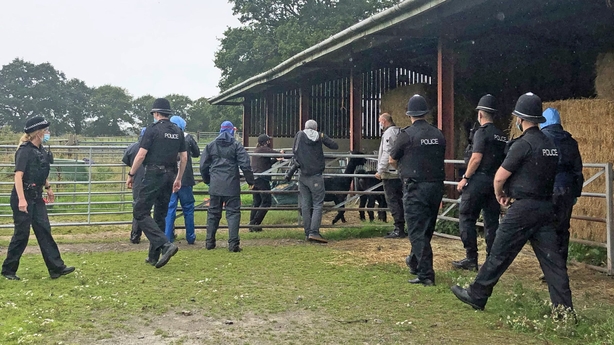
The destruction warrant was valid until 4 September and Ms Macdonald wanted Defra to allow Geronimo to be tested for a third time or let him live to aid research into the disease.
In a statement, Defra said Geronimo was moved from the farm and "euthanised" by staff from the APHA as a "necessary measure to control the spread of bovine tuberculosis (bTB)".
Chief veterinary officer Christine Middlemiss said: "This is a terribly sad situation and our sympathies remain with all those affected by this devastating disease.
"No one wants to have to cull infected animals if it can be avoided, but we need to follow the scientific evidence and cull animals that have tested positive for bTB to minimise spread of this insidious disease and ultimately eradicate the biggest threat to animal health in this country.
"Not only is this essential to protect the livelihoods of our farming industry and rural communities, but it is also necessary avoid more TB cases in humans."
Defra said a post-mortem examination will now be carried out by veterinary pathologists from the APHA, followed by a bacteriological culture of selected tissue samples, which can take up to three months to process.
Ms Macdonald has called for Defra to allow an independent witness at the post-mortem to confirm whether the animal had bovine tuberculosis.
The UK government expressed sympathy for Ms Macdonald.
Prime Minister Boris Johnson's spokesperson said: "It's obviously highly distressing for someone to lose animals to TB and that's a situation that farmers sadly have to face.
"Our sympathies are with Ms Macdonald and any others that are affected by this terrible disease."
