



The United Kingdom has recorded 55,892 new Covid-19 cases and 964 deaths within 28 days of a positive test for the virus, according to official data.
Yesterday's data had shown 50,023 new coronavirus infections and 981 deaths.
Meanwhile, millions of people across England are ending the year under the toughest coronavirus restrictions.
More than three-quarters of the country's population is being ordered to stay at home, as swathes of the country were plunged into Tier 4 (the highest level of restrictions in the UK) overnight.
Another 22 million people in parts of the northeast, northwest, southwest and midlands have been placed under lockdown measures in a bid to control infections.
People were warned they must ring in the New Year by staying at home and not mixing, with NHS England's national medical director Professor Stephen Powis saying: "Covid loves a crowd."
Hospitals continue to face pressure, with Covid-19 patient numbers in England having surpassed the April first-wave peak.
The new restrictions mean a total of 44 million people, or 78% of the population of England, are now in Tier 4, where non-essential shops, as well as gyms, cinemas, casinos and hairdressers, have to stay shut.
People are also limited to meeting one other person from another household in an outdoor public space, and must not leave their Tier 4 area except for legally permitted reasons such as medical appointments.
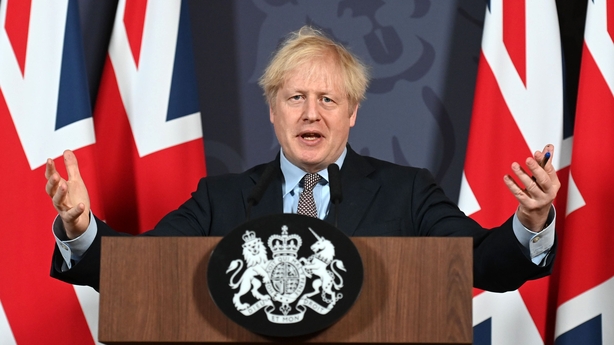
British Prime Minister Boris Johnson said the UK must redouble its efforts to fight coronavirus, and that "no-one regrets these measures more bitterly than I do" but insisted that "firm" action was needed to control the pandemic.
According to the Department of Health, between 18-24 December the weekly Covid-19 case rate in England rose to 402.6 per 100,000, a 32% increase on the previous week.
Some 14,915 patients have been admitted to hospital with Covid-19 in the past week, an 18% increase on the week before.
There were 55,226 daily new symptomatic cases of Covid-19 in the UK on average over the two weeks up to 26 December - not including care homes - according to the the Zoe Covid Symptom Study UK Infection Survey.
The survey figures, based on swab tests data from up to five days ago, suggest Wales, London and the south of England are still the main drivers of the high numbers of daily new cases in the UK, researchers said.
But Professor Tim Spector, lead scientist on the study and professor of genetic epidemiology at King's College London, said children are showing the lowest increase in infection of any age group and that "closing schools is a bad idea and will unlikely have a major impact on new cases, but will have long-term consequences on children".

The reopening of secondary schools in England is being delayed until later in January, and in some of the areas hardest hit by Covid-19, primary school pupils will also not return to their desks as planned next week.
Universities are being asked to reduce the number of students returning to campus from the beginning of next month, and those who do return should be offered two rapid coronavirus tests.
Education Secretary Gavin Williamson said he is "absolutely confident" there will be no further delays to school reopenings.
He moved to reassure teaching staff, pupils and parents the newly rescheduled staggered return dates for England will stay in place.
The government announced yesterday that primary school pupils in some of the areas hardest hit by Covid-19 will not return to their desks as planned next week, with students in exam years returning to secondary schools a week later than planned, from 11 January. Other secondary and college students will go back full-time on 18 January.
The vast majority of primary schools will return on 4 January as planned.
The British Medical Association (BMA) has warned that the NHS will "struggle to get patients in urgent need of care, the care they need" if the trajectory of rising infections continues.
An intensive care doctor said the situation in intensive care units in England is currently "pretty dire".
The Intensive Care Society's Dr Zudin Puthucheary, who also works at the Royal London Hospital, said a "huge number of patients" are "coming in rapidly" and numbers are rising in "every hospital" and said staff are "running ragged because they've been doing this all along, they've been doing this since March".
Mr Johnson said the government was "working as hard and as fast as we can" to get supplies of the newly approved vaccine from Oxford University and AstraZeneca to people.
The Medicines and Healthcare products Regulatory Agency (MHRA) gave the vaccine the green light yesterday and 530,000 of doses are expected to be available for roll-out from Monday.
