


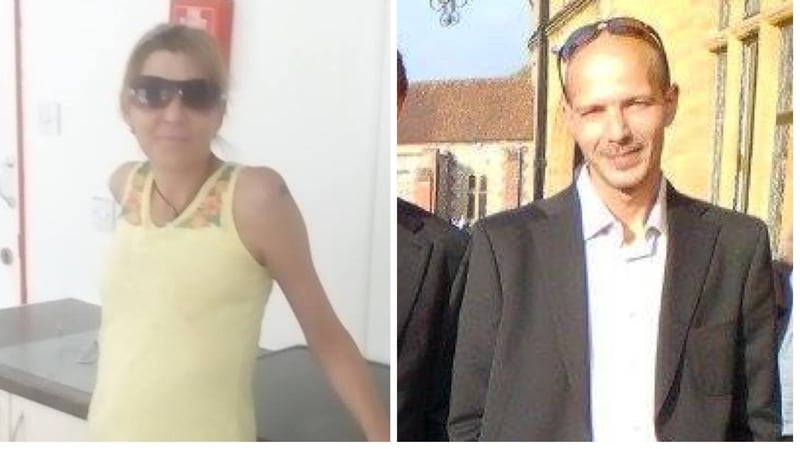
Independent investigators have confirmed the toxic chemical that killed Dawn Sturgess in the UK was the same nerve agent as that which poisoned Sergei and Yulia Skripal three months earlier.
The Organisation for the Prohibition of Chemical Weapons (OCPW) said its team had confirmed the findings of the UK, which concluded in July that the substance used was Novichok.
Ms Sturgess and her partner Charlie Rowley fell ill at his home in Amesbury, near Salisbury, on 30 June.
Ms Sturgess, a mother-of-three, died in hospital eight days later having never regained consciousness.
It is believed they were exposed to a military grade nerve agent from a perfume bottle discarded by those responsible for the attack on former Russian double agent Sergei Skripal and his daughter Yulia in March.
The OPCW said: "The results of the analysis by the OPCW designated laboratories of environmental and biomedical samples collected by the OPCW team confirm the findings of the United Kingdom relating to the identity of the toxic chemical that intoxicated two individuals in Amesbury and resulted in one fatality.
"The toxic chemical compound displays the same toxic properties of a nerve agent.
"It is also the same toxic chemical that was found in the biomedical and environmental samples relating to the poisoning of Mr Sergei Skripal, Ms Yulia Skripal, and Mr Nicholas Bailey on 4 March in Salisbury."
The OPCW said it was not possible to conclude whether the nerve agent used in the two incidents was from the same batch.
Mr Rowley is planning on leaving hospital in the next few weeks.
He is being treated at Salisbury District Hospital for meningitis and loss of eyesight.
Mr Rowley was originally released from hospital on 20 July but was readmitted two weeks ago suffering from meningitis.
He told ITV News he was "feeling positive about the news" he was hearing from doctors and is "hoping to get out of hospital in the next two or three weeks."
Mr Rowley said his eyesight has "improved" but is not yet fully restored and said there was still "a bit of meningitis in the system."
British Foreign Secretary Jeremy Hunt has welcomed the OPCW's report and again levelled the blame for the attacks at Russia.
He said: "We are grateful to the OPCW for the independent expert work in confirming the type of nerve agent used in Amesbury, and once again pay tribute to the high standards set by our world-leading scientists.
"The recklessness of the Russian state in bringing a nerve agent into the UK, and total disregard for the safety of the public, is appalling and irresponsible. Our thoughts are with the family of Dawn Sturgess and with Charlie Rowley.
"This is another reminder of the importance of the international community standing together to uphold the global ban on all use of chemical weapons and ensure that the rules-based international order is respected so we can all keep our citizens safe."
In July, Assistant Commissioner of London's Metropolitan Police Neil Basu said test results on the Amesbury poisoning had showed the victims to have been "exposed to the nerve agent Novichok."
