In the Pillar Room, on the grounds of the Rotunda Hospital, Dublin, hang the pictures of each of the 48 victims of the Stardust fire.
The faces serve as a reminder as to why these inquests are being heard.
Their hairstyles and fashion point to a different era and tell of the length of time that has passed to get to these current proceedings.
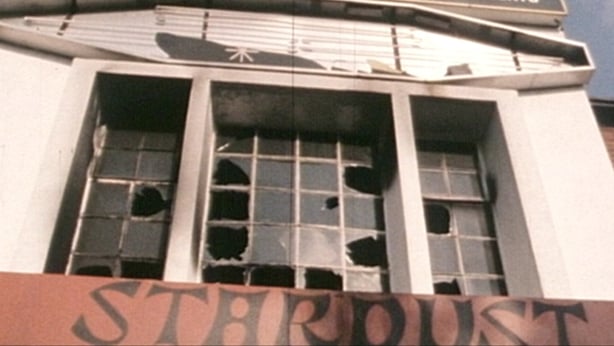
It's been 42 years since the fire in the Artane club broke out in the early hours of St Valentine's Day 1981. The following year, inquests were held over a five-day period, but were widely regarded as inadequate.
An intensive and lengthy campaign by the families followed and culminated in 2019 with the then Attorney General, Seamus Woulfe, directing fresh inquests be held.
Four years on from that decision by the AG, these fresh inquests began last April.
They started with a month of 'pen portraits', where the families and friends of the dead told the court about the loved ones they lost.
For many, it felt like a cathartic experience.
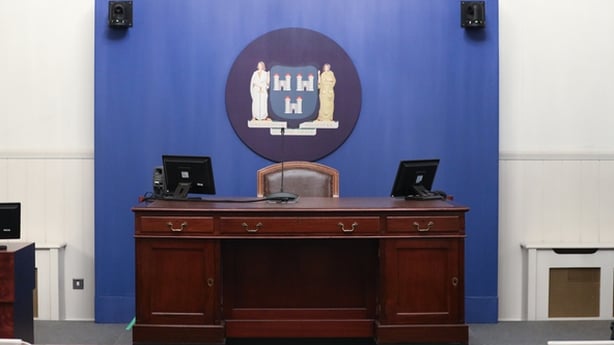
Six weeks ago though, the proceedings, under Dr Myra Cullinane, moved to a different stage. The court began to hear direct evidence from those who were there that night, mostly staff.
It has been tough going for many; for the families who have had to listen to some harrowing testimony, and for some of the witnesses too who have faced hard questioning from the legal teams representing the relatives of the dead.
The Dublin District Coroner's Court has heard from former doormen, bar staff and waitresses at the club. So far, there have been common themes running throughout the questioning.
The fire exits
There has been much focus on the Stardust's six exits and the door policies in place in the lead up to the fire and on the night/early morning in question.
On this front, the 14-person jury has been told throughout the proceedings, management had been concerned about people sneaking into the club without paying.
This could be done, the court heard, by someone already inside premises opening the emergency exits and letting their friends in.
To counter this, it was confirmed that a practice was in place where chains would be looped around the bars of the doors to give the impression that they were locked, in order to deter those from opening the doors for their friends.
Bernard Condon, SC, representing families of the victims, has been describing it as "mock-locking".
His colleague, Des Fahy, KC, said it was done to "trick teenagers".
In addition to the chains being "draped", the jury also heard that in the weeks before the disastrous blaze, there was a practice of keeping the exits locked up until around 12.30am on disco nights.
Last Friday, the court, sitting on its last day before its summer recess, heard a change in aspects of that narrative.
Leo Doyle, the former deputy head doorman, was giving evidence, and Mr Fahy was asking the questions.
The court heard that a "scam" was going on among doormen who were charging people to be let in the Stardust via the adjoining Lantern Rooms, without paying at the front cash desk.
Mr Fahy said it had been part of the story of the Stardust for the past 42 years that the reason doors were being locked on disco nights up until 12.30am was to prevent paying patrons letting their friends in through the fire exits.
He said this was a "false justification" for locking the doors.
Mr Fahy suggested that the real reason the policy of locking the doors was brought in to stop doormen who "were on the take".
Mr Doyle said that could be true.
At one point, Mr Doyle also agreed with barrister Michael O'Higgins that there had been "no system" for the unlocking of the doors on disco nights.
Then, last Friday, came the dramatic moment when Mr Doyle said he now believed the doors must have been locked on the night.
After a brief pause in proceedings, he told the court: "I would like to apologise … I think I've made a right boo-boo and I maybe now believe… that the doors were locked."
He went on to say that "they must have been locked," adding "I just don't know".
It was his fourth day of giving evidence.
The state of the exits and how people escaped out from them, or in fact did not, will no doubt remain a central theme when the inquest resumes.
More doormen and senior management are due to give evidence in early September.
The fire
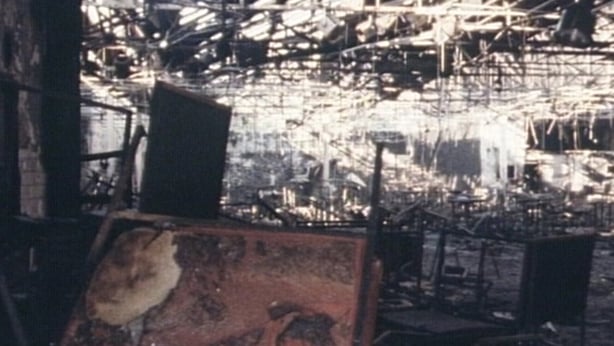
Over the last six weeks, there has also been focus on the size of the fire, when it was first noticed, its location and how quickly it took hold.
Witnesses have remarked how "small" it was at first, that it looked like that it could be contained. But they have spoken too about how fast it spread and how the thick black smoke took over.
The location of the fire too has come in for examination.
Witnesses have said they first saw it in the cordoned-off area known as the west alcove.
But there's attention too, on the ceiling.Those giving evidence have spoken about the heat and fire dripping from overhead.
Where the fire was first seen and where it first started will, there is little doubt, be examined further as these inquests progress.
The testimony
Families of the victims have attended every day of the proceedings so far and there have been occasions when audible gasps could be heard coming from their direction.
The first came on 16 June, when former part-time doorman Francis Kenny was giving evidence. He attended the Stardust on the night the fire broke out as a customer. He was not working that evening and he left before the blaze.
He was questioned by Mr Fahy and was asked about the wrapping of chains around the doors.
Mr Kenny agreed that the practice was "catastrophic".
He then told the court that the bodies of 22 victims were found around the area of two exits.
The mention of the "22" figure was met with a sharp intake of breath from some of those present.
There was a similar reaction a week later when former floor manager, Phelim Kinahan, gave evidence via videolink.
He was asked by counsel, Dáithí Mac Cárthaigh, about a 1981 garda statement in which in which he reported hearing the manager, Eamon Butterly, when the blaze was noticed, saying: "The b*****ds started a fire."
In court, Mr Kinahan said: "I think he thought the same as I did, people started the fire to distract the barmen to rob the bars."
This too, was met with audible gasps from the public gallery where the families were sitting.
The mayhem
The court has heard about the mayhem in the immediate aftermath of the fire.
Linda Bishop recalled after getting out the main entrance: "We could hear people screaming inside, shouting and banging," she said.
In evidence read into the record, Jack Walsh, a former manager, described a similar image.
He recalled being outside the premises and hearing "screaming and shouting" from inside the toilets.
He said he remembered saying to somebody "you will never break down that steel shutter".
Coroner Dr Myra Cullinane acknowledging the families present, has said there was and would be distressing content at times.
She made those comments after the account of doorman PJ Murphy, now dead, was read aloud. He recalled the fire taking hold and trying to get others out.
"As I looked in, I saw a young girl run towards this door through the flames and she fell about four feet inside the door. This person was completely on fire," the account read.
"When she fell, I and two others … got down on our bellies, crawled in and pulled her out. When we got her out, she appeared to be dead."
The victims
The inquests have heard too about just how young the people were who caught up in the disaster.
The disco was meant to be for over 21s, but 83% of the patrons were underage. The ages of the dead ranged from 16 to 27.
The inquests have now broken for the summer and are due back again in September when it will continue to hear from former staff.
It will then be the turn of patrons who escaped, the emergency responders and then fire experts.
So, far the court has heard evidence from approximately 70 witnesses.
There are around another 280 to go.