


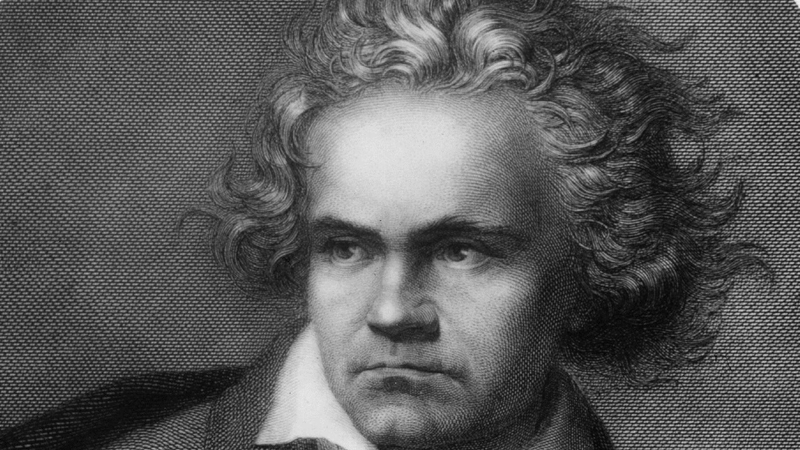
A previously undiscovered musical arrangement by Ludwig van Beethoven has been performed for the first time at a British university today.
The two-minute long piece is an organ harmony to the 1,000-year old Gregorian hymn "Pange Lingua".
Professor Barry Cooper from University of Manchester made the discovery while studying a copy of a 192-year-old Beethoven sketchbook.
"Other scholars looked at it without realising what it was as it looks like a random collection of chords. When I looked at it I saw the series of chords and saw a tune there," said Prof Cooper.
"It's a Gregorian chant that I happen to know so I realised that he'd obviously harmonised the chant and produced a new composition."
The hymn had likely eluded other experts because the German composer had not included the words to the piece or the first line, which in a chant is usually sung unaccompanied.
It is thought the hymn was penned for the composer's friend Archduke Rudolph of Austria, for whom Beethoven also wrote the "Missa Solemnis" when the archduke was made an archbishop around 1820.
Cooper, a leading Beethoven expert, enlisted the help of a group of music students to put on the first known performance of the composition at Manchester University in northern England today.
The short hymn is significant because it marks a rare experiment into religious music for Beethoven, who died aged 57 in 1827.
