


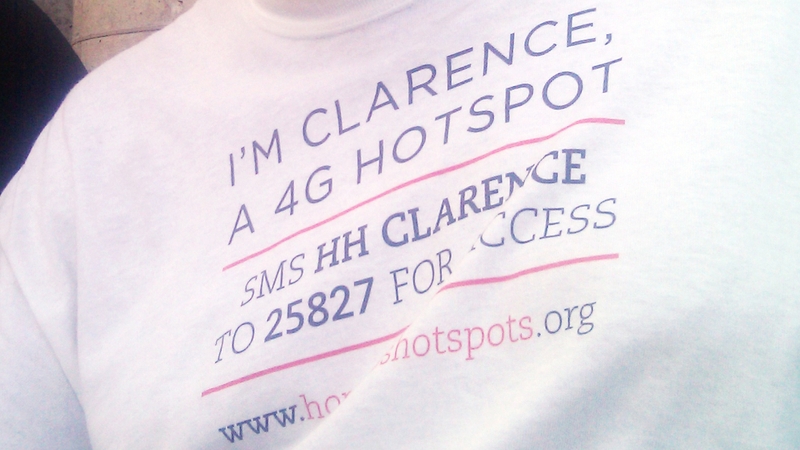
A global advertising firm used homeless people as roving wi-fi hotspots, sparking controversy among technology trendsetters at an interactive festival in the United States.
Debate over whether the stunt by Bartle Bogle Hegarty, which coincided with the South By Southwest (SXSW) conference, was helping or misusing the homeless has spread from the streets of Austin, Texas.
"I am 4G ready, a homeless hot spot, my name is Clarence, give me a check, check my story out see why I can say I am a homeless hot spot," 54-year-old Clarence Jones sang on a downtown Austin street as the gathering wrapped up.
"You don't have to go to the library no more, you don't have to go to the bookstore, you don't have to go to Starbucks, or inside a building, you can do it under the sun. You can do it right here right now on this spot."
Mr Jones was one of 13 homeless men given gadgets to carry around that provided free mobile 4G Wi-Fi service to anyone nearby.
Bartle Bogle Hegarty worked with a local shelter to recruit homeless people for the jobs, paying them $20 (€15.31) up front and guaranteeing a total of at least $50 daily with the chance to earn extra money in tips.
The idea was to let homeless people cash-in while providing high-speed hotspots to SXSW goers known for routinely overloading telecom networks with heavy use of smartphones and tablet computers.
While hotspot use was free, people were encouraged to donate at least $2 for each 15 minutes by using online financial transaction service PayPal. Donations were to be divided up between the homeless people involved.
"We thought it might be worth giving the opportunity to homeless people to sell 4G connectivity to the tech-oriented attendees instead of a printed paper," said Bartle Bogle Hegarty Chairwoman Emma Cookson.
"The strength of that model is not only the money generated, but also the way that it encourages the public to interact with homeless individuals personally," she added.
But the promotion provoked a backlash at SXSW, with some people condemning it as exploitation. Event organizers distanced themselves from the unsanctioned marketing ploy.
"For better or for worse in our social media world, any message is better than no message," said SXSW Interactive Director Hugh Forrest.
"By doing this bad promotion, this company got way more publicity than they would ever have gotten. They cut through the noise in a negative way."
Some of the 24,000 people taking part in the conference viewed homeless hotspots as internet era versions of people getting paid to stand around wearing sandwich board signs, but homeless participant Mr Jones said he saw himself as a businessman.
"We had an opportunity to be entrepreneurs for ourselves and sell our own product," Mr Jones told AFP. "It made me feel that I was selling Clarence."
