


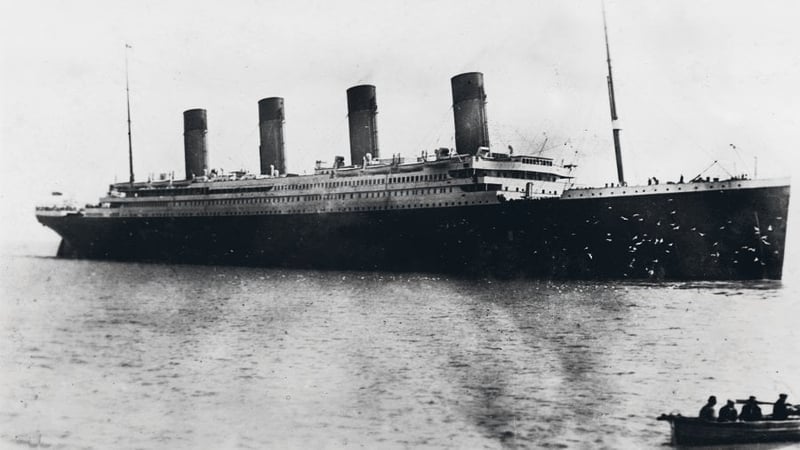
The Co Cork-born grandmother of a woman campaigning to become the first female mayor of New York was among those who survived the sinking of the Titanic, a new exhibition reveals.
Helen Shine Callaghan, 20, a servant, was rescued from the stricken liner in April 1912 and later married a New York firefighter.
She was the grandmother of Democrat Speaker of New York City Council Christine Callaghan Quinn, who is expected to launch her campaign for mayoral office next year. A picture of her with her mother and grandmother is among many featured.
The exhibition explores the stories of Irish passengers on the Titanic and opened today at the Ulster American Folk Park near Omagh, Co Tyrone.
Pat O'Donnell, curator of exhibitions at the folk park, said: "Only 40 Irish Titanic survivors eventually made it to America. Although many of the survivors' later lives turned out well, many of them remained as silent about the sinking of Titanic as they were about the trauma of permanently leaving home."
The Titanic struck an iceberg in the northern Atlantic on her maiden voyage from Southampton to New York on April 15 1912, sinking with the death of 1,517 people.
A total of 113 people boarded the Titanic at Cobh near Cork.
They were among 30,000 who left Ireland for North America that year.
Titanic: Window On Emigration also tells the story of the only third-class passenger on the vessel from Northern Ireland.
Thomas Morrow. from Rathfriland, Co Down, boarded the ship at Queenstown and died in the sinking.
The exhibition chronicles the experience of the worshipful master of the Drumlough Orange Lodge, who was joining his brother on a ranch in Canada.
The stories of three Co Cavan girls who survived are also featured. Mary McGovern, Julia Smyth and Kate Connolly shared a cabin.
Kate became a live-in maid for a New York family but ended up owning several apartments during the pre-Depression period. Mary McGovern returned to Ireland in 1920 where she married and raised a family.
Exhibition highlights include 300 artefacts, Edwardian costumes like those worn by third-class passengers, jewellery and personal items. The centrepiece is a recreation of a typical third-class cabin.
Ms O'Donnell added: "Our exhibition gives visitors the opportunity to find out what life was like on board and how, contrary to popular opinion, the third-class passengers enjoyed a good standard of accommodation."
Tom Cooke, director of National Museums Northern Ireland, said the exhibition was appropriate and timely.
"It is the first time some of these stories have been brought to public attention in this way and it connects people from across the island of Ireland very directly with both passengers who perished and with survivors who went on to pursue new lives in North America," he said.
