


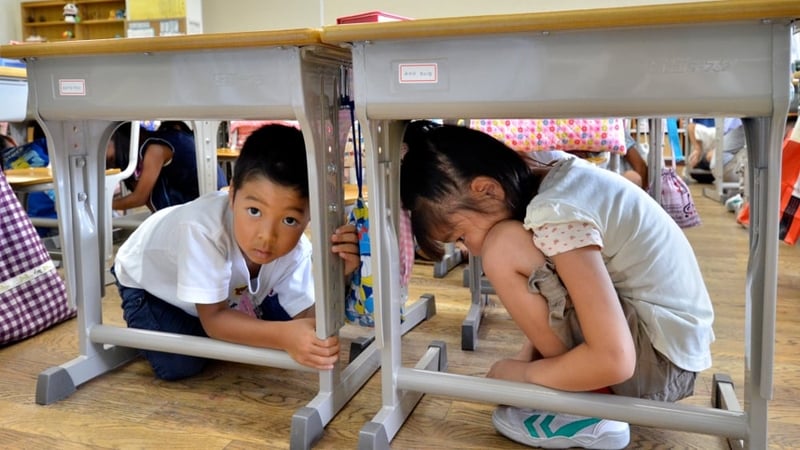
Japan has conducted its first national earthquake drill since the 11 March disasters that left 20,000 dead or missing and triggered a nuclear crisis.
Police supervised traffic at some 100 points in central Tokyo while passengers were guided to safe zones from train stations in a simulation of a post-quake scenario.
Announcements warning passengers that tests were taking place throughout the day were made in stations, as all rail and subway services were suspended.
Disaster Prevention Day is an annual exercise to train for a potentially deadly magnitude-7.3 quake scenario in Tokyo. It is held to commemorate the anniversary of the 1923 Great Kanto Earthquake, which killed more than 105,000.
"The country and local governments should reconsider the conventional disaster prevention measures and prepare for every possible scenario of earthquakes and tsunami," the government's cabinet office said.
"Especially in terms of tsunami measures, they need to raise people's disaster prevention awareness and take all possible, comprehensive measures, including evacuation of residents."
Chubu Electric Power, which runs the Hamaoka nuclear plant on the Pacific coast in Shizuoka, central Japan, tested communications in a simulation of a plant power loss in the event of a tsunami.
The surging waves triggered by the March earthquake crippled back-up cooling systems at the Fukushima Daiichi nuclear power plant, which led to reactor meltdowns, explosions and the release of radiation into the environment.
Thousands of homes remain evacuated, as well as farms and businesses in a 20km radius around the stricken plant.
Throughout Japan, about 517,000 people were scheduled to take part in the drills.
However, many areas hit by the March disaster, including Fukushima, cancelled their participation with residents still struggling to recover from the March calamity, officials said.
