


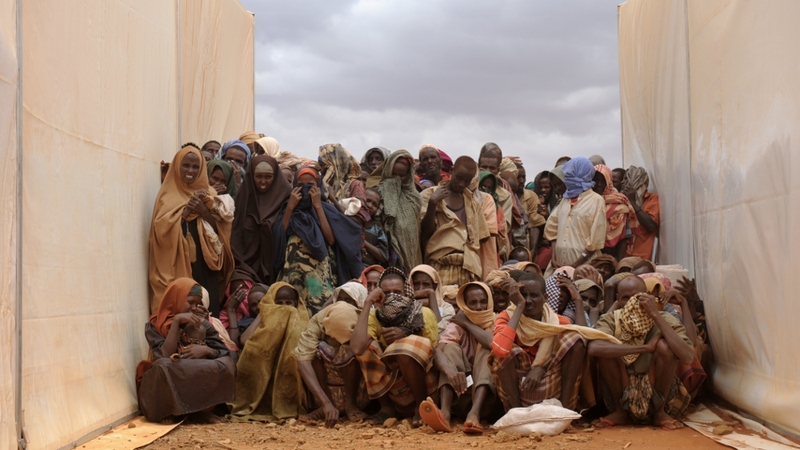
The UN has officially declared famine in two parts of southern Somalia as the world slowly mobilised to save the 12m people battling hunger in the region's worst drought in 60 years.
The Horn of Africa, which often sees food crises and civil strife, is particularly vulnerable this year because the drought is the worst in 60 years.
RTÉ News Correspondent Jim Fahy has sent reports from the region.
Watch and listen to his reports below:
24 July
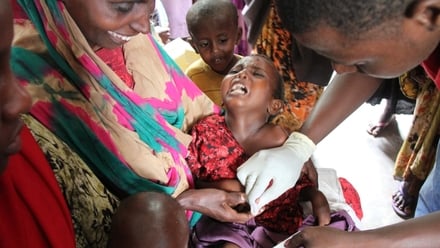
 Jim Fahy reflects on a week spent in east Africa reporting on the famine and the flight of hundreds of thousands of people from Somalia into Kenya and Ethiopia.
The region is facing its worst drought in 60 years; there are reports that up to 10,000 people have already died from starvation and disease and that up to 12m people in the three countries have already been affected by a new and as yet unfolding humanitarian crisis.
Somalia is by far the worst hit of the three countries. An estimated 3m of its 10m people are now described as being ‘displaced’ meaning that they have abandoned their homes and villages and fled to either Kenya or Ethiopia or into the scores of makeshift tented shanty-towns which have sprung up around Somalia’s war torn capital city Mogadishu.
Reports this weekend suggest 800,000 Somalis have already made their way to Kenya and Ethiopia or have sought help in the vastly overcrowded Internal Displacement Camps in Mogadishu. Conditions in all of the camps are appalling. They are overwhelmed by sick and dying refugees and so far only a trickle of aid has reached Somalia. The UN has declared that famine conditions exist in two of the country’s eight regions and it has warned it will spread to many other regions unless there is a huge global response to the crisis.
Tomorrow (Monday) at the headquarters of the World Food Programme in Rome there is to be an emergency meeting, of EU ministers, non governmental organisations and international aid agencies to discuss ways of getting food and medical aid to the region. The meeting has been called at the request of the French Government which is currently chairing the G20 group of nations. Getting aid into Somalia is going to be difficult because of the highly volatile and unstable conditions which exist in many parts of the country where Government forces and fundamental Islamist groups are involved in an ongoing and bloody battle for control of the country.
The intensely personal tragedies that unfold daily across Somalia take place against this turbulent and deadly backdrop of war, famine and politics. Every day thousands of near starving Somali families have to fight hunger; disease and death itself.
Khadija's tears
On my last day in Somalia this week, I met one grief-stricken family in the great displacement camp at Koorsan close to Mogadishu Airport where a mother was having to deal with the great tragedy of the death in a single night of two of her three children.
Khadija Yusuf stood erect, rocking with grief in the first light of the new day. Outside the home she had fashioned, from cardboard boxes and cement bags, for herself and her family, she cried and cried - gently at first and then almost uncontrollably.
Inside the little igloo-like shack, which had been her home for the past four weeks, friends were preparing the bodies of her 12-year-old son Yusef and her five-year old daughter Asha for burial.
Yusef had died late on Thursday night, and even as Khadija began grieving for her son, death still stalked in the shadows outside and just hours later claimed the life of her daughter Asha.
Both had contracted measles - they died within hours of each other, Khadija’s one-year-old daughter Elhan had received the measles vaccination and had survived the measles outbreak, which was sweeping the huge dusty, dirty camp they had come to on the outskirts of Somalia’s capital city Mogadishu.
They had walked for 24 days from the drought stricken interior of Somalia’s south central province to reach Mogadishu.
I wondered how such a frail, vulnerable little family could possibly have found the strength to walk more than 70km through some of the harshest landscape in Africa in daytime temperatures of up to 40C.
How could they have found the energy to walk all that way? Had they been able to hitch a lift from a passing truck or use a donkey to carry their few possessions?
But ‘no’ I was told, they’d walked day after day their eyes fixed on Mogadishu; Khadiga carrying the youngest of her children.
They were leaving behind a village and a huge stretch of arid bushland devastated by almost two years of drought where crops had failed; animals had died and there simply was no longer any water to sustain life.
And so they set out together on the journey that was to take them to the great sprawling displacement camp at Koorsan close to Mogadishu Airport.
Here they were at last able to get some shelter and food but very soon tragedy was to overtake Khadija and now – when hope and some kind of new life seemed to be on hand - the death of two of her three children completely overwhelmed Khadija.
We were invited to look into her home where friends she had made here over the past 24 days were wrapping the emaciated bodies of Yusef and Asha in their burial sheets.
It was a piteous scene - the women working silently gently with the winding sheet and preparing to carry the children through the campsite to their burial place.
They were laid to rest in two small graves late on Friday afternoon.
That morning six children had died in the camp. For Khadija life would never be the same again.
Aid workers including Francis O'Keefe from Concern, who were visiting the camp that morning, tried to console Khadija.
Briefly, she dried her tears for just a moment or two; accepted the sympathy and the embrace of friendship that was being offered but then began to sob and shake with grief once more, looking almost through and beyond all that was happening all around her in the noisy, clamouring camp at some point on a far horizon. As though she was wondering to herself if there was anything at all she could have done to prevent the deaths of her two children.
Had she taken the right decision to set out on her long journey? Was there some way that she could have had Yusef and Asha vaccinated for the measles in time? and why, oh why did they have to die?
Khadija and her family are just one of the thousands of Somali families who are trying to flee from famine and death in the vast interior of this troubled and secretive country.
Somalia has a population of almost 10m, 3.5m of its people are now caught up in the unfolding tragedy of this, the first officially declared famine of the 21st century.
The last famine in 1992 claimed the lives of a quarter of a million Somalis.
Just now nobody knows how many people have died in this latest drought and famine crisis. It is already running into the thousands and there have been dire warnings that it could claim the lives of tens of thousands (perhaps hundreds of thousands) unless some way can be found to get huge amounts of food and medical aid into the country - something which is going to be very, very difficult to do because of the totally unstable security situation in much of Somalia.
Al Shabaab
Government forces are engaged in a vicious ongoing battle for control of the country with militant Islamist groups - the most powerful of which is 'Al Shabaab'.
The name Al Shabaab means 'The Youth' and the fighters it has attracted to its ranks makes it a very powerful opponent of Somalia’s weak transitional Government.
Two years ago it forced most aid agencies out of the regions of the country it controls and despite earlier hopes that it might allow them back in – in the aftermath of the UN declaration that a Famine exists here – it has said that is not going to happen.
On Friday it said that it doesn’t accept that there is a Famine here; it says parts of the country are suffering from a drought and the extent of the situation has been 'politically exaggerated'.
And so the uncertainty continues. More aid is getting here but it is nowhere near enough to cope with the situation.
As world's governments and international aid agencies ponder on the dilemma this weekend, Khadija Yusuf ponders on the great tragedy that has overtaken her life.
She has lost her son and daughter Yusef and Asha.
As we prepare to leave the camp at Koorsan, Khadija stands holding one-year-old Elhan in her arms still looking into the middle distance. She is holding the tiny, frail, fly-covered Elhan so gently, so lovingly as if she was trying to reassure her that she wasn’t going to fail her and that she like so many other Somali mothers had an indomitable will to survive.
Listen to Jim Fahy's report on World Report
22 July
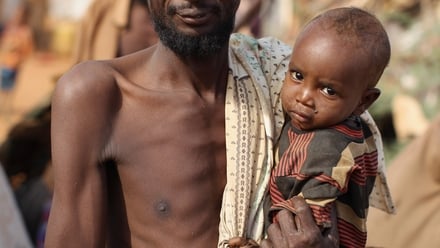
Rebels have dismissed a declaration made by the UN earlier this week that there is famine in two regions of southern Somalia under rebel control. Jim Fahy reports on the situation at a camp.
Jim Fahy reports on the growing crisis.
21 July
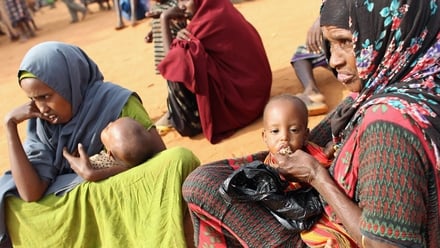
The UN says famine will spread across Somalia unless millions of dollars worth of emergency aid is distributed in the region. Jim Fahy travels to Mogadishu where he finds conditions that have been described as shocking and disturbing.
20 July
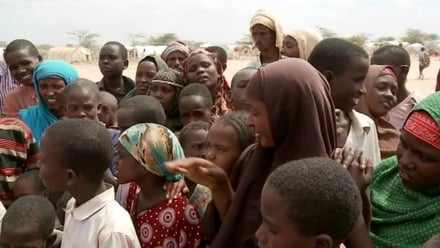
The UN has formally declared famine in two areas in the southern half of Somalia. Jim Fahy travels with three Irish aid agencies to the Daadab refugee camp in Kenya.
19 July
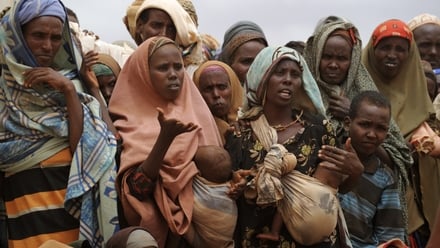
Irish aid agencies in Somalia warned thousands of people are at risk of starvation and disease. Jim Fahy reports from a refugee camp on the Kenya-Somalia border.
Extended audio: Interview with former President Mary Robinson
18 July
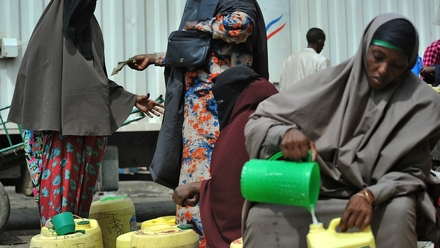
Thousands of people are migrating in east Africa following a sustained period of drought. Jim Fahy reports from Kenya.
