



In part two of a series of stories RTÉ.ie Journalist Blathnaid Healy travels to the Rift Valley in Kenya to see how keeping bees can make a difference environmentally.
As the day drew to a close in the cool highlands of Kenya’s Rift Valley several dozen large white sacks packed full of grass were being piled high and secured onto the back of a small pick-up truck.
The grass, cut that afternoon by Franciscan Brothers in the fields close to the town of Molo in Baraka Agricultural College, was being readied to be taken more than an hour away by road to the dry, lowland town of Lare to feed the hungry cattle on a teaching farm there.
Brothers Alan Farrell and James Kamanu have been making the same journey regularly over the past year in search of food to sustain their livestock.
Although the towns of Molo and Lare are only 60km apart their climates are very different.
 Crops in the college grounds in Molo, a town 2534m above sea level, have continued to grow nurtured by the regular showers of rain and shaded by the many trees the students and staff have planted. But almost a thousand metres lower in Lare crops planted with great hope earlier in the year have withered and died due to the extended drought.
There has been no significant rainfall in Lare since January, according to Brother Farrell, who is from Roscommon, and when any rain falls it is absorbed into the dry, cracked ground within minutes.
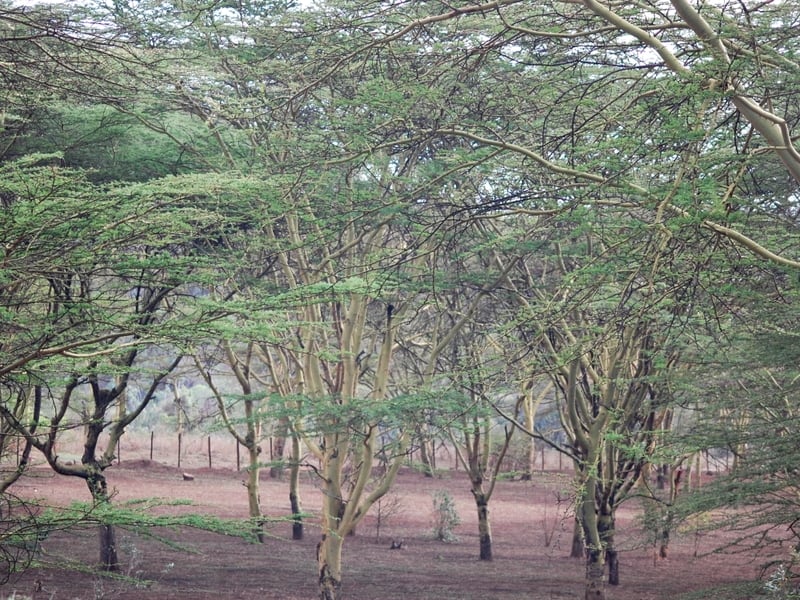
In Koibatek, a nearby lowland district in the Rift Valley also hit by drought, the members of a local beekeeping association are making efforts to improve their climate by planting more trees to attract the rain and help with honey production.
Secretary of the local beekeeping association Samson Legat said that the better the environment is the more conducive it will be for keeping bees.
‘We have started a tree nursery farm,’ Samson said. ‘We will plant trees for the animals. When we shift our project to one area there must be water and forage from the plants.’
The association has been paying attention to the types of plants that work and the ones that do not.
It learned about the importance of planting trees and flowering plants from the staff at Baraka college.
Baraka teaches farmers to keep bees not only as a form of income but also because of environmental conservation.
In a classroom with diagrams and posters of bees, trees and plants on the walls, secondary school students were taking a day course in beekeeping.
 The college’s head of beekeeping Cornelius Kasisi told the students that conserving the natural environment is the most important thing he can teach them about keeping bees.
The students have a beekeeping project in their school, which they began in March with ten beehives.
When they harvested the hives, the young beekeepers found that all but one had been occupied with bees and they have already extracted 200kgs of honey since the project began.
In the classroom, Cornelius told the students that they must plant as many different tree species as possible and try to conserve them.
‘If you can have different tree species and flowers of different types your bees will be able to get food continuously throughout the year,’ he said.
More trees are needed to help with the temperature of the apiary, or area where the beehives are kept. Cornelius told the students that they should plant a line of trees to provide their bees with shelter from the wind and sun.
‘The apiary should be partly sunny so that the bees can see the light in the morning and go out and forage without any difficulty,’ he said.
Trees and plants are also essential for increasing the number of bees in an apiary, according to Cornelius. The bees used in African beekeeping are wild and have to be attracted to the area where the apiary is located.
‘If the area is rich in bee forage then it will be very easy for a swarm of bees to occupy your hive.’
 Author of a Beginner's Guide to Beekeeping in Kenya Thomas Carroll said beekeepers are usually very good environmentalists because they realise themselves that the source of nectar comes from trees and they plant them naturally often without being advised to do so.
If beekeepers plant a lot of trees the soil on their farms retains the moisture better, which gives people an improved microclimate.
The author said some the best conserved areas he has seen in countries like Kenya and Zambia are where beekeepers are practicing.
‘It is an indirect way to get people to conserve and plant trees…in a way they can see the value of the trees,’ he said. ‘Trees are a long-term investment but once you keep bees you see a very quick return once the tree starts to flower, which is a big incentive.’
Brothers Allen and James in Lare see the extreme effects of drought every Tuesday when people line up along the road waiting for parcels of food to carry home for their families.
Like many parts of Kenya and east Africa, the ground is clear with no vegetation and few hedges.
‘If everything was normal, climate and all, they would be able to survive, they would have enough crops growing on their farms,’ Brother Allen said. At present ‘People are just existing.’
'The Humble Bee' is brought to you in part by the Simon Cumbers Media Challenge Fund
Click to return to the main page of the series
