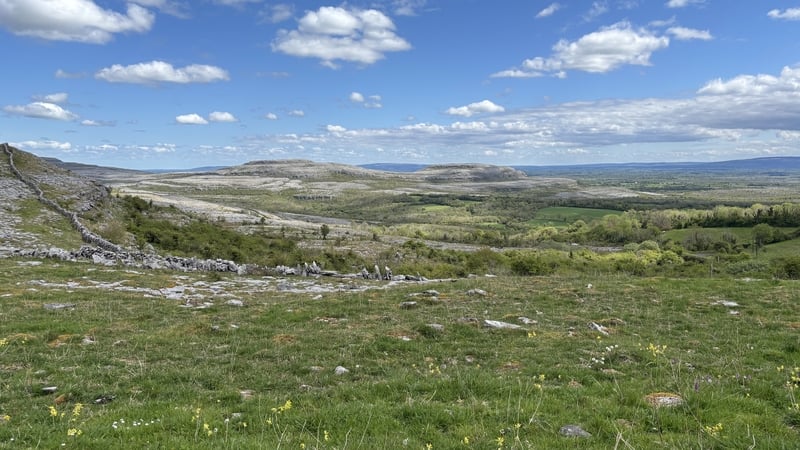

A biodiversity project in the Burren, Co Clare, that encourages landowners to make space for nature has been rolled out 5,000 times across 15 counties.
Burrenbeo Trust said there is a huge desire among people in Ireland to protect biodiversity and the natural environment.
The Trust took inspiration from the tradition known as 'The Hare's Corner'.
Brendan Dunford, a volunteer with Burrenbeo Trust, said, "The hare's corner is that lovely little idea, it refers to that corner of the field that you couldn't get into with the big machinery so you let it off to nature and became a sanctuary or a little hare's corner."
Mr Dunford said it is a simple entry level opportunity for landowners and gardeners to create some space for nature.
"The demand is just huge, people love it," he said, "and they get back to us afterwards telling us about the joy it has brought them, having that little hare's corner on their land."
The initiative is one of many that Burrenbeo Trust offers to support landowners, farmers, schools and communities to play a part in protecting biodiversity.
Aine Bird, CEO of Burrenbeo Trust, said it is wonderful to see a pilot project that started in the Burren, take hold all over the country.
"What we have found is that there is a huge desire among people to take action, but a lot of people feel quite disempowered because they almost don't know where to start," Ms Bird said.
"We have put time into developing very targeted and achievable measures so that they can be supported to take those actions," she added.
Watch: Burren biodiversity project rolled out across 15 counties
We need your consent to load this rte-player contentWe use rte-player to manage extra content that can set cookies on your device and collect data about your activity. Please review their details and accept them to load the content.Manage Preferences
A recent report by the Independent Advisory Committee on Nature Restoration found that Ireland is one of the lowest-ranked countries in the world for intact biodiversity.
It found that 90% of protected habitats are in an unfavourable conservation condition.
"Nature underpins our economy, our society, our culture," Mr Dunford said. "We need to bring it back and every one of us has a role to play so why not do something great for Ireland and do something great for yourself as well by creating a little bit of space for nature."
The old Cistercian monks called the Burren the 'petra fertilis', the fertile rock because of its rich biodiversity.
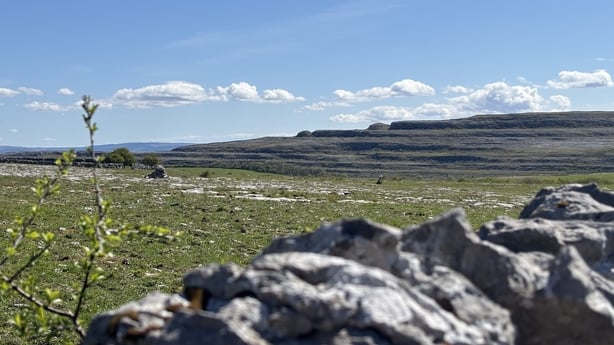
Three quarters of all of Ireland's native plant species are found here, as well as plants from the Arctic, Alpine and Mediterranean regions.
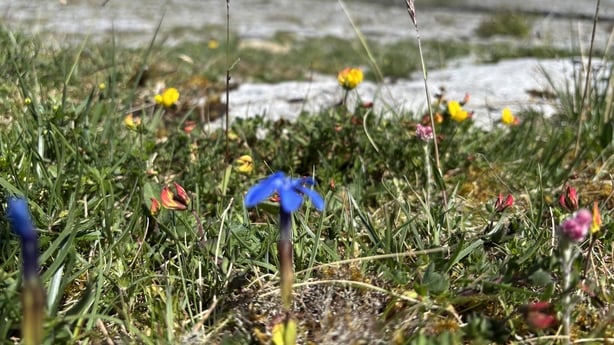
Flowers such as mountain avens and spring gentians which are becoming more rare in other parts of Ireland, still thrive in the limestone landscape.
The Burren is an example of how farming and nature can work hand in hand.
For thousands of years, farmers have moved cattle onto the rocks to graze throughout winter, known as the Winterage.
Local farmer, Aoife Forde said she knows how she farms is important to protecting the biodiversity in the Burren.
"The cattle graze from the end of October to the end of April, they graze off these winterages and what it does is, it cleans off all the grass and allows for all the flowers to come in the summer time."
The "Return to Winterage Walk" explores the unique practice during Burren in Bloom throughout the month of May.