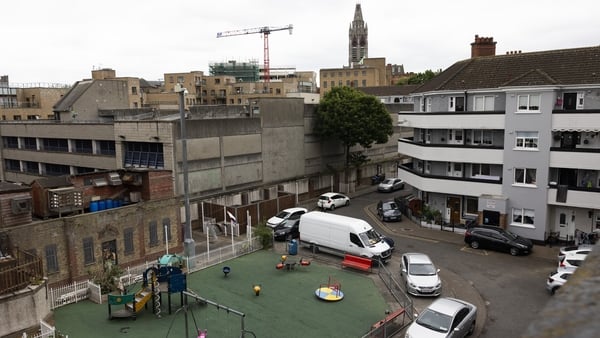
Residents of a Dublin housing estate have been told they must remove their €2,000 electric car chargers after the developer said they had been installed without the "required approvals".
Locals at the Shackleton development in Lucan have received letters from Cairn Homes, saying the charging points were fitted in public spaces and must now be disconnected.
One of those impacted is Bhawna Rana.
She moved into the estate in 2020 and had a charger installed in 2024.
Her home does not have a driveway, and has on street parking.
The charger is powered by cables that run from her house, under a cycle track and footpath and into the charger pole, which is just under 1m tall.
Ms Rana said a group of residents got together and decided to install the chargers.
She estimated there are over 20 such chargers now in place around the local area, although it is not clear how many have been told they must now be removed.
"A lot of people have the chargers around," she said.
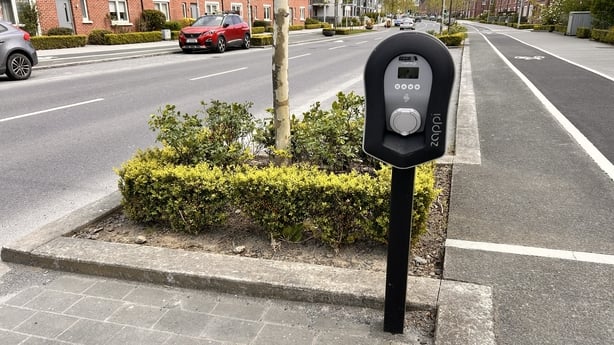
Ms Rana is now facing the prospect of having to remove the charging point and selling her EV for a diesel or petrol alternative.
"It's very stressful, to be honest, and not just the financial impact, but also the fact that we have to stress about this unnecessarily," she said.
She said the chargers were installed after receiving advice, and was done to the correct standards by qualified professionals, adding that there is no trip hazard.
"Absolutely not. It's done to the required standard. We have used the right ducting. It's at the right depth."
There is a significant financial impact too.
The cost of fitting the charger was €2,000 while her Tesla car was also around €45,000.
"We're still paying the instalments on it. And if we don't have the charging infrastructure, it's not practical to have EVs.
"You can't really rely on them without having a private charger. So, you're talking about having to buy a new car.
"I don't want to think about the cost, to be honest right now, because it's impractical," she said.
In a statement, Cairn Homes said that as part of the process where the responsibility for the estate is passed over to South Dublin County Council, "certain EV chargers have been identified as being installed within public areas without the required approvals".
It said it was aware of concerns by local residents and was engaging with them.
It said to avoid further delays in the council taking control of the estate, it has provided "clear guidance" to residents on the actions required.
It is not clear how many residents are impacted or what the implications will be if the residents do not remove the charging points.
But Ms Rana said her street has already been taken over by South Dublin County Council and is now calling for clarity as to who is in charge.
"There needs to be some authority who's making sure that the infrastructure that we're building today is fit for purpose, that we are aligning with the national strategy.
"I know there's a push from the Government to have more EVs on the road. But how is that going to work if you're not going to have appropriate infrastructure for charging?" she asked.
For its part, South Dublin County Council said it supports the transition to more sustainable transport choices, but said there are specific issues where charging infrastructure is installed outside the plot of an individual dwelling.
It said where privately installed EV chargers remain in footpaths or communal parking areas, SDCC cannot assume responsibility for the road, footpath or associated services.
The council also said it acknowledges that national policy in this area is evolving with the Government’s recognition of the need for solutions for those who live in homes with no driveways.
The Department of Transport has said it is aware of the challenges regarding home charging and said the Private Wires Bill is seeking to address the issue.
It said a framework is expected to be finalised later this year and a number of pilot projects are under way to address the challenges.
It all comes as the Government continues to push for more EVs on the roads.
It is aiming for 30% of all cars to be electric by 2030.
For that target to be reached, experts say, charging infrastructure needs to be ramped up.