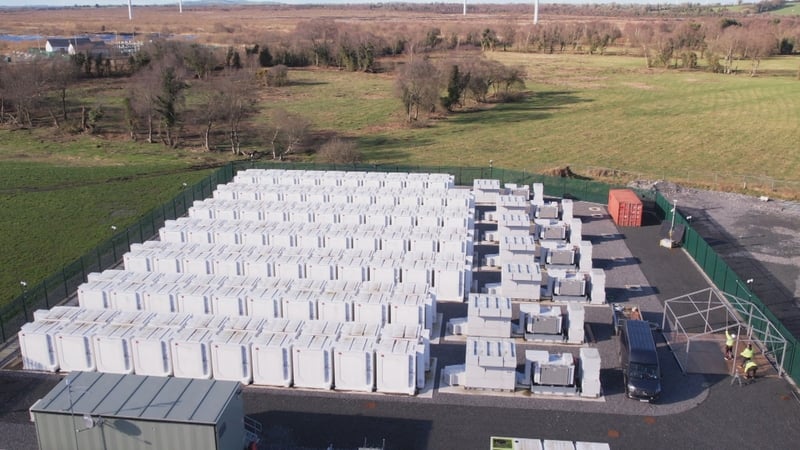

Statkraft, the largest producer of renewable energy in Europe, has launched Ireland's first ever four-hour grid-scale Battery Energy Storage System beside its windfarm at Cushaling in Co Offaly.
It can store enough power to supply 10,000 homes with renewable electricity for a full four-hour period after the wind has stopped blowing.
The 22.8-megawatt battery system has already demonstrated exceptionally strong response times.
The entire system can be called into action by Eirgrid and switched on in less than one tenth of a second, quicker than the blink of an eye.
Managing Director of Statkraft in Ireland Kevin O’Donovan said this will strengthen the stability and flexibility of Ireland’s electricity grid, and help to bring down the cost of electricity for everyone.
Mr O’Donovan said between 10% and 14% of available wind energy is effectively wasted each year, because even when the wind is blowing, a proportion of wind turbines are turned off during the day when electricity demand is low.
"All that power is going to waste. But by using our four-hour battery storage technology, we can capture it and effectively move it, so it is consumed at other times when electricity demand is higher," he said.
"This will bring down the price of electricity over the longer term. That is what we're aiming to do by rolling out more and more storage capacity," he added.
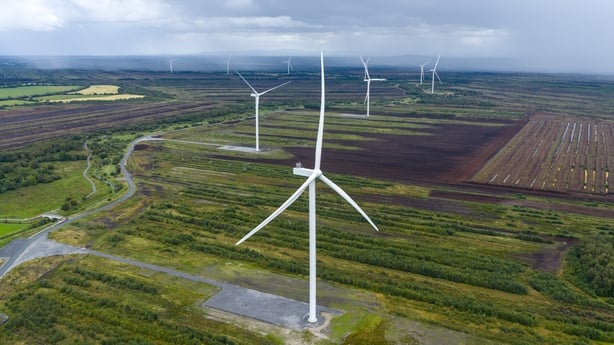
Statkraft’s 55.8 megawatt Cushaling Wind Farm is located directly across the road from its Battery Energy Storage System and beside the Edenderry power station.
The company is also planning to build a large solar farm on the site, starting this year, to complement the wind farm, and the four-hour battery system will be able to store electricity for future use from both.
It says Cushaling is evolving into a fully hybridised clean energy hub, mirroring the Government’s vision for green energy parks and the future of renewable energy generation in Ireland.
Battery duration refers to the amount of time a battery can discharge at its full capacity before running out and needing to be recharged.
The longer the duration is, the greater the buffer will be, and the more effectively the gap in time between peak electricity supply and demand can be bridged.
The increased flexibility for the electricity grid provided by battery storage systems can help mitigate the impact of sudden changes in renewable energy production such as those caused by weather events or unexpected equipment outages.
Until now most grid-scale energy battery storage systems installed in Ireland ranged from 30 minutes to two hours of capacity.
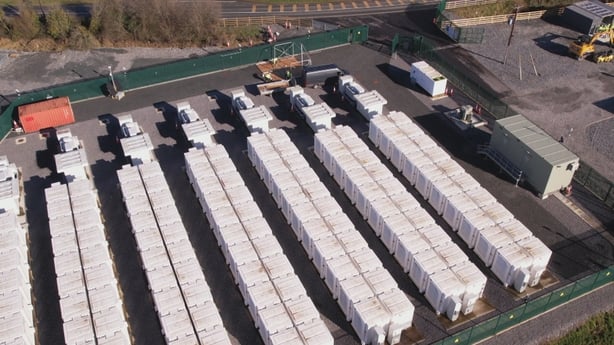
Statkraft said its pioneering four-hour storage system represents an evolution in energy storage in the Irish electricity market transitioning from short-duration energy storage to long-duration storage.
Statkraft entered the Irish renewable electricity market in 2018. Since then, it has grown its presence significantly with major investment of over €1 billion across onshore wind, offshore wind, solar, battery storage and electricity grid services.
The Battery Energy Storage System project at Cushaling will also have a dedicated sustainability fund which will be made available, by Statkraft, to local sustainability initiatives with a year of it being fully operational.
We need your consent to load this rte-player contentWe use rte-player to manage extra content that can set cookies on your device and collect data about your activity. Please review their details and accept them to load the content.Manage Preferences