Around 120 healthcare workers who have not returned to work due to Long Covid are set to lose their ordinary sick pay by June, leaving many reliant on illness benefit of €254 a week.
Some members of the group, backed by the Irish Nurses and Midwives Organisation (INMO), even fear they face losing their homes due to the financial impact.
They are due to meet the Taoiseach on Thursday to seek further support.
Until last December, affected healthcare workers were paid their full salary, under a 'special leave with pay' scheme. It was introduced in the early days of the pandemic, in March 2020, but extended several times.
When scheme ended last December, they moved onto the standard public service sick pay scheme, meaning three months full pay followed by a further three months on half pay ending in June.
Most have already been rejected for an extension of this sick leave on the grounds of that they do not have a "critical illness."
Once this sick pay period ends, they will become wholly reliant on social welfare payments or a HSE "temporary rehabilitation" payment of 37% of their salary.
The INMO says that these supports for healthcare workers for Long Covid sufferers are not enough.
"They were our heroes. We applauded them and we should now not abandon them," the INMO’s Phil Ní Sheaghdha said.
"Their recovery is slow in returning to work - and that's everybody's wish – so, what we want is the Government to support them until that time. They're trying to get physio, to get treatments that help them increase their energy levels to have some semblance of normality".
The INMO wants government to recognise Covid-19 as an occupational illness so they can get ongoing financial supports to help them back to work, without a specified expiry period.
If healthcare workers contract other infectious diseases at work, such as infections like HIV or Hepatitis C, they are entitled to access the HSE’s Occupational Injury Scheme with ongoing supports until recovery.
Without Covid-19 being recognised as occupational illness, this scheme does not apply to those suffering with Long Covid.
Healthcare workers insist that they undoubtedly became infected in their jobs, often while working in hospitals or in nursing homes with segregated wards and areas for people confirmed Covid-19 infections.
‘We were a person behind that statistic’
Shortness of breath due to respiratory problems is one of the main Long Covid symptoms affecting healthcare assistant, Tracey Dowling, from Monasterevin, Co. Kildare.
As result, she also experiences crippling tiredness.
"I still have a lot of fatigue and my joints get sore.I'm stepping like a person that's 20 years older," she said.
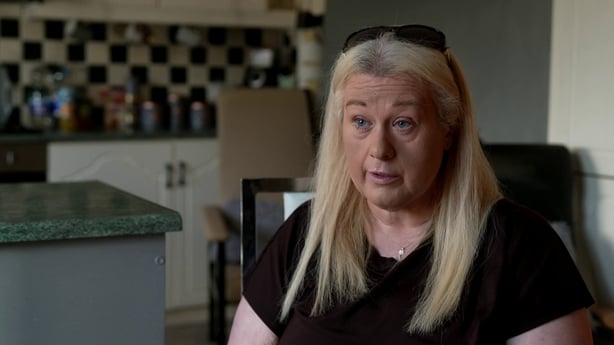
She became critically ill from Covid-19 after the outbreak at the Dublin hospital where she worked for over 20 years.
As a result, she was admitted to ICU and remained on a ventilator, in an induced coma, for 19 days.
"I still have a lot of fatigue and my joints get sore. I'm stepping like a person that's 20 years older," she said.
She became critically ill from Covid-19 after the outbreak at the Dublin hospital where she worked for over 20 years.
As a result, she was admitted to ICU and remained on a ventilator, in an induced coma, for 19 days.
She says scans in more recent years show her lungs are scarred.
"I got up, I went to work, I put my family at risk, and then I got it myself, and then I ended up like this from it," she said.
A recent assessment by an HSE Occupational Health report states that she is "unfit to return to work."
By the end of June, she expects to go on illness benefit of €254 per week, which is more than a potential HSE payment of 37% of her salary.
She has applied to extend her sick leave but is yet to hear if she is eligible.
Ms Dowling said she's financially reliant on those around her to support her and feels the government could do more, given that up to a third of those infected with Covid-19 were healthcare workers at the time she was infected, according to Health Protection Surveillance Centre (HSPC) figures from early 2020.
"We were a number and a statistic on the news every day. But we were a person behind that number and behind that statistic," she said.
The INMO claims people like Ms Dowling should be allowed to apply to a HSE occupational injury scheme.
The INMO and SIPTU have long argued this point in a protracted industrial relations dispute with the HSE, including proceedings before the Workplace Relations Commission (WRC) and the Labour Court.
"Those schemes have always existed, because it is a fact of life if you work in healthcare, you are going to be exposed to an illness that might affect you as a healthcare worker," INMO's Phil Ní Sheaghdha said.
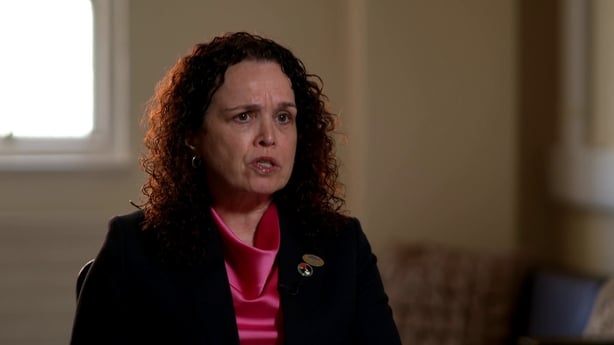
The European Commission recommended in 2022 that Covid‑19 be recognised as an occupational illness. Ireland and Greece were the only two EU member states not to adopt that position.
A letter from the then Minister for Health in 2022, Stephen Donnelly, to the then Minister for Social Welfare, Heather Humphries, said that Ireland risked becoming an "outlier" by not recognising Covid-19 as occupational illness.
The Department of Social Protection’s view then and now is that Covid-19 does not fulfil the definition of an "occupational illness", as its main source of transmission was in the community.
The Department of Health also told Prime Time the Health Service Executive’s (HSE) Injury at Work Scheme has a "very specific eligibility criteria" which requires that an injury must be 'wholly attributable’ to an incident occurring in the workplace. The schemes only apply in circumstances of physical injury.
"Contracting Covid-19 is not considered a physical injury, and workplace exposure cannot be distinguished from widespread community transmission with sufficient certainty," it said.
Taoiseach's recent statements in the Dáil
The position of the Department of Health appears to contrast with a statement made by the Taoiseach Micheál Martin in the Dáil in February, when he was asked about providing continuing payments for Long Covid healthcare workers.
He said "the fact that it was without question, in my view, contracted on the hospital site. I don’t dispute that".
When asked again about the impending financial cliff for Long Covid-healthcare workers in March, he stated "that they did do incredible work during Covid working in the health service and I did meet them last June. I will talk to my colleagues again in respect of it... to see what can be done in endeavouring to support."
What does the research say?
Professor of Immunology, Christine Loscher, at Dublin City University (DCU) says that there is increasing medical research indicating that Long Covid symptoms can persist for many years.
"What's really evolved in the last year or two is data that shows that the profile of somebody with Long Covid is very different to a normal individual."
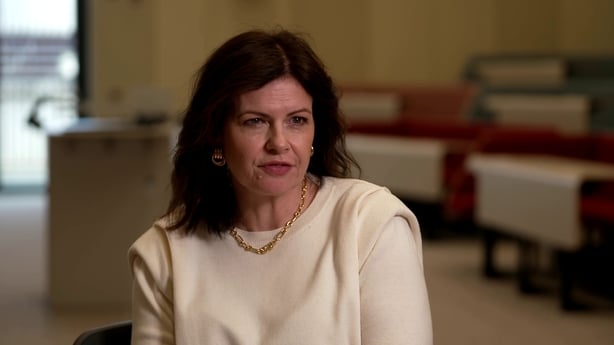
She believes for this reason more could be done for those affected.
"We've seen in other countries across Europe where they would have a substantially higher number of Long Covid clinics and substantially more supports for people with Long Covid."
The most common symptom is fatigue, but also include brain fog, insomnia and headaches.
"There are a number of cardiovascular symptoms which are chest pain, palpitations, and then the other one is the respiratory one," according to Professor Loscher.
‘My life is very small now’
Surgical nurse, Eilis McManus, from Clontarf who has Long Covid finds the Government's stance hard to understand.
When she got Covid in April 2020 she was working as a nurse on a Covid-19 ward in a prominent Dublin hospital.
"We were looking after only Covid-positive patients. So, 13 hours a day I was surrounded by the virus," she said.
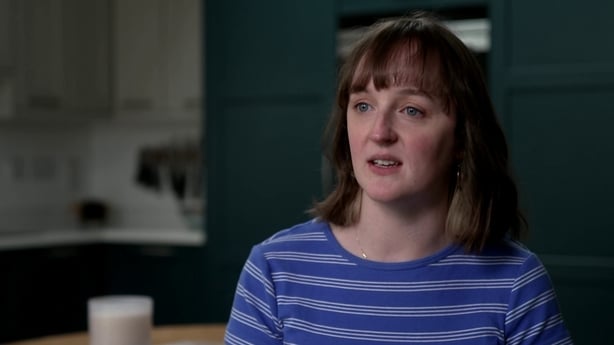
Previously healthy and then aged 26, she expected to rebound quickly but she developed heart issues.
"I had myocarditis, pericarditis, and pericardial effusion. My heart was basically inflamed, and the sac that your heart sits in, was inflamed," she said.
Ms McManus, now 32, says she has ongoing palpitations and other health issues from that time.
"Fatigue would probably be my main symptom that affects me on a daily basis," she said.
Having previously worked long shifts she now says, "a 15-minute walk would be enough for me."
Any social contact, she says, is "meticulously planned around my energy."
On her wedding day in 2024, she says, "I had to take time during the day to rest multiple times throughout the day."
Long Covid is also limiting her plans now. "I wanted kids at that time and beforehand, but now, you know, how do I look after a baby when sometimes I can't look after myself because I'm so unwell?"
With certification that she has a "critical illness" from a private Long Covid clinic, her sick leave has been extended for another year.
"My life is very small now, so I really miss it [work], but I don't know what the future holds for work for me," she adds.
‘I can't live on one-third of my salary’
Another nurse suffering Long Covid is Noreen Lucey, from Mogeely in East Cork.
She has been turned down for an extension of sick leave from June, but after that she can apply for a payment bringing her to just over one-third of her salary.
Ms Lucey says she gets distressed even thinking about this.
"I can't live on one-third of my salary, it's as simple as that. My mortgage, my direct debit is €2,000. That's not my medication, that's not my doctor's bills, nothing like that," she says.
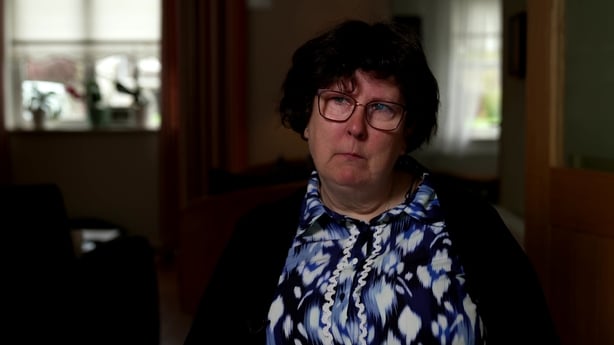
"If I had cancer in the morning, I'd be fine. I have every insurance that you can think of, but none of them pay out for Long Covid".
Now in her mid-50s, she was working in a hospice oncology unit, when she got Covid after an outbreak there in late 2020.
Now, she says she has ongoing symptoms of "huge fatigue and brain fog."
"At the moment I can't care for anybody.I'm not a safe pair of hands. I can't care for myself," she said.
She says her bouts of disorientation have caused her to do dangerous things, including driving the wrong way down a motorway.
"I'd go to the beach and I'd end up getting lost," she says.
She previously returned to work, but found she was not well enough to do her job.
"I couldn't retain any of the handover. I felt too unsafe to do any medication. On the fifth shift, I just went in and I said, 'I can't do this anymore'."
She has ten years left on her mortgage and says she fears for her financial future if the Government does not do more to help people like her.
"The chance of losing my house is huge. If I don't get back to work by next year, it'll be gone," she said.
A report by Oonagh Smyth and Genevieve Brennan on the impact of Long Covid on healthcare workers is broadcast on the 28 April edition of Prime Time at 9.35pm on RTÉ One and RTÉ Player.