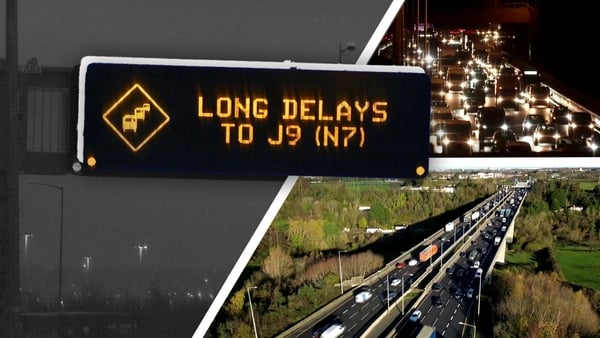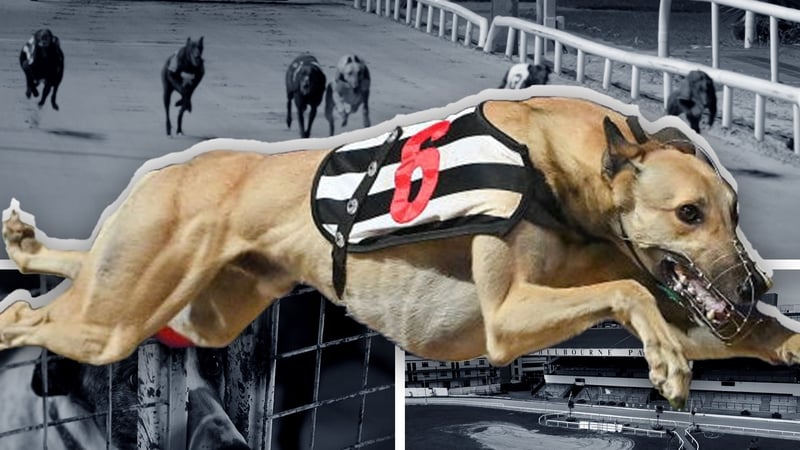

Parliaments in Scotland and Wales voted to ban greyhound racing in the past fortnight, but Greyhound Racing Ireland (GRI) says those decisions will have little impact here.
"There is a very strong industry here and there is no comparison," Tim Lucey, the GRI's CEO, told RTÉ Prime Time.
The last remaining greyhound track in Scotland was closed in March 2025 and there is currently just one track in Wales.
UK bans have reignited debate over the future of racing in Ireland.
Following the bans, Solidarity-People Before Profit TD Ruth Coppinger asked if the Government here would follow the example of its neighbours.
"I do not intend to ban greyhound racing here," Minister for Agriculture Martin Heydon responded.
That is not something the GRI takes for granted, Mr Lucey said.
"We have very strong support from government, we have a very committed set of sponsors, businesspeople and business partners who work with us. So, it’s not a concern but a pity," Mr Lucey said.

During the Scottish parliament debate, Green Party MSP Mark Russell said, "Racing greyhounds at speeds of up to 40 miles an hour around an oval track result in catastrophic injuries and deaths."
Similar animal welfare concerns have been expressed in Ireland by those who oppose greyhound racing, including volunteers at the Limerick Animal Welfare (LAW) charity.
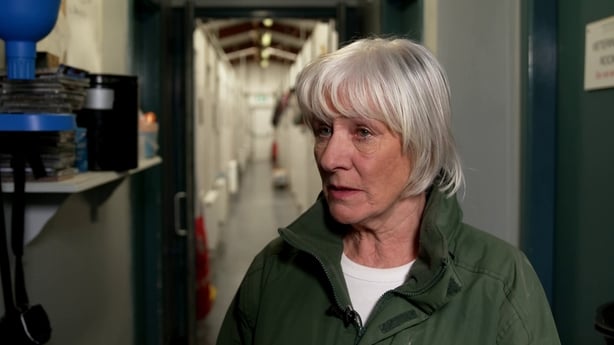
Geraldine Gunning, vice-chair of that organisation, argues that no animals should be used for "so-called sports".
"In greyhound racing, the dogs are running on tracks that are not suitable. They have very sharp bends. There is a lot of accidents. They end up with injuries such as broken hocks, broken legs and other injuries," Ms Gunning said.
"And then the owner of the greyhound knows that greyhound is not going to be able to race anymore and win races. So, they're put to sleep the majority of the time," she added.
Welfare record
Greyhound racing is divisive, caught between persistent questions over animal welfare and racing enthusiasts’ love for greyhounds and racing.
Mr Lucey says there are welfare checks and a veterinary presence at every greyhound stadium in the country, 15 of which are in the south with another two in the North.
"In terms of injury rates, we had just over 88,000 entries into our races last year. 99.63% of those entries racing greyhounds came off the track uninjured," Mr Lucey said.
"There's obviously an injury rate. It varies between 0.25% to about 0.38% on an annual basis," he added.
Funding
The Government allocated €99.1m to the Horse and Greyhound Fund in this year’s Budget.
About 80% or €79.3million goes to Horse Racing Ireland with €19.82 million allocated to the greyhound sector.
Of the €19.82 million allocated to the GRI, €8.1 million is allocated in prize money. €3.79million is allocated to welfare and a further €1.8 million is spent on regulation.
Critics argue greyhound racing is propped up by taxpayers’ money and question whether it could survive without State support.
Asked about that, Mr Lucey said: "I think it would be challenging, obviously very challenging."
"There are elements of our business that make money. We make money out of restaurant, catering and entertainment business. We make money from our Tote business," Mr Lucey said.
"Clearly there's a level of sustainability that is required from government to support greyhound racing, and that's very welcome. We'd have a different model of racing, I think, if funding from government were to reduce in any way," he added.
'Running for their lives’
A 2019 programme from RTÉ Investigates titled 'Running for their Lives’ reported that up to 6,000 greyhounds were being killed each year because they were not fast enough.
It also reported that the industry was breeding 1,000% more puppies than it needs, leading to a cull of thousands of racing dogs every year.
Campaigners say overbreeding remains a key issue in the sector.
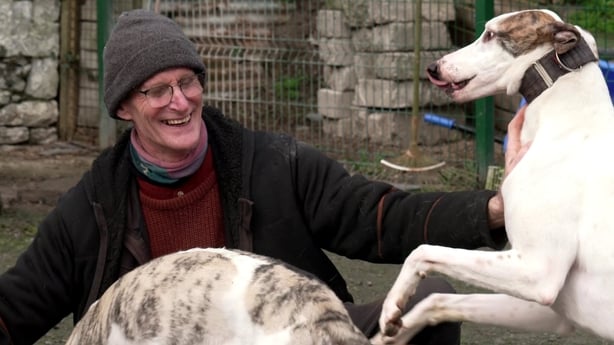
Paul O’Riordan is the founder of Great Hounds in Need, a rescue charity based in south Tipperary where most of the dogs taken in are former racing greyhounds.
"So many greyhounds are bred, to try and find the next winner. In any litter, there'll be six to nine dogs. You might get one good one, and the rest, they get wasted. That's why they're overbred," Mr O’Riordan said.
Great Hounds in Need rehomes dogs in Slovenia, the Czech Republic, Germany and Sweden, and has a long waiting list of owners seeking to surrender their dogs.
"There's so much waste, and so the need for us to rehome them," Mr O’Riordan said.
Geraldine Gunning from LAW says that while the reported annual culling of 6,000 dogs has decreased since 2019 "there’s still a lot of greyhounds being put to sleep."
The GRI says the industry has introduced more stringent regulations in the seven years since the RTÉ documentary.
"There is a level of putting them to sleep on humane grounds. But the figure is not 6,000, it's under half of that now," Mr Lucey said.
He added that some deaths occur due to natural causes or illness over a greyhound’s lifetime, while others involve dogs deemed unsuitable for rehoming.
"It's important to note that over the last five years, we've rehomed close to 7,000 racing greyhounds," he said.
Animal welfare groups, including Greyhound Action Ireland, dispute these figures, arguing that the whereabouts of some dogs are still not accurately recorded.
The GRI says that it can now account for every greyhound as they are microchipped at 12 weeks after they become a racing greyhound and tracked until retirement.
"At this point in time there's about 62,000 greyhounds who have been traced, and every life stage of that greyhound is traced. Those records have to be updated every 42 days, by an owner and trainer, so we know where every greyhound is," Mr Lucey said.
The key question then is what happens to greyhounds once their racing careers come to an end.
Retired greyhounds
The GRI provides around €400,000 each year to the Irish Retired Greyhound Trust (IRGT), which works to rehome former racing dogs.
Trustee Brenda Powderly said the organisation typically rehomes between 1,000 and 1,200 greyhounds annually, with numbers rising to around 2,000 during the Covid-19 pandemic.
Most of the greyhounds rescued by LAW are rehomed in Italy, where they are popular as pets, while in Ireland they have not traditionally been viewed that way.
Geraldine Gunning of LAW said greater awareness is needed, describing greyhounds as "very docile" and "very gentle" animals that make suitable pets.
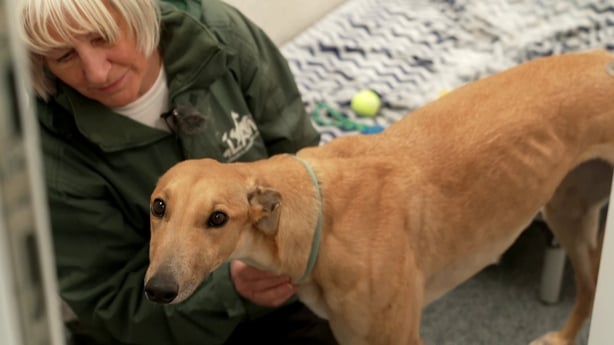
While Minister Martin Heydon has ruled out a ban, the wider debate is far from settled.
Ms Gunning firmly believes the sport’s days are numbered.
"Eventually, hopefully, we'll get it banned," she told Prime Time.
But Brenda Powderly from the Irish Retired Greyhound Trust is looking forward to the centenary of greyhound racing in Ireland next year. The first greyhound races took place in May 1927 at Shelbourne Park.
"It's such a wonderful sport. I can't see it ever dying here. We're too much involved, we love it too much," she said.
‘Gone to the Dogs’, from Conor McMorrow and producer Isabel Perceval’s report about greyhound racing, is broadcast on the 31 March edition of Prime Time at 9.35pm on RTÉ One and the RTÉ Player.