
Three months after Australia introduced its landmark social media ban for under-16s, millions of accounts have been suspended.
Other countries, including Ireland, are considering following Australia's lead.
But questions remain about how teens are circumventing the process, and the long-term societal impact of putting a ban in place.
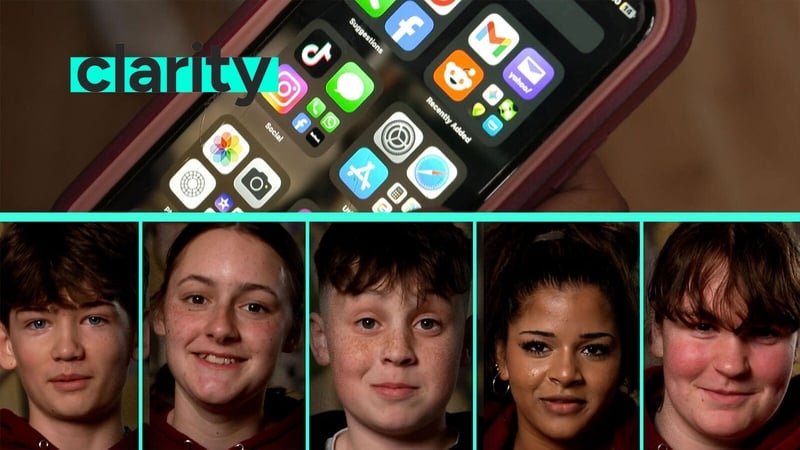
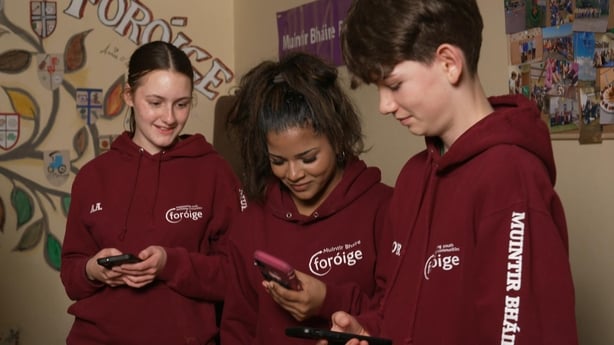
Five teenagers from the west Cork village of Durrus agreed to take part in a week-long experiment for Prime Time.
For one week, they deleted the social media apps covered by Australia's proposed under-16s ban: TikTok, Snapchat, Instagram, Facebook, Threads, Reddit, X, YouTube, Kik and Twitch.
Sean O'Brien, aged 13, Abbie Arundel, 15, Daniel O’Sullivan,14, Michaela Nicholas, 16, and 15-year-old Mary Ellis all know each other through their Foróige youth club.
They tend to spend between two and six hours a day on social media, typically driven by the use of apps like Snapchat, TikTok, and Instagram.
"My favourite thing about being on social media is probably just feeling that I'm connected to other people," Sean told Prime Time.
Mary described it as a way of "just seeing what everyone's doing really. Like, I can communicate really easily."
Daniel said he uses the apps to be "texting my friends, looking at what they've been doing lately, that kind of stuff."
WATCH: Prime Time challenges five teenagers to a social media ban for a week.
Yet they also recognise the downsides of social media, and the addictive or engagement-promoting features within some of the apps they use.
Snapchat, for instance, displays a 'daily streak' score, which displays to other users the level of connection between two friends. To maintain it, each user must send a Snap to the other at least once every 24 hours.
"You have to do it every day because there's like streaks and then, yeah… It's just kind of like annoying sometimes," Abbie said, "like, you just forget about it and then you have to do it."
Michaela noted that other algorithmic features on apps like TikTok and Instagram can encourage her to "just keep scrolling, there's nothing like stopping [you]."
"I've probably spent a bit too long on it, and then sometimes I just feel a bit tired afterwards and I don't feel like doing much rather than just sitting down on the couch," Sean said.
"There's a lot of fakeness, I feel like, and a lot of fake stuff probably," Mary said.
Prior to starting the experiment, Prime Time took note of each teenager’s screen time data.
They were also asked to keep short video diaries throughout the week, documenting how they were feeling without their usual apps.
The pressure got to at least one of our volunteers. Michaela, Abbie and Mary went to a ball organised by Foróige over the weekend, and Mary said she gave in at this point. It was day three.
"So obviously, I did cheat. I can admit that," she said. "I downloaded Snapchat just to see who's going [to the ball]... I think I'd be bored without it."
Others said that while the experiment overall "was grand", it was not without its challenges. Daniel said he was "missing texting my friends", while Sean said he "probably felt a bit disconnected to my friends at times. I would have probably been chatting to them on Snapchat, but I wasn't."
Screen time reduction
Over the course of the week, all five teenagers saw their daily screen time fall.
Michaela cut hers from six hours and five minutes to two hours and five minutes, a reduction of four hours.
Sean went from two hours and 27 minutes to just 48 minutes. Abbie reduced her usage from three hours and 12 minutes to one hour and seven minutes, while Daniel dropped from two hours and 53 minutes to one hour and 25 minutes, but said he spent more time gaming.
Mary, who reinstalled some of the apps in the ban, saw a smaller but still significant fall, from four hours and 46 minutes to three hours and 11 minutes.
While the scale of change varied, every participant spent less time on social media by the end of the experiment.
Would a social media ban work?
Our volunteers said they could understand why parents or governments might consider a ban. Abbie said it would help ensure "kids don't have access to videos or stuff that's not for them and not age-appropriate."
Most said a ban would be more beneficial for younger users. Mary said a ban would be a good idea for "for the younger kids, younger people under 12."
"But for our age and over 12 and stuff, definitely not... it's going to be stupid because we're more mature."
Daniel took a similar view, arguing that people under 13 are "too young" for social media. "They're getting addicted. It’s too early and stuff."
In practice, they also struggled to see how a ban on users their age would work. "They will get around it, though, because there's NordVPN or just lie about their age," Michaela said.
Sean said that if there was "face verification or something, they’d get their older sibling or something to do it for them."
"I don't think it'll ever work. People will always find ways to get around. You can change your age quite easily," Daniel said.
Ireland’s plan to ban social media
Since Australia introduced its under-16 social media ban in December 2025, governments across Europe have been watching closely. Rather than waiting for coordinated EU action, many are advancing national proposals of their own.
At least 14 European countries are now considering age-based restrictions on social media access for under-16s.
In France, legislation has passed the National Assembly and is awaiting Senate review.
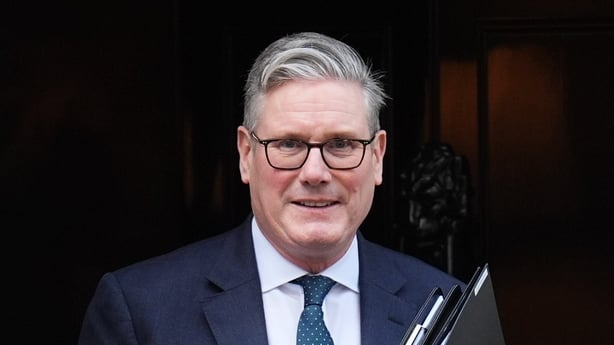
The UK government has launched a public consultation on whether to introduce a similar ban, inviting young people and their parents to submit comments ahead of any government decision.
Denmark, Italy, Norway, Portugal and Spain are all exploring legislation or formal consultations on age limits.
There is, however, no single European model emerging. Some governments are proposing outright bans.
Others are focusing on age-verification systems. Earlier this week, it was announced an EU expert group will begin work on whether to ban social media for children, with the aim of coming up with recommendations by the summer.
Taoiseach Micheál Martin has said "there needs to be more debate on whether blanket bans are the way to go", while Tánaiste Simon Harris has said he is "very supportive of the idea of social media being restricted to people above a certain age".
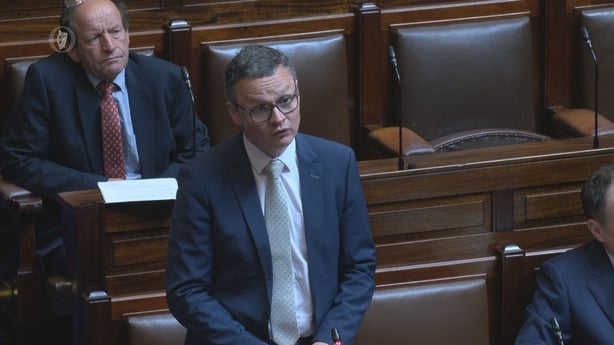
During a debate on social media bans on Tuesday in the Oireachtas, Minister for Communications Patrick O’Donovan said that the "Government's view [is] that a decision at EU would be preferable" but that "Ireland will also take action domestically if necessary."
He added that it is regrettable that the "European Commission and the European Union had not acted as one with regard to this up to now, and that individual member states are being left to do it."
He also said a "pilot is envisaged ... and will be voluntary and will run for a number of months" and that "feedback from the pilot will inform the shape of the initiative."
A key question outstanding is how it would work in practice.
Age verification would be delivered through a new Irish Government Digital Wallet, the Office of Public Expenditure and Reform said, which is "a secure mobile application" developed in line with EU digital identity rules. Under EU legislation, Under EU legislation, Ireland will have to introduce some form of digital identity wallet by the end of 2026. But crucially, it won't be mandatory for citizens to use.
The Department said the wallet will allow individuals to "store, manage, and share verified digital credentials issued by public-service bodies" and potentially, in future, non-public bodies.
It will be able to hold a wide range of credentials, including identity documents, licences and certificates, and "will ultimately contain credentials that can be used for numerous things, one of which can be Age Verification."
In practical terms, that means a person could use the wallet to confirm they meet a minimum age requirement online. Rather than uploading an identity document to a social media company, the wallet would allow a user to confirm only what is necessary for a "specific transaction (for example, proving age without sharing date of birth)." It added: "No tracking of wallet or credential use will take place."
The Department confirmed that the verification system will not rely on a commercial vendor, but instead on "an in-house developed opensource product, based on Credo from the Open-Wallet Foundation, which again complies with the agreed EU standards."
A beta version of the wallet "is to be launched as a research tool only," adding that "the nature, deployment and timeline of the pilot is still under consideration and will be outlined in due course."
Under EU regulations, Ireland will have to introduce some form of a digital identity wallet by the end of 2026. Crucially, it won't be mandatory for citizens to use, but would underpin age verification if and when it's rolled out.
The Department added that a pilot is still under consideration; it has not confirmed when it will begin, how long it will run, or whether under-16s will be involved.
Global push and pushback
Yet as governments accelerate plans to introduce age checks, a group of 371 security and privacy academics from 29 countries is calling for a global pause on rolling out age-verification systems.
In an open letter, the researchers said they shared "concerns about the negative effects that exposure to harmful content online has on children," but cautioned that current proposals would require all users, minors and adults, to prove their age online.
They argue that a robust system would likely require checking "government-issued IDs with strong cryptographic protection for every single interaction with the service."
Building and maintaining this infrastructure would be technically complex and could add friction to online services, which would discourage smaller providers from participating.
This then would also risk centralising power in the hands of the few companies capable of deploying these systems at scale.
They also warn that efforts to stop people circumventing the restrictions could lead governments to restrict tools like virtual private networks, which are technologies widely used by journalists, activists, and others, to protect their identities.
Whether Ireland ultimately pursues a national ban or pushes for an EU-wide solution, there also remains questions about whether restricting access to social media will deliver the improvements in children’s wellbeing that policymakers hope for.
Australia's regulator is currently tracking more than 4,000 children and families over two years to assess the ban’s impact on wellbeing, mental health, and behaviour, acknowledging that while compliance can be measured quickly, whether the policy actually works will take years to know.
The full report from Clarity Correspondent Kate McDonald and producer Isabel Perecval will feature on the 5 March edition of Prime Time on RTÉ One and RTÉ Player.