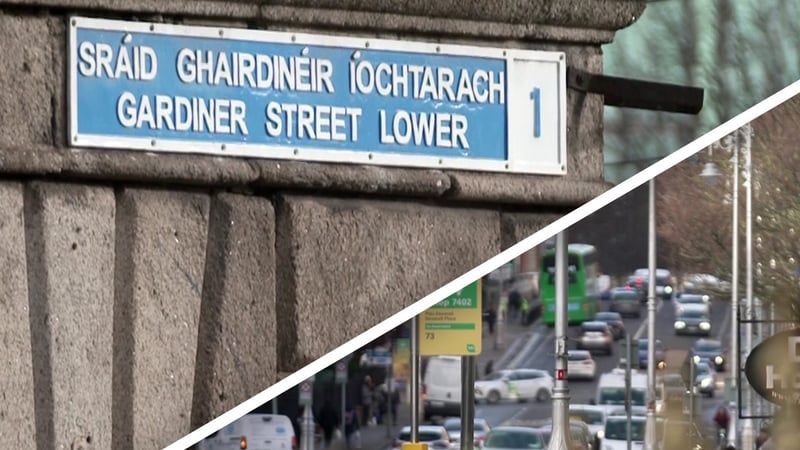

One in ten people who are homeless in Ireland are living in accommodation on one Dublin street, according to figures released to RTÉ's Prime Time.
There are more than 1,700 homeless beds contracted on Gardiner Street in Dublin’s north east inner city, while 16,734 people are listed as homeless and relying on emergency homeless accommodation nationwide.
The Dublin Region Homeless Executive (DRHE) confirmed that 20 properties on Gardiner Street are used for homeless people, with nine accommodating families and 11 providing housing for single individuals. The vast majority are privately owned and operated.
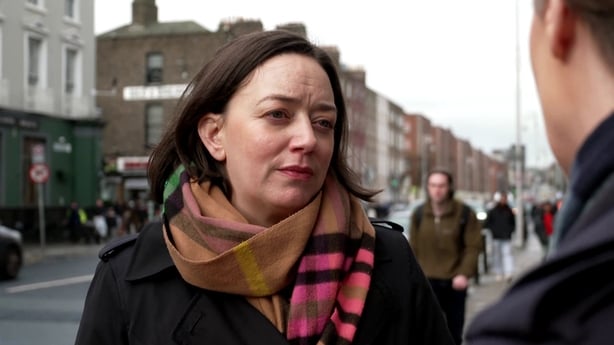
Speaking to Prime Time, local activists and politicians criticised the concentration of emergency accommodation.
"It is not sustainable for one part of the country to carry such a significant amount of the work of providing homeless services and emergency support services," Green Party Councillor Janet Horner told the programme.
"Dublin 1 has the type of accommodation that they can open in a hurry when they need to, but we urgently need to change course," Cllr Horner added.
"We are witnessing the reintroduction of a homeless ghetto in the north of the city," Paul Flynn, community activist with the Young People At Risk organisation warned.
"People are parachuted in and families have a feeling of entrapment. It's very much an out-of-sight, out-of-mind scenario. How is that a model of good child protection?" Mr Flynn asked.
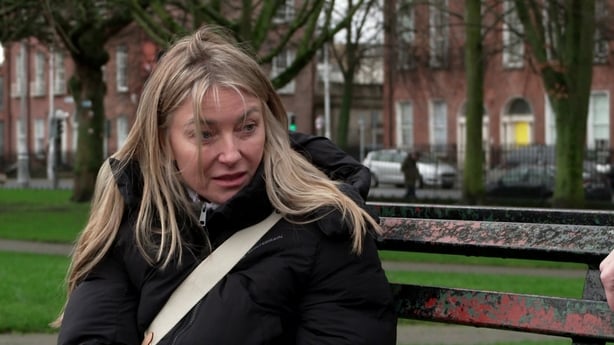
For Jessica Molloy, homeless accommodation on the street has been "like living in a matchbox."
Jessica and her three children have lived in one bedroom emergency accommodation for nine months. "The first room I was in was really restrictive. There were two sets of iron bunk beds, no cooking facilities and no washing facilities," Jessica said.
The guesthouse where the family is accommodated charges €10 per month to rent a remote control for the television in the room, which Jessica says she refuses to pay.
"In my eyes the Government is paying enough," she said.
The family has recently been offered a permanent home and will be moving soon, but their experience has taken a toll.
"It affected my mental health. It was horrendous. I wouldn't usually be an anxious person, but it has really made me anxious."
The growing number of homeless children living on the street is also placing pressure on local services. Currently, 20 per cent of students at Gardiner Street Primary School are living in homeless accommodation.
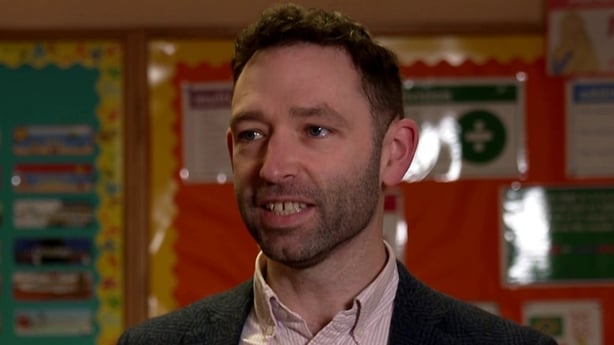
School Principal Eoin Murphy says "students’ basic needs aren't being met a lot of the time because they might be up late at night."
"They might not have good washing facilities or cooking facilities, nowhere to play or do their homework," Mr Murphy added. "If your basic needs aren't being met it's very hard to learn."
Mr Murphy says the school has developed an expertise in working with homeless children but that it's a challenge to balance the requirements of all students.
"I'm so proud of this school. It has served the locals for 200 years, but more supports are needed because of the unique situation we find ourselves in."
Homeless accommodation across Dublin is heavily concentrated in Gardiner Street, but also in the city. While Fingal has 20 centres, South Dublin has 16, and Dún Laoghaire-Rathdown has 12, Dublin City Council oversees 165 separate properties.
The owner of one guesthouse on Gardiner Street, Brian Moloney, spoke to Prime Time. He has owned his property, Abbott Lodge, for decades. In recent years, he was asked by the DRHE to provide homeless accommodation.
"These are unfortunate people so we did our best for them. We were flexible in every way, we had kitchen facilities open 24/7. The services we provided were as good as we could," Mr Moloney said.
"I'm sure they weren't suitable for families, but that was the best that could be done," he added.
Some of the homeless guests stayed for up to two years. Mr Moloney rejects the suggestion that he has made money from the misfortune of others, saying the guesthouse rooms would have been full of tourists had he turned down the request to provide homeless accommodation.
Accepting the street has "lost its appeal somewhat in terms of the tourist feel," Mr Moloney says that "at the end of the day we're a business and we're not choosy as to who stays."
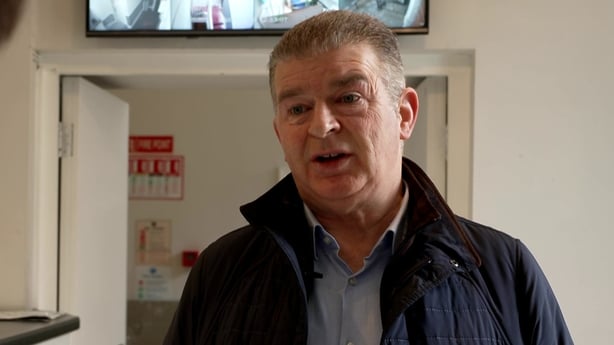
The property is being renovated for a return to tourist accommodation, as the DRHE is ending its use for homeless housing. At the same time, the city council confirmed to Prime Time that it has bought Avondale House, a guesthouse across the road, for €6 million.
The move, which will provide savings to the local authority in the long term, will not significantly affect overall homeless numbers on the road in the short term, Prime Time understands.
For Mr Moloney, it means a return to his core hospitality business.
"Gardiner Street has a lovely character. The Georgian buildings are very nice. I'd be confident enough that it would be attractive to tourists," he said.
Yet it remains a challenging environment for local businesses.
The concentration of homeless accommodation has led to a deterioration in the perceived safety of the street, Will Monaghan, owner of the One Society restaurant, told the programme.
"It's a kilometre of homelessness," Mr Monaghan said. "Customers don't want to hang around because when they walk around, they see the area for what it is – overlooked," he added.
He said social problems are not caused solely by homelessness, "but it's a symptom," adding that the restaurant’s outside terrace has been vandalised and that retaining regular customers has become increasingly difficult.
"When you don't feel comfortable walking down the street, it does change if you want to come back here or not."
The restaurateur is calling for a 30% reduction in homeless accommodation in the area saying, "there are not enough resources when the concentration is so high."
"We’ve got so many lovely people around here, and that spurs you on. We're going to figure it out but homelessness is a massive problem for the whole community."
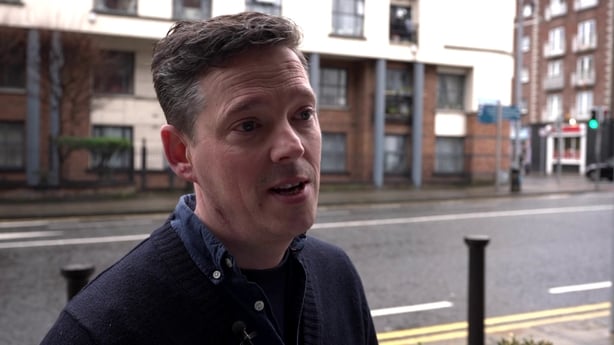
Cllr Horner said that, in general, hostels are well run on Gardiner Street and "do a good job of providing a secure environment for the wider public around them."
"But it does make a difference when you have a concentration of high dependency issues in one area," she added.
Compounding the challenges in the inner city is the overlap between other State bodies seeking accommodation in the same areas. Properties that are turned down for homeless accommodation can be approved for housing asylum seekers.
Across the wider north inner city, there are around 1,500 people seeking international protection living in State provided accommodation.
"My big concern is that an area is not ghettoised simply by having homeless accommodation. It is ghettoised when homeless accommodation is not matched with support and services," Cllr Horner said.
The DRHE told Prime Time it wants to reduce the current concentration of emergency accommodation, pointing to recent newspaper advertisements seeking to attract providers outside the city's core.
"We now actively seek to balance having enough accommodation for families and adults presenting with a need for shelter with community impact," it said, adding that it is "limited by the options that are made available to us through our open tender process and projects developed by the four Dublin Local Authorities and NGOs."
Community activist Paul Flynn believes there is a need for more integrated, long-term thinking.
"We need to identify that the homeless problem is not going away and start thinking how do we provide better for these families?" he said.
"I see the positives of the local community embracing another issue that is not of our making, but we really need to grasp the nettle now."
A report on Gardiner Street from reporter Louise Byrne and producer Genevieve Brennan was broadcast on the 12 February edition of Prime Time on RTÉ One and RTÉ Player.