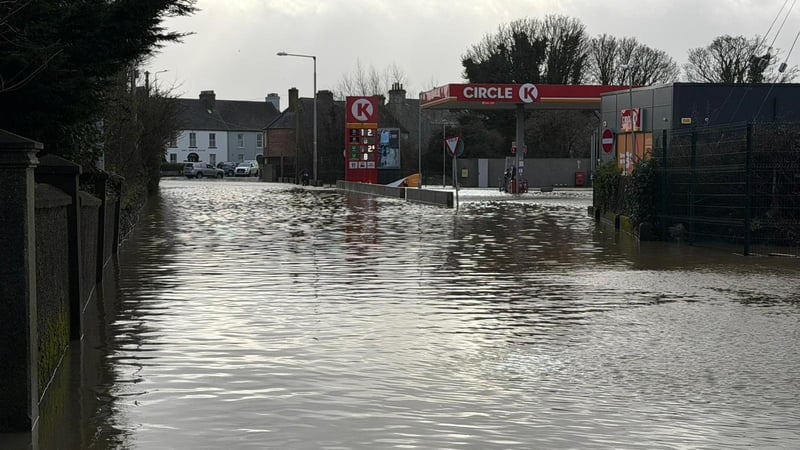

Met Éireann says that its head of forecasting, Eoin Sherlock, told the National Emergency Co-ordination Group that there was a "high likelihood" of river flooding and surface flooding in parts of Leinster and Munster, on Monday afternoon - before Storm Chandra struck later that evening.
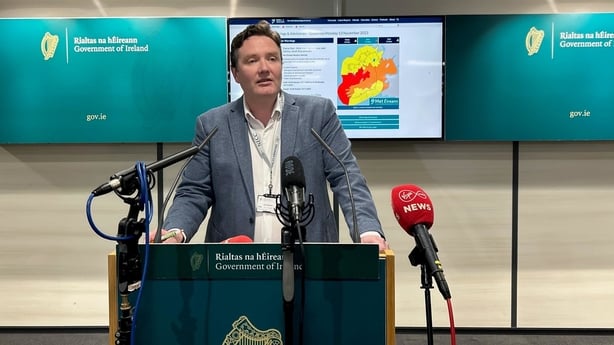
It follows comments from the Minister for Housing and Local Government, James Browne, yesterday, who said the forecaster was "guarding information" on flood risks.
The Minister who has responsibility for the National Emergency Co-ordination Group (NECG) said Met Éireann needed to "step up its communication with the public".

However, Mr Sherlock added that last Monday communications to the public had been made. "The expected impacts and flooding risks, including mention of river levels and soil saturation, were communicated to the public through a commentary on our website, social-media channels, bulletins and media interviews," Mr Sherlock added.
In an answer to a Dáil question last December the Minster James Browne explained how the current system of communicating more detailed localised information on flood risks works.
"Met Éireann's Flood Forecasting Centre provides daily guidance and targeted advisories to the National Directorate for Fire and Emergency Management within my Department as well as local authorities and emergency responders across Ireland," he said.
This information passed on to local authorities and emergency responders is however technical information needing interpretation by engineers and technicians, which is why it is currently only sent to those services directly.
More direct communication with the public will come in phase two of the development of National Flood Forecasting and Warning Service, according to the Minster's statement to the Dáil last December.
Minister Browne said that "A public flood warning system, capable of providing localised alerts to people in high-risk flood zones, will be developed as part of the broader National Flood Forecasting and Warning Service. This development will be built on an expanded river and coastal observation network."
Phase two of the NFFWS, which is estimated to take several years to complete has not yet begun, however.
Minister Browne explained last month that "a Memorandum to Government for a decision to agree to the Stage II Plan, seeking a commitment from Government to resourcing the delivery of the Stage II Plan for the NFFWS".
In a statement to Prime Time the Department of Housing said: "The Minister has spoken to the Director of Met Éireann and recognises the important work that our meteorological teams and forecasting service do."
It also said "Minister Browne is very appreciative of all parties working together to tackle the current impacts of Storm Chandra, particularly as floods are complex and difficult events which require input and analysis from multiple stakeholders."