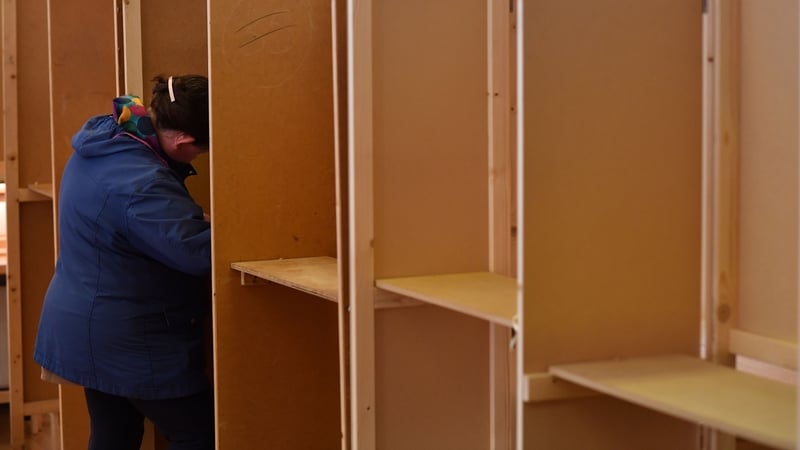

Voters in Dublin Central and Galway West are set to go to the polls on 22 May in what are expected to be two hotly contested bye-elections.
Just two Dáil vacancies will be filled, but the campaigns and results might be viewed as a barometer of the Irish political temperature after a tumultuous few weeks.
These represent the 137th and 138th bye-elections since the foundation of the Irish State.
What is a bye-election?
A bye-election is an election to fill a Dáil seat that has been vacated in between general elections.
Voters elect one TD to fill the free seat in their Dáil constituency.
This is different to a general election where multiple seats are filled across all Dáil constituencies.
Why are we having these two bye-elections?
Two Dáil seats are vacant.
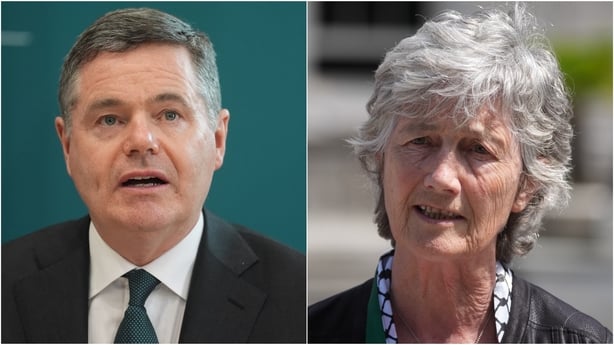
Independent Catherine Connolly resigned her Galway West seat after she was elected President. She was the fourth TD to swap Leinster House for Áras an Uachtaráin.
Fine Gael's Paschal Donohoe resigned as Minister for Finance and vacated his Dublin Central seat in November to take up a position at the World Bank.
Why now?
When a TD dies, resigns or retires, the election to fill their seat must be held under law within six months.
As the next General Election is not planned until the end of the Dáil term in 2029, bye-elections are taking place in Dublin Central and Galway West.
The rule that all Dáil seats must be filled within six months came after a successful legal challenge by Sinn Féin's Pearse Doherty in 2010.
The Government has waited until the last minute to hold these contests - with the six-month window almost closed by the expected polling date of 22 May.
Who can vote in these bye-elections?
You must be ordinarily resident in one of the two constituencies in which a bye-election is taking place.
Voters must also be an Irish or British citizen and aged 18 or over on polling day.
They must also be registered to vote.
The deadline to register to vote is set to be Tuesday 5 May with the Electoral Commission reminding people how the quickest and easiest way to register or to update their details is to go to the Check the Register website.
Read more:
Dublin Central constituency profile
Galway West constituency profile
How do bye-elections work?
The same as a General Election.
There will be a number of candidates on the ballot paper and voters start with '1' for their first preferred candidate, then '2' for their second choice and so on.
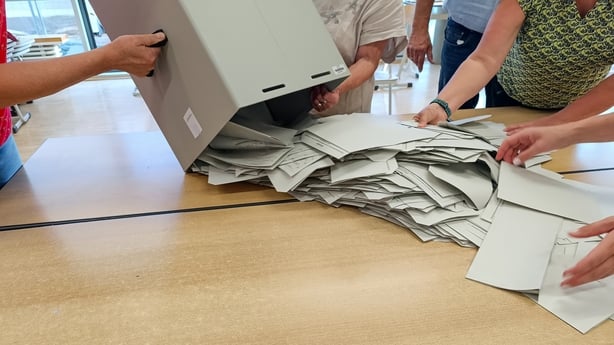
At the election count, the quota - the number of votes that a candidate must get to be elected - is calculated.
As usually happens, the number of first preference votes for each candidate is counted.
After the first count takes place, if no candidate reaches the quota the candidate with the lowest number of votes will be excluded and their next preferences will be distributed.
This process continues until one candidate reaches the quota or there are just two candidates remaining.
What will a candidate likely need to win?
Front-runners will be rewarded.
Around 80% of the time, the candidate who tops the poll on the first count goes on to win the bye-election
In the last ten bye-elections, the candidate who topped the poll on the first count went on to win on seven occasions.
In the other three cases, the victor was a very close second on the first count.
Since the 1990s, the average first preference share of the subsequent winner has been around 30%.
When will we know the final slate of candidates?
Nominations are expected to close at midday on Friday 1 May.
Candidates have 24 hours thereafter to pull out before the ballot paper is finalised.
Bye-elections typically attract between ten and 15 candidates.
Many aspirant TDs have already thrown their hat in the ring in both constituencies - with campaigning taking place informally across both Dublin Central and Galway West for several weeks.
What should we expect over the next few weeks?
Unlike a general election, the Dáil continues to sit during bye-election campaigns.
This means they often turn into a referendum on the political issue of the day.
For example, People Before Profit TD Paul Murphy pulled off a dramatic win over Sinn Féin in the 2014 Dublin South West bye-election off the back of his opposition to water charges.
So, watch for the impact of the recent fuel protests and the cost-of-living crisis in the coming weeks.
But only voters in two constituencies are going to polls. Will these elections really be significant?
Bye-election results can sometimes trigger bigger political developments.
A double bye-election defeat for Fianna Fáil in 1979 precipitated the departure of the party's last Cork taoiseach Jack Lynch.
Bye-election victors sometimes go on to hold high office with three former taoisigh (Seán Lemass, Enda Kenny and Brian Cowen) entering the Dáil after bye-election success.
How do Government parties usually fare in bye-elections?
Not great.
No government candidate has won a bye-election since 2014.
Indeed, Government parties have won just three bye-elections from 25 attempts over the last 30 years.
Two of those wins - Fine Gael's Gabrielle McFadden and Helen McEntee - came after the deaths of their sister and father respectively.
The third, Labour's Patrick Nulty, switched to the opposition benches within weeks of his election in 2011.
Going back further still, government parties have scored just four times out of 44 attempts since 1982 - with no success between that of Fianna Fáil's Noel Treacy in 1982 and that of Mr Nulty's in 2011.
So, Galway West will have a new TD. But who will they join in representing the constituency?
Sinn Féin's Mairéad Farrell topped the poll here in the 2024 General Election - the first woman to do so in the history of the constituency.
Fine Gael's Hildegarde Naughton, Fianna Fáil's John Connolly and Independent Noel Grealish are also TDs here.
Ms Naughton sits at Cabinet as Minister for Education while Mr Grealish is Minister of State at the Department of Agriculture, Food and the Marine.
And what about Dublin Central?
Sinn Féin Leader Mary Lou McDonald is joined by Social Democrats Gary Gannon and the Labour Party's Marie Sherlock.
The most recent election in Dublin Central is remembered for Ms Sherlock's come-from-behind victory over Independent Gerard Hutch, who has been described by the Special Criminal Court as the head of the Hutch Organised Crime Group.
Any other significant figures hail from these constituencies?
Dublin Central was for years dominated by former taoiseach Bertie Ahern and his so-called 'Drumcondra Mafia'. Fianna Fáil has failed to win a seat here since his retirement in 2011.
Former president Michael D Higgins represented Galway West as TD for the Labour Party for 25 years.
Will we have any indication in advance as to how these bye-elections might go?
Opinion polls are expected but carry an even bigger health warning than usual in bye-elections.
Firstly, bye-election results often deviate from national opinion polls. So, any look at the state of the parties in the next few weeks might not be an accurate guide as to the potential results in these battles.
Secondly, the results of constituency-based opinion polls do not always bear out come polling day.
One such poll in the Meath East bye-election of 2005 predicted success for Fianna Fáil's Shane Cassells over Fine Gael's Shane McEntee, beneath the headline 'Cassells Romps Home'.
As one Fianna Fáil apparatchik recalled recently of that poll, "our own sat back, certain of the win. Fine Gael got it together and fought like hell".
Fine Gael won the seat.
When will results be known?
Counting is set to begin at 9am on Saturday 23 May - with results expected later that evening.
The political fall-out will then begin in earnest.