
The Oireachtas Committee on Tourism has heard that the short-term rentals bill is "unworkable" and will "close down rural tourism".
The Irish Self-Catering Federation told members that the tourism sector is "being herded off the Cliffs of Moher" while being assured the Government will issue a safety net.
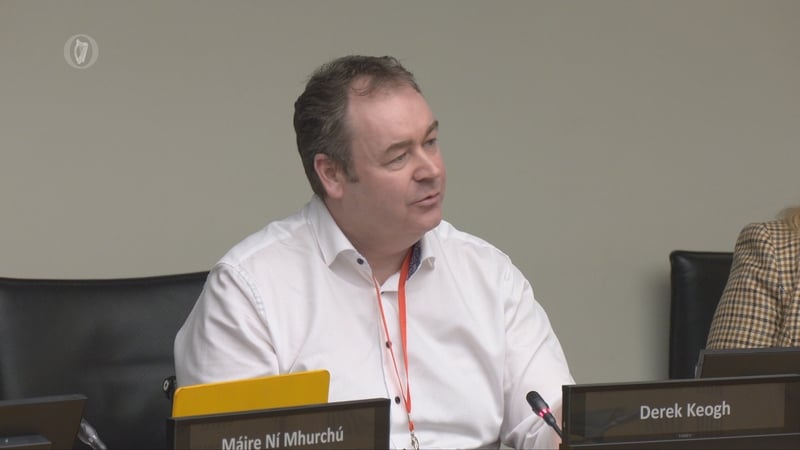
The federation's chair Derek Keogh said planning departments are ill-equipped to deal with an influx of applications.
He said requiring hosts to register with Fáilte Ireland from May is "equally unachievable".
Short-term letting refers to the letting of accommodation for up to 21 nights at a time.
It is understood that those involved in short-term letting will be allowed up to two years to get the required planning permission.
While those operating for seven years or more could benefit from what is called a 'grandfather regularisation'.
Mr Keogh said the Bill in its current format is "enforceable but unworkable".
He said many of the 35,500 short-term rentals will never be suitable for the long-term market.
He said "quirky" offerings like shepherd huts would be unsuitable, and that some rentals will be unable to provide the facilities required.
"These properties were never going to be suitable for the long-term market but will be lost forever from the tourist stock," said Mr Keogh.
It said complying with current day building regulations will be "an insurmountable barrier" for small and medium enterprises.
"A recent cost of complying with current building regulations without any structural changes was €125,000," he said.
He called for exemptions to be introduced, with a focus on tourist hotspots and rural Ireland.
The chair said thatch houses and heritage buildings should be exempt from planning for use as short-term rentals.
Mr Keogh suggested that a separate class of properties called Tourist Accommodation Lets be introduced, for short-term rentals that do not conform to current building regulations.
He said the current legislation is not designed to accommodate the "nuances required to satisfy rural Tourism".
He said that according to the 2022 census only 27% of the population live in towns of between 500 and 20,000 people.
Worry for future of historic houses
Meanwhile, the Historic Houses of Ireland charity said that it is "genuinely worried" for the people they represent and the heritage they protect.
Its Events and External Relations Officer Thomas Emmet said its members properties are "overwhelmingly" in rural Ireland.
"They include thatched cottages as well as Georgian houses, Victorian estates, and medieval tower houses. These are not commercial operators in any conventional sense," he said.
Mr Emmet said the costs of maintaining these properties are "endless" and tourism accommodation income is how many of its members "stay afloat".
"It funds the roof repairs, the conservation work, the rewiring, the insurance premiums," he said, adding that historic houses are often the "last anchor" of community life.
He said "hermitages, ice houses, stables, gamekeeper’s huts, yurts" have all been placed at risk by a lack of clarity and "common sense exemptions".
He called for exemptions for historic properties that cannot be deemed suitable for long-term housing stock.
Meanwhile, Booking.com raised concerns with how the measures will be "sequenced and implemented".
The head of the company's public affairs for Ireland and the UK said: "There is a serious risk that a significant share of existing stock will fall out of compliance or be forced to cease operating, not because operators are unwilling to comply, but because the system is too complex and the compliance window too short."
Fiona MacConnacher said this raises "genuine concerns " for operators and travellers, "especially given how close these changes are to the peak summer season in Ireland".
"There will be knock‑on impacts for local businesses and employment: from cafés and pubs to visitor attractions and shops," she added.