
Therapists do not condone "retraumatising" victims of sexual abuse through the use of counselling notes in criminal trials, the Dáil has been told.
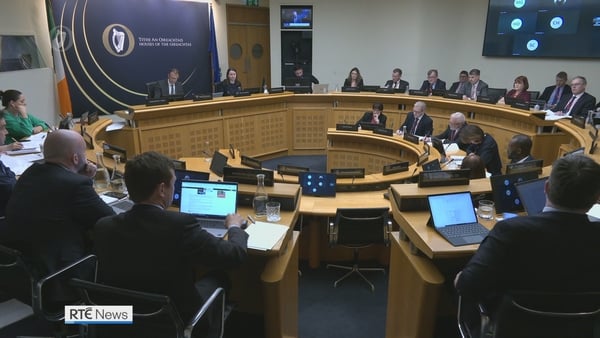
The charge was part of the debate on the Criminal Law and Civil Law (Miscellaneous Provisions) Bill, brought forward by Minister of Justice Jim O'Callaghan.
The Bill will also criminalise sex for rent practises, clear convictions for consensual same sex activity before it was decriminalised in 1993, as well as allow prison officers to use pepper spray.
In relation to the use of counselling notes in criminal trials, survivors and some therapists have been calling for a complete ban.
On the issue of counselling notes, Mr O’Callaghan acknowledged the "distress" the "disclosure of such personal and sensitive information" can cause.
He said he has been informed by the Attorney General that a blanket ban on the disclosure of counselling notes is "not compatible" with the Constitution.
Mr O’Callaghan said the notes will be only disclosed in a "small number of cases" where it is warranted, to protect an accused’s right to a fair trial.
Prior to the debate , therapists handed bags of shredded counselling notes and a letter from survivors into the Department of Justice to protest the proposed changes.
‘Therapists against Harm’ said they would only be handing over counselling notes if they were shredded.
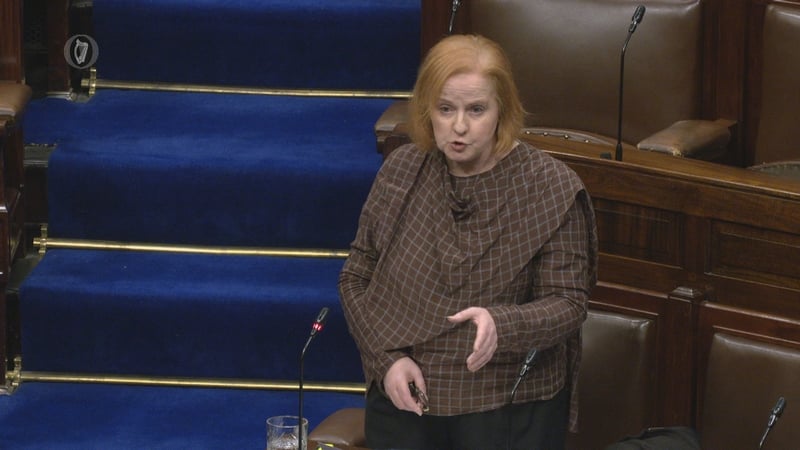
People Before Profit-Solidarity TD Ruth Coppinger said the issue of counselling notes has dominated the Bill.
She said therapists "are no longer willing to go along with this abuse of their clients".
"This is not welcomed by any of the professional bodies," she added.
Ms Coppinger said: "You have talked with survivors minister. But I'm afraid you haven't listened to what they have to say."
She said therapists are not "willing to go along with this abuse of their clients", adding: "This is not welcomed by any of the professional bodies."
She said this is being proposed in a week when "Margaret Loftus stood outside a court and told us the legal system had done as much damage to her as the violence that she faced".
Last week, 48-year-old garda Trevor Bolger was given a three-month suspended sentence for attacking Ms Loftus in Co Mayo in October 2012.
Ms Coppinger also raised concerns that people would have their "private thoughts" used against them.
She said the minister is taking agency away from the victim and giving it to a judge.
"You've great faith in judges, but I don't think the general population has the same absolute faith," said Ms Coppinger.
An ombudsman in Canada found 13% of 1,000 choose not to report to the police because they wanted to take part in counselling, under a similar law, she said.
Sinn Féin’s Matt Carthy said women would have to make the decision whether to attend counselling or pursue legal recourse.
"We all know it is absolutely wrong and unacceptable to add to the trauma of victims of survivors," said Mr Carthy.
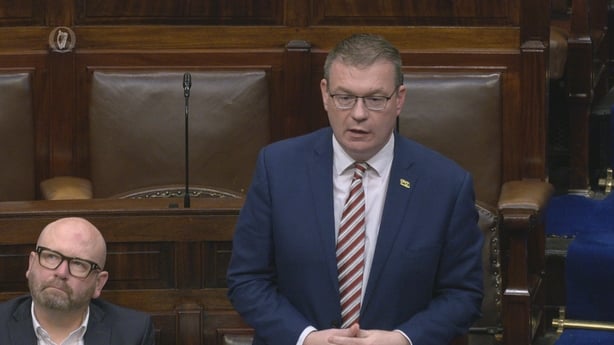
Meanwhile, Labour TD Alan Kelly urged Mr O’Callaghan to listen to expert groups, adding he does not expect this legislation to be sustainable.
"You need to reconsider this whole section," he said. Mr Kelly also criticised the wide range of measures in the Bill.
He said it is "crazy doing a bill like this". The criminalisation of sex for rent practices was largely welcomed.
Mr O’Callaghan said this attempt to "prey on vulnerable individuals" would not be accepted.
He also said the move to clear convictions for consensual same sex activity would address a "historical injustice".
He said it is an injustice that "every one in this house wants to see corrected".
Kieran Rose of the LGBT Restorative Justice Campaign said in a statement: "Justice is finally in sight for men convicted under historic anti-gay laws, which were huge violations of their human rights and dignity"
He said the imminent legislation would "bring relief to people who have been living for decades under the cloud of criminal convictions for consensual activity".
Labour's Conor Sheehan welcomed this move and thanked campaigners for their work on the issue.
"It is really important that we get this done quickly," he said. "These people are getting older."
Sinn Féin's Aengus Ó Snodaigh previously said that gay men "continue to suffer as a result of convictions imposed when consensual sex between men was criminalised up to 1993".
He said that 309 proceedings began and there were 64 convictions in the ten years leading to decriminalisation alone.