Search and rescue teams are facing "significant challenges" due to concerns over their working hours and shift patterns, the Oireachtas Committee on Transport has heard.
Potential breaches of European Union working time directives have recently been reported, raising concerns about crew fatigue and safety.
The Irish Aviation Authority's (IAA) "factoring" system has been criticised as being misused to circumvent working hour limits.
Sinn Féin's health spokesman David Cullinane previously claimed this system, which normally only applied to standby and reserve crews, means 24-hour shifts were recorded as 16.5 hours.
Its new contractor Bristow Ireland Limited was accused of using factoring as a method for "squeezing more out of staff without employing more people" by another Sinn Féin TD.
Conor D McGuinness said he does not believe it is compliant with Irish law.
Fianna Fáil TD Cathal Crowe also suggested that the company could be in breach of Irish and EU law.
He said US company CHC, which also operates search and rescue helicopters, records 17 hours and 15 minutes for a 24-hour shift and "their crews go home at night".
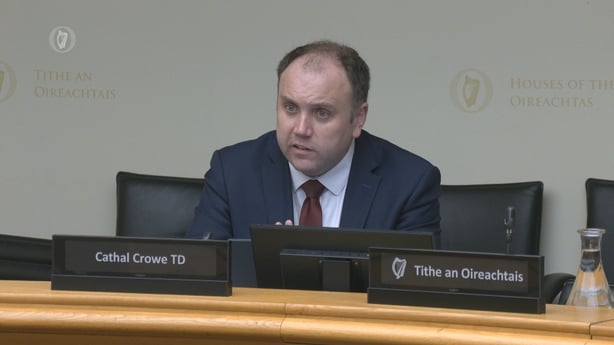
"Whereas Bristow logs 16 hours and 30 minutes but your crews are required to stay at company accommodation," he said.
He asked why Bristow was "only recording" 16.5 hours, adding "how is this legal".
In response, Bristow’s Director Philip Bartlett said the newest contract requires the crew to be at base.
He said factoring has been present in Ireland for many years and is covered under Irish legislation.
Mr Bartlett said it has to comply with "thousands of pages of regulations".
"We are in compliance with all regulations," he added.
The Fianna Fáil TD asked if Mr Bartlett was familiar with the EU Directive on working time.
Mr Bartlett responded that Bristow’s legal advice has been "thorough and comprehensive".
Mr Crowe added that Bristow should have sent its legal team to the committee.
"Your legal team has very poorly advised you," he said. "They have signed you up to stuff that in my opinion is in breach of Irish and European law."
Labour Senator Nessa Cosgrove said there seems to be a difference between how factoring is applied between airlines and the rescue service.
She said she would also argue that it is not compliant with EU regulation.
"It is important to understand the working day of the crews," responded Mr Bartlett. "They operate a 24-hour shift."
He said the period from 10pm to 8am is a "standby period" where crews go to their accommodation waiting for tasking.
Ms Cosgrove asked if workers who live nearby could go home during this time "from a safety point of view", with Mr Bartlett responding that crews are required to remain at base.
"We see this as a very positive step," he said. "By having the crews together for the 24-hour period of time, the elimination of distractions is real."
"It’s not about pay. It’s about safety," said Ms Cosgrove.
Bristow's co-director James Lorraine said "more and more" search and rescue contracts around Europe and other parts of the world require crews to remain at base.
He said this is to "enhance safety" and "remove the multiple distractions that might occur away from base".