


More young people and children sought help from mental health services over the past year than ever before, an Oireachtas committee has heard.
HSE CEO Bernard Gloster said that "7.612 applications for assessment of need" were submitted over the last four quarters, the highest for any 12-month period.
Figures go as far back "as June 2007," he noted.
Mr Gloster was addressing the Oireachtas Committee on Children on the challenges faced by young people with dual diagnosis in accessing CAHMS (Child and Adolescent Mental Health Services).
The HSE said that dual diagnosis describes a person who has both a mental health disorder and a substance use disorder.
Mr Gloster accepted that services are nowhere near where they need to be.
While plans are in place to improve access, he warned that there will continue to be challenges for the foreseeable future.
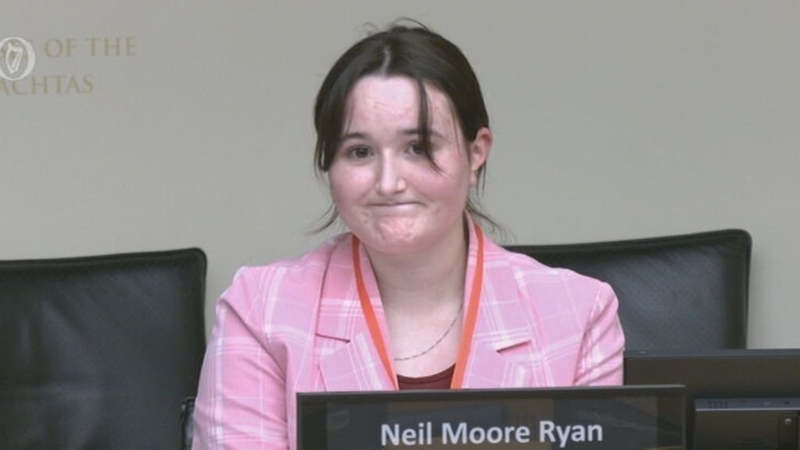
Neil Moore Ryan, a 23-year-old autistic woman, told the committee that she had experienced self-harm and suicidal ideation.
But her CAHMS team "did not take it seriously", dimissing it as attention-seeking, she said.
They then put Ms Ryan on Prozac despite her concerns about this and raised her dose often as a prerequisive for her using the service, she told the committee.
She warned that it is easy for politicians to overlook the fact that each of the 4,400 children and young people on the CAHMS waiting list is a person with their own story.
Dr Amanda Burke, who has been appointed as the first National Clinical Lead for CAHMS, apologised to Ms Ryan for the over-medication, which she said should not have occurred.
Dr Burke also said that she is open to talking with Ms Ryan to learn from her experience of using the CAHMS service.
Dr Gerry McCarney, a child and adolescent psychiatrist with the Substance Abuse Service Specific to Youth (SASSY), said that the unhealthy use of drugs and alcohol is a "fact of modern life".
Yet it is used as a basis for excluding a person from accessing CAHMS, he said, which cuts young people off from essential supports.
Ber Grogan, Policy and Research Manager with Mental Health Reform, noted that there are 1.2 million people in Ireland under 18.
At 23%, this is "the highest proportion of children in the EU", she said.
But, she told the committee, that many of them are being failed, with CAHMS waiting lists having almost doubled since 2019.
The UN Committee on the Rights of the Child has expressed "serious concern" over the state of mental health services for children in Ireland, Ms Grogan added.
Community and voluntary groups provide essential services, she said.
But Budget 2024 delivered "no increased funding" for the sector, despite demand "having gone up exponentially" for services.
