



Workers in the Republic of Ireland are 40% more productive than those in Northern Ireland, an Oireachtas committee has heard.
In money terms, the gap is even greater, with the Republic of Ireland generating over 50% more per capita than Northern Ireland.
Productivity in the two jurisdictions had been the same shortly after the Good Friday Agreement (GFA) was signed in 1998, Dr Alan Barrett, Chief Executive Officer of the Economic and Social Research Institute (ESRI), noted.
In the years since, productivity has grown in the South as it moved closer to European Union norms, while it has fallen in the North, which has failed to move closer to UK averages.
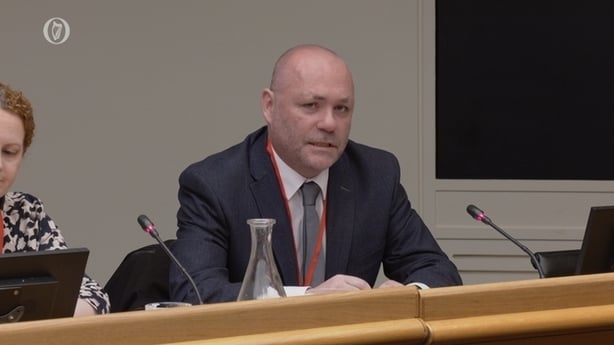
Members of the ESRI were appearing at the Joint Committee on the Implementation of the Good Friday Agreement to explore the all-island economy.
Ahead of any referendum on re-unification, Dr Seamus McGuinness cautioned that people need to know the differences in both general welfare and living standards on either side of the border, and also how these may change in the event of reunification.
Significantly more people in Northern Ireland are at risk of poverty (14.3%) than are in the Republic (8.9%), Dr Barrett revealed.
While those south of the border live on average a year and a half longer, he added, noting that these figures "come as a surprise to an awful lot of people".
The contributors said that the ESRI was working to address the scarcity of data comparing the two economies.
Dr McGuinness pointed to the lack of integrated policy across government departments in the North.
But he also identified serious structural issues, particularly in education, which will need greater funding - not simply greater coordination - if they are to be tackled.
A person's social class is the single greatest factor in determining their access to education, Dr Adele Bergin said.
However, in Northern Ireland, social class has an impact three times greater on a person's educational achievements than it does in the Republic.
Dr Bergin pointed to the success of the DEIS programme in helping to reduce the numbers leaving school early to around half the level seen in Northern Ireland.
When it comes to further education, three times more people in the Republic are qualified, which she noted is partly due to the rising popularity of Post-Leaving Cert courses, as well as the status now associated with education.
