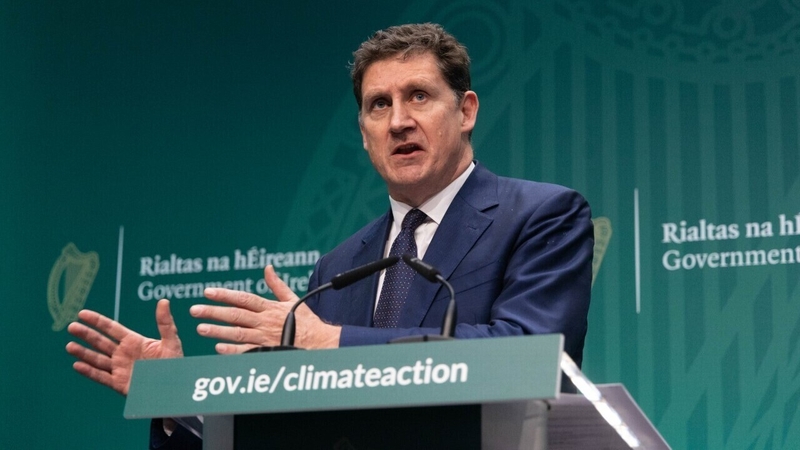

The Minister for Environment Climate Change and Communications Eamon Ryan has said that it is important that reformed planning legislation is passed.
The Minister said this would allow for a fairer, more certain, and less expensive planning process, without removing the right of people to question, object to, or try to reverse planning decisions that are taken.
He was responding to news that the Chair of the Climate Change Advisory Council, Marie Donnelly, has written to the heads of the three Coalition Government parties calling for crucial changes in the planning system this year to speed up the delivery of projects that are essential for meeting Ireland's climate change obligations.
The letter outlines concerns of the Climate Change Advisory Council about timelines for the delivery of core measures within the Climate Action Plan as we approach the mid-point of the first carbon budget period.
The letter is addressed to the Taoiseach Leo Varadkar, Tánaiste Micheál Martin, and Green Party Leader Eamon Ryan.
Ms Donnelly points out that the planning system is at the heart of the actions needed to meet our legislated carbon budgets, particularly for electricity, heat and transport.
She said it is crucial that planning policy gaps are addressed quickly to give greater local policy support for the advancement of the onshore renewable energy projects and the compact growth targets that Ireland needs to meet its binding obligations.
Minister Ryan said that he agrees with Marie Donnelly.
"The planning system is probably our biggest constraint. It is now being resourced. Bord Pleanála is now back up to a full 15 members. They have all the additional staff they said they were looking for. But they have a backlog, and it is important that we get that backlog cleared," he said.
The Climate Change Advisory Council has welcomed the opportunity for a review of the National Planning Framework due to begin this year.
It highlighted that sustainable residential development reduces transport demand as well as the cost of provision of low carbon services such as public transport and district heating.
Going forward, it says it is vital that new dwellings are predominantly located in multi-unit developments sited within easy reach of existing services including transport, health, education, and retail.